 Ring Studio
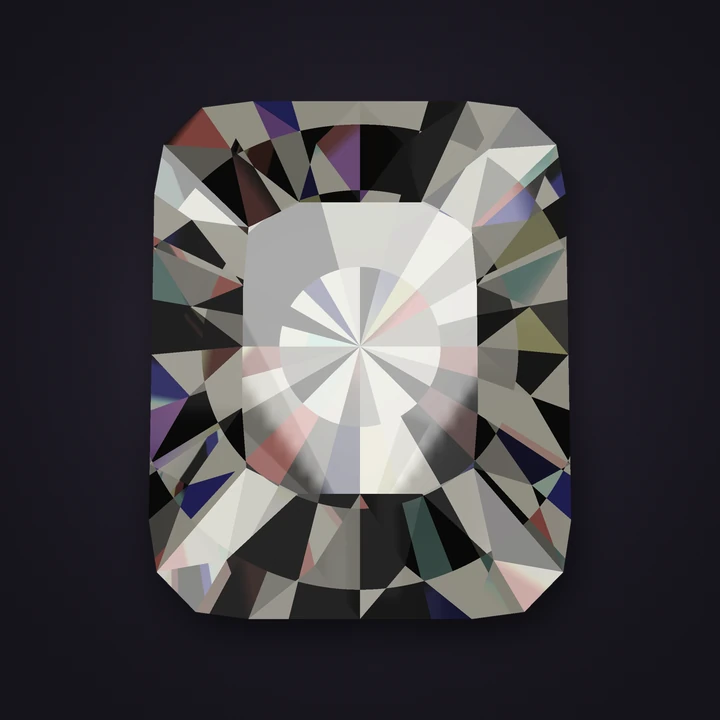
Radiant Cut Engagement Rings
A radiant engagement ring combines the clipped-corner rectangle of an emerald cut with the fiery faceting of a brilliant. The result is one of the sparkliest fancy shapes, with tough corners that suit everyday wear.
On this page
- Where the radiant came from
- Radiant diamond carat to mm chart
- Radiant proportions: depth, spread and colour
- Best settings for a radiant cut
- Wedding bands with a radiant
- Radiant pros and cons
- Radiant ring prices
- Who should choose a radiant?
- Radiant buying mistakes to avoid
- How to design a radiant engagement ring in Ring Studio
- Radiant vs emerald, cushion and princess
- Facets
- Typically 62 to 70, mixed step and brilliant
- Length-to-width
- Square 1.00 to 1.05; rectangular 1.20 to 1.40
- Look
- Crisp rectangle with intense, crushed-ice style sparkle
- Best settings
- 4 prong at the corners, halo, three stone, east-west
- Price vs round
- Generally lower per carat than a comparable round
Where the radiant came from
The radiant cut is usually credited to cutter Henry Grossbard, who introduced it in the late 1970s. The idea was to give a rectangular step-cut outline the brilliance of a round. It took a while to catch on, then surged in the 2020s as rectangular rings became fashionable again. Today, elongated radiants are one of the shapes people most often ask jewellers about after ovals.
Radiant diamond carat to mm chart
Approximate face-up sizes for rectangular radiants around a 1.30 ratio, with square equivalents. Radiants vary in depth, so check the report.
| Carat | Rectangular (approx. L x W) | Square (approx.) |
|---|---|---|
| 0.50 ct | 5.4 x 4.2 mm | 4.6 x 4.6 mm |
| 0.75 ct | 6.1 x 4.7 mm | 5.1 x 5.1 mm |
| 1.00 ct | 6.6 x 5.1 mm | 5.6 x 5.6 mm |
| 1.50 ct | 7.6 x 5.8 mm | 6.4 x 6.4 mm |
| 2.00 ct | 8.3 x 6.4 mm | 7.0 x 7.0 mm |
| 3.00 ct | 9.5 x 7.3 mm | 8.0 x 8.0 mm |
Radiant proportions: depth, spread and colour
Radiants have no universal cut grade, so judge them on proportions and how they look.
- Depth: roughly 61 to 68% for a good balance. Deeper stones are common and look small for their weight; some cutters push past 70% to save rough.
- Table: roughly 61 to 69%.
- Corners: the trims should be even. Lopsided corners look obvious in a four-prong setting.
- Bow-tie: elongated radiants can show a mild one; usually less than ovals.
- Colour: radiants hold colour a little more than rounds, especially at the corners, though their sparkle helps. G to H in white metal; I to J often fine in yellow gold.
- Clarity: the busy facet pattern hides inclusions well, so VS2 or SI1 is often eye-clean.
Measure value by millimetres, not carats. Two 1.5 carat radiants can differ by half a millimetre in length, which is easy to see on the hand.
Best settings for a radiant cut
Four prongs at the corners
The cleanest solitaire uses one prong on each clipped corner. Claw tips look sleek; double prongs give extra security. Six prongs are rarely needed.
Hidden halo or classic halo
A hidden halo adds a ring of pavé under the stone without altering the outline. A classic halo makes the stone look larger and softer. See halo engagement rings.
Three stone
Trapezoids, tapered baguettes or half moons either side create a structured, high-sparkle ring. Ring Studio's side stone options include three stone and baguettes. More in our three stone guide.
East-west
A horizontal elongated radiant looks very contemporary and sits low on the finger.
Wedding bands with a radiant
Straight bands pair naturally with radiant solitaires. Pavé or eternity bands match the sparkle; a slim baguette band adds contrast and an Art Deco hint. With a halo, check whether a slight curve is needed so the band sits close.
Radiant pros and cons
| Pros | Cons |
|---|---|
| One of the most brilliant fancy shapes | Often cut deep, so can face up small |
| Clipped corners resist chipping | Quality varies widely between cutters |
| Hides inclusions better than step cuts | Can look busy to people who prefer calm flashes |
| Square and rectangular options | Holds some colour at the corners |
Radiant ring prices
Radiants generally cost less per carat than rounds of comparable quality. Because many are deep, compare price per millimetre of spread rather than per carat. Lab-grown radiants are widely available, especially in larger elongated sizes, and lab-grown prices have fallen sharply. Our 2 carat ring price guide shows how costs scale with size.
Who should choose a radiant?
A radiant suits someone who wants maximum sparkle in a rectangular or square outline, and who values durability. The clipped corners make it one of the better fancy shapes for busy hands. On shorter fingers, an elongated radiant around 1.30 adds length; on longer fingers, a square radiant looks bold and modern. It works equally well with yellow gold for a warmer, 1990s-revival look and with platinum for a crisp, icy one.
Radiant buying mistakes to avoid
The biggest is comparing radiants by carat rather than measurements: a deep 2 carat stone can face up like a 1.6 carat. Another is ignoring corner symmetry, which shows clearly under four prongs. Lastly, some radiants are cut so deep that the centre looks dark; always ask for a video in normal light before buying.
How to design a radiant engagement ring in Ring Studio
Radiant is one of Ring Studio's Pro shapes.
- Choose Radiant in the stone tray and set the carat.
- Pick a 4 prong head and compare claw tips with double tips.
- Add a hidden halo, then switch to a classic halo to compare the outline.
- Try baguette or kite side stones, and toggle east-west.
- Choose a pavé or plain band in your metal.
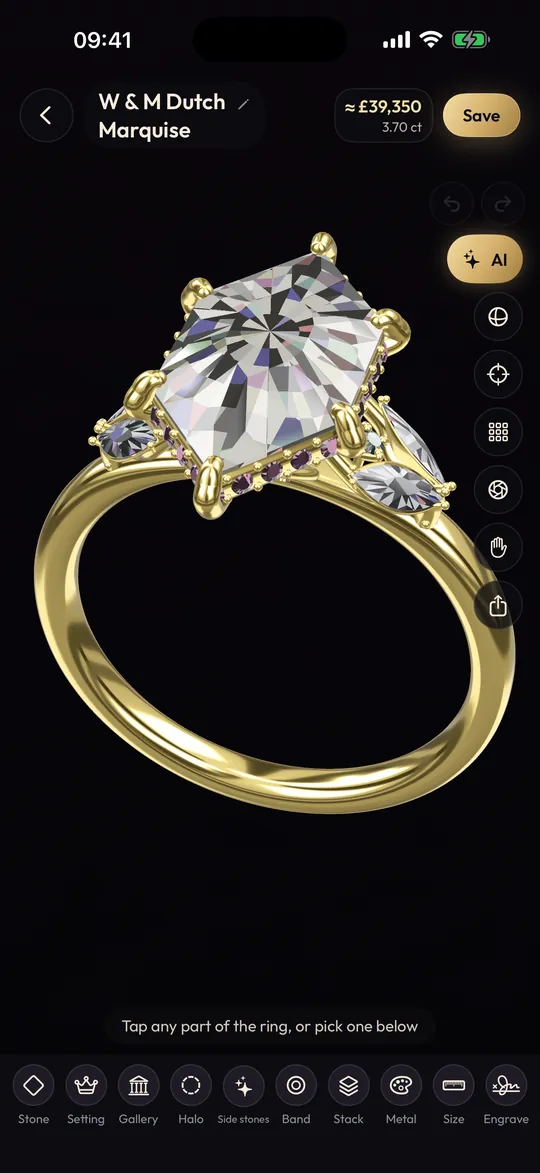
On the free plan, the Emerald and Princess shapes are good stand-ins for exploring the outline before you upgrade. Share your final design with a jeweller as a ring code or screenshots.
Radiant vs emerald, cushion and princess
The radiant shares its outline with the emerald cut (compared in emerald vs radiant), its sparkle with the princess, and its softness with the elongated cushion. If durability matters most, see rings for an active lifestyle.
Frequently asked questions
What is a radiant cut diamond?
A radiant has a square or rectangular outline with trimmed corners, like an emerald cut, but it is faceted as a brilliant so it sparkles intensely. It typically has around 62 to 70 facets.
Do radiant cut diamonds look smaller?
They are often cut fairly deep, so a radiant can face up slightly smaller than a round or oval of the same carat. A 1 carat rectangular radiant is commonly around 6.5 x 5.0 mm.
What is the best ratio for a radiant cut?
For a square look, 1.00 to 1.05. For the popular elongated look, roughly 1.20 to 1.35. Above about 1.40 the stone starts to look very long.
Is a radiant or emerald cut better?
A radiant sparkles more and hides inclusions and colour better; an emerald cut has calmer, mirror-like flashes and looks larger from above. It comes down to whether you prefer glitter or elegance.
Are radiant cut diamonds durable?
Yes. The clipped corners remove the sharp points that make princess cuts vulnerable, so radiants are a good choice for active hands.
Keep reading
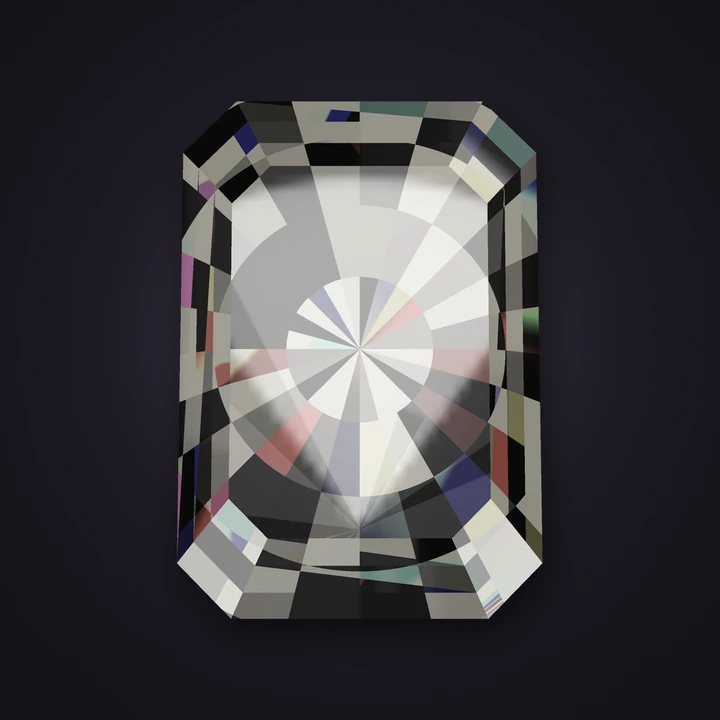 Emerald Cut Engagement Rings: Clarity, Sizes and StyleEmerald cut engagement ring guide: why clarity matters in step cuts, the best ratios, carat-to-mm sizes, settings, bands…
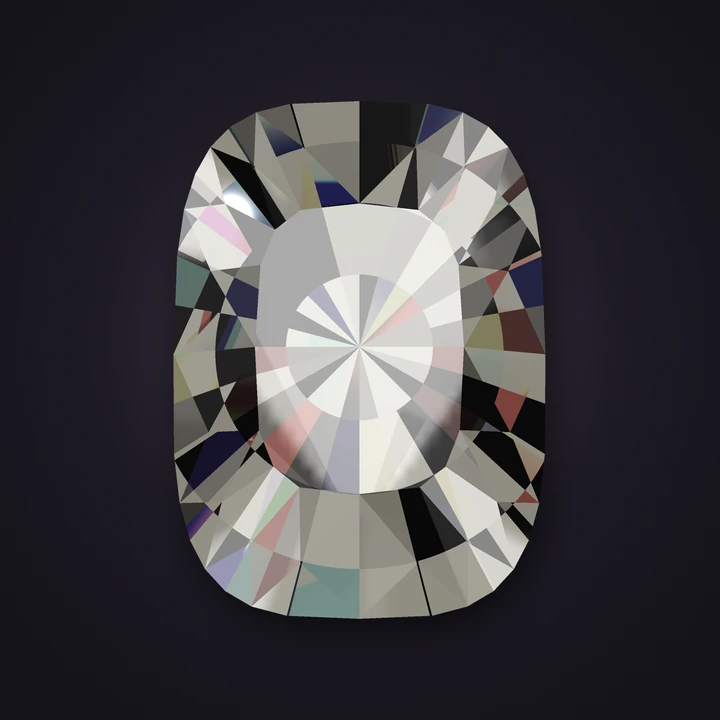 Elongated Cushion Engagement RingsElongated cushion engagement ring guide: the ideal 1.15 to 1.35 ratio, carat-to-mm sizes, colour tips, settings and band…
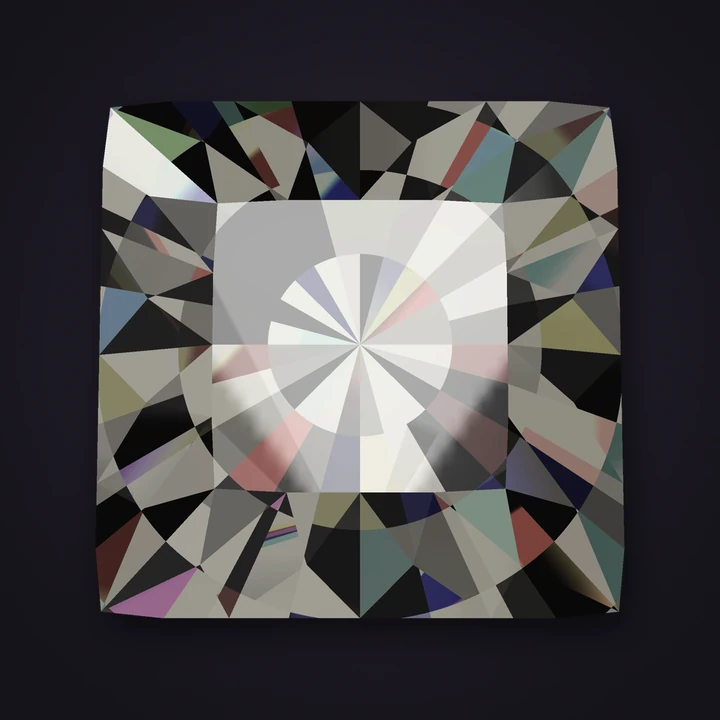 Princess Cut Engagement Rings: A Practical GuidePrincess engagement ring guide: square brilliant sizes in mm, protecting the corners, best prong settings, band pairings…Three Stone Engagement RingsThree stone engagement ring guide: side stone sizes and shapes that balance the centre, pears vs baguettes vs trillions,…Halo Engagement RingsHalo engagement ring guide: how a halo adds face-up size, which shapes suit one, upkeep of small pavé stones, band pairi…