 Ring Studio
Stone shapes
Dutch Marquise Engagement Rings
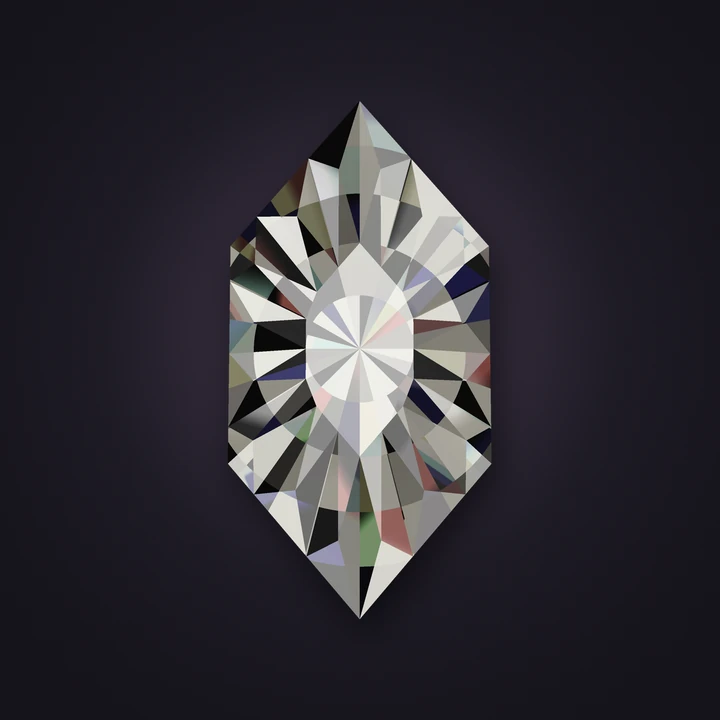
A Dutch marquise engagement ring uses a modern twist on the marquise: pointed ends like the classic navette, but with straight, angular sides instead of a continuous curve. It looks geometric and architectural, and it is still rare enough to feel individual.
On this page
- What exactly is a Dutch marquise?
- Dutch marquise sizes in mm
- What to look for when buying one
- Sourcing realities
- Best settings for a Dutch marquise
- Pairing a wedding band
- Dutch marquise pros and cons
- How much does a Dutch marquise ring cost?
- Designing a Dutch marquise ring in Ring Studio
- Dutch marquise or classic marquise?
- Facets
- Varies by cutter; most are brilliant-style, some use step or antique-style faceting
- Length-to-width
- Roughly 1.70 to 2.10
- Look
- Angular, elongated, architectural; a marquise with straight sides
- Best settings
- 6 prong with protected tips, bezel, east-west, minimalist solitaire
- Price vs round
- Natural stones vary widely as they are often cut to order; lab-grown is common and affordable
What exactly is a Dutch marquise?
The Dutch marquise keeps the two points of a classic marquise but replaces its smooth curves with flat side segments. From above, the outline reads as a long, pointed polygon, closer to an elongated hexagon with tapered tips than to a boat. Because it is a newer, non-standard shape, outlines and facet patterns vary between cutters, and laboratories often describe it with a generic modified-shape name rather than a single standard term.
Its rise in popularity over the past few years follows the wider move towards geometric and "unusual but still classic" centre stones. It suits people who love the length of a marquise but want something cleaner and more contemporary. The origin of the name is not well documented, so be wary of confident origin stories.
Dutch marquise sizes in mm
There is no industry-standard sizing for this cut, so these are very approximate figures for a brilliant-style stone around a 1.85 ratio. Measurements on the actual report are what count.
| Carat | Approx. L x W | Comment |
|---|---|---|
| 0.50 ct | 8.0 x 4.3 mm | Slim and delicate |
| 0.75 ct | 9.0 x 4.9 mm | Long for the weight |
| 1.00 ct | 9.9 x 5.3 mm | Similar presence to a classic marquise |
| 1.50 ct | 11.3 x 6.1 mm | Strong graphic outline |
| 2.00 ct | 12.4 x 6.7 mm | A statement centre |
| 3.00 ct | 14.2 x 7.6 mm | Consider east-west for comfort |
What to look for when buying one
- Clean, straight edges: the whole point of the shape is its crisp geometry. Wavy or uneven sides spoil it.
- Symmetry end to end: both tips should sit on the same centre line and have the same angle.
- Bow-tie: like other elongated brilliants, a Dutch marquise can show a dark band across the middle. Judge it on video.
- Tip thickness: check the girdle is not knife-thin at the points.
- Colour at the ends: as with a classic marquise, colour gathers in the tips, so a slightly higher colour grade helps in white metal.
- Documentation: make sure the grading report states the measurements and shape description clearly, since naming varies.
Sourcing realities
You are unlikely to find a wide selection of natural Dutch marquise diamonds in high-street windows. Most come from specialist cutters, sometimes re-cut from other shapes or cut to order, which takes time and can cost more per carat than the shape's spread might suggest. Lab-grown Dutch marquise stones are far easier to source in specific ratios and sizes, and they make the trend affordable. Coloured gemstones such as sapphire are also sometimes cut this way. Our guide to working with a jeweller explains how to commission a specific shape.
If you commission a custom-cut stone, agree the target ratio, tolerance in millimetres and grading lab before the cutter begins, and get it in writing.
Best settings for a Dutch marquise
The two points need protection exactly as with a classic marquise. A six prong head with one prong over each tip and two pairs along the sides is the most common choice; ideally those tip prongs are V-shaped. Ring Studio doesn't have a dedicated V-prong, so use a 6 prong head with claw tips and mention V-prongs to your jeweller. A slim bezel suits the shape's clean lines particularly well.
Because the outline is the star, many people choose a simple minimalist solitaire or a hidden halo rather than a classic halo, which can blur the angles. East-west settings are striking and practical.
Pairing a wedding band
A chevron or contoured band that follows the tip, or a straight band with an east-west stone, works well. Straight-edged bands such as knife edge designs echo the geometry.
Dutch marquise pros and cons
| Pros | Cons |
|---|---|
| Distinctive, modern and geometric | Hard to find in natural diamond |
| Long outline flatters the finger | No standard proportions to guide you |
| Readily available in lab-grown | Two tips still need protection |
| Feels unusual without being odd | Trend-driven; may date faster than classic shapes |
How much does a Dutch marquise ring cost?
There is no meaningful market price for natural Dutch marquise diamonds because so few are cut. Expect individual quotes, often at a premium over a classic marquise of the same grades, reflecting the extra work and limited supply. Lab-grown Dutch marquise stones are far more accessible and are priced much like other lab-grown fancy shapes, which have fallen sharply over recent years. Settings cost the same as for any solitaire of similar complexity. All figures vary by cutter, retailer and market. For context, see lab-grown diamond prices.
Designing a Dutch marquise ring in Ring Studio
Dutch marquise is one of the Pro shapes in Ring Studio.
- Choose Dutch marquise from the stone tray and set the carat.
- Use a 6 prong head with claw tips, then compare with a bezel.
- Toggle east-west to see the horizontal version.
- Pick a knife edge or plain band, and try a hidden halo for side sparkle.
- Swap to the free classic Marquise on the same ring to compare outlines directly.
Because the cut is rare, a precise 3D design is useful when you brief a cutter or jeweller: share a ring code or screenshots so they see the exact outline and proportions you want.
Dutch marquise or classic marquise?
If you want history and softness, choose the classic marquise; if you want crisp lines and a modern edge, the Dutch version wins. The full side-by-side is in marquise vs Dutch marquise, and the hexagon is worth a look if you like angular outlines.
Frequently asked questions
What is a Dutch marquise cut?
It is an elongated shape with a point at each end and flat, angled sides, so the outline looks faceted rather than curved. Think of a marquise drawn with a ruler, sitting somewhere between a marquise and an elongated hexagon.
What is the difference between a marquise and a Dutch marquise?
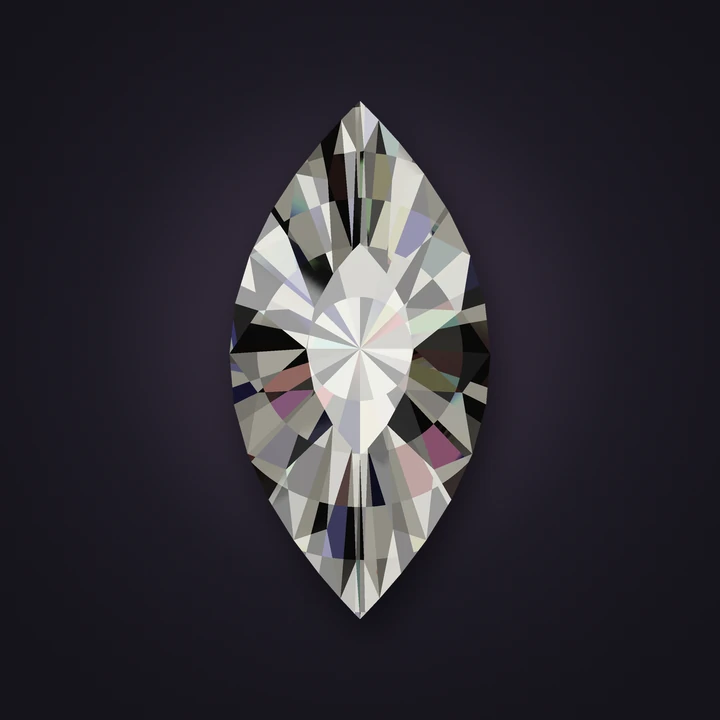
A classic marquise has smoothly curved sides meeting at two points; a Dutch marquise has straight side segments that meet at angles. The Dutch version looks more geometric and usually slightly less pointed.
Are Dutch marquise diamonds hard to find?
They are much less common than standard shapes. Many are cut to order by specialist cutters, and a large share of what is on the market is lab-grown, which makes the shape easier and cheaper to source.
What setting works best for a Dutch marquise?
A six prong head with the end prongs covering both points, or a bezel, protects the tips. Many people pair it with a slim plain or pavé band to keep the focus on the outline.
Is a Dutch marquise more durable than a regular marquise?
The tips are often slightly blunter, but they are still the thinnest part of the stone. Treat them the same way and make sure both points sit under metal.
Keep reading
 Stone shapesMarquise Engagement Rings: The Shape That Looks BiggestMarquise engagement ring guide: the ideal 1.85 to 2.10 ratio, bow-tie and symmetry checks, carat-to-mm sizes, tip protec…
 Stone shapesHexagon Engagement RingsHexagon engagement ring guide: regular vs elongated hexagons, step vs brilliant cuts, approximate sizes, sourcing, six-p…Settings & stylesUnique Engagement RingsUnique engagement ring ideas: unusual cuts, coloured stones, east-west and toi et moi layouts, hidden details and custom…GemstonesLab-Grown DiamondsLab-grown diamonds explained: how HPHT and CVD diamonds are made, why they are real diamonds, how they are graded, resal…GuidesHow to Work With a Jeweller on a Custom RingHow to work with a jeweller on a custom ring: finding the right maker, writing a clear brief, questions to ask, approvin…