 Ring Studio
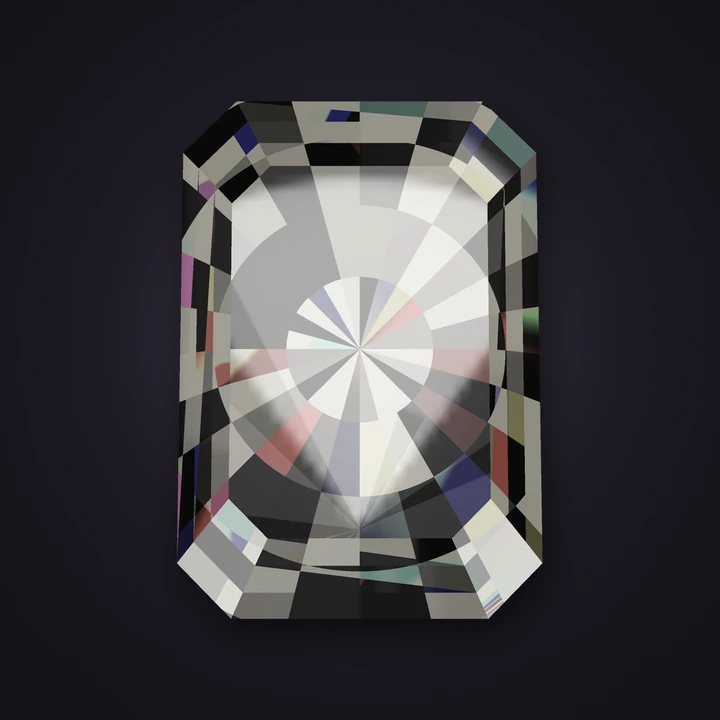
Emerald Cut Engagement Rings: Clarity, Sizes and Style
An emerald cut engagement ring uses a rectangular step-cut diamond with clipped corners, prized for its long, mirror-like flashes rather than glittering sparkle. It is elegant and understated, but its open table makes clarity and colour more visible than in brilliant cuts.
On this page
- Why the emerald cut feels different
- Emerald cut carat to mm chart
- Clarity and colour: why step cuts are less forgiving
- Best settings for an emerald cut
- Wedding bands for emerald cut rings
- Emerald cut pros and cons
- Emerald cut prices
- Who suits an emerald cut engagement ring?
- Common emerald cut mistakes
- Designing an emerald cut ring in Ring Studio
- Emerald cut vs radiant and Asscher
- Facets
- Usually 50 to 58 step facets in parallel rows
- Length-to-width
- 1.30 to 1.60; classic 1.40 to 1.50
- Look
- Hall-of-mirrors flashes, clean lines, Art Deco sophistication
- Best settings
- 4 prong at the corners, double prong, bezel, three stone, east-west
- Price vs round
- Generally lower per carat than a comparable round
Why the emerald cut feels different
Most popular shapes are brilliants, designed to break light into many small sparkles. The emerald cut is a step cut: long, flat facets arranged in rows like steps, parallel to the edges. The name comes from the gemstone, because lapidaries used this cut to protect brittle emerald crystals, and it became a defining diamond shape of the 1920s and 1930s Art Deco period.
The effect is calm and glassy, with big flashes rather than glitter. It looks especially beautiful in candlelight and in clean, minimal settings.
Emerald cut carat to mm chart
Approximate face-up sizes for stones around a 1.45 ratio. Measurements vary with depth and ratio.
| Carat | Approx. L x W | Typical look |
|---|---|---|
| 0.50 ct | 5.7 x 4.1 mm | Neat and subtle |
| 0.75 ct | 6.5 x 4.6 mm | Clearly rectangular |
| 1.00 ct | 7.0 x 5.0 mm | Classic size; looks larger than a 1 ct round |
| 1.50 ct | 7.8 x 5.6 mm | Elegant statement |
| 2.00 ct | 8.6 x 6.2 mm | Big flashes become very visible |
| 3.00 ct | 9.8 x 7.1 mm | Old Hollywood scale |
Clarity and colour: why step cuts are less forgiving
The large table and long facets act like windows. An inclusion that a round brilliant would hide behind its sparkle can sit in plain view in an emerald cut.
- Clarity: VS2 or better is a common starting point, but the real test is whether the stone is eye-clean. Some SI1 stones are fine; some VS2 stones are not. Our clarity chart explains the grades.
- Colour: step cuts show body colour more readily, especially at the corners. G or H suits white metal; warmer grades look good in yellow gold.
- Depth: roughly 61 to 69%. Too shallow looks flat and lifeless; too deep looks small.
- Table: roughly 60 to 69%.
- Step pattern: you want evenly spaced, parallel steps and a crisp outline. Uneven steps look messy once set.
Ask for a clear, magnified photo of the actual stone, not a stock image. With emerald cuts, where an inclusion sits matters as much as its grade: near the corner under a prong is much better than in the middle of the table.
Best settings for an emerald cut
Four prongs at the corners
The cut corners are the most exposed points. Four prongs, one over each corner, is the classic solitaire; double prongs add security and a slightly vintage feel.
Bezel
A slim bezel frames the outline and suits the shape's architectural lines. It protects the corners entirely.
Three stone with step-cut side stones
Tapered baguettes or trapezoids either side are the definitive Art Deco look and stay in the step-cut family. See tapered baguette rings and three stone rings.
East-west
A horizontal emerald cut is sleek and modern, sits low and pairs neatly with a straight band.
Wedding bands for emerald cut rings
Straight bands sit well against emerald cut solitaires. Baguette eternity bands continue the step-cut theme, while a plain band in platinum or yellow gold keeps the clean lines. A round pavé band introduces a contrast of sparkle that some people love.
Emerald cut pros and cons
| Pros | Cons |
|---|---|
| Elegant, distinctive flashes | Shows inclusions and colour more |
| Looks large from above for its weight | Less sparkle than brilliant cuts |
| Usually good value per carat | Fingerprints and dirt dull the table quickly |
| Clipped corners resist chipping | Needs higher clarity, which costs more |
Emerald cut prices
Emerald cuts are generally cheaper per carat than rounds of the same grades. However, because you may need higher clarity to stay eye-clean, the real saving is smaller than the price list suggests. Lab-grown emerald cuts are increasingly popular for large sizes, and lab-grown prices have fallen sharply. See engagement ring costs for budget ranges.
Who suits an emerald cut engagement ring?
The emerald cut appeals to people who prefer understated elegance to obvious sparkle. Its long outline lengthens shorter fingers, and on longer fingers a 1.40 ratio looks perfectly proportioned. It is a natural fit for tailored, minimal wardrobes and for anyone who loves Art Deco design. Practically, the clipped corners make it more durable than a princess, but the large table shows smudges, so it suits someone happy to give it a quick clean. Read our ring care guide for simple routines.
Common emerald cut mistakes
The most common is buying on the certificate alone: an SI1 with a dark crystal in the middle of the table can look worse than an SI2 with an inclusion tucked under a prong. Another is picking a very shallow stone because it measures large; it may look glassy and lifeless. Finally, check that side stones match the step-cut style, as round side stones can make the centre look flatter by comparison.
Designing an emerald cut ring in Ring Studio
Emerald is one of the free shapes in Ring Studio.
- Choose Emerald in the stone tray and set the carat.
- Use a 4 prong head and try double prong tips at the corners.
- Add baguette side stones for an Art Deco three stone look.
- Toggle east-west, then try a bezel for a modern minimal look.
- Choose platinum or yellow gold, and add an engraved vintage band if you want a 1920s feel.
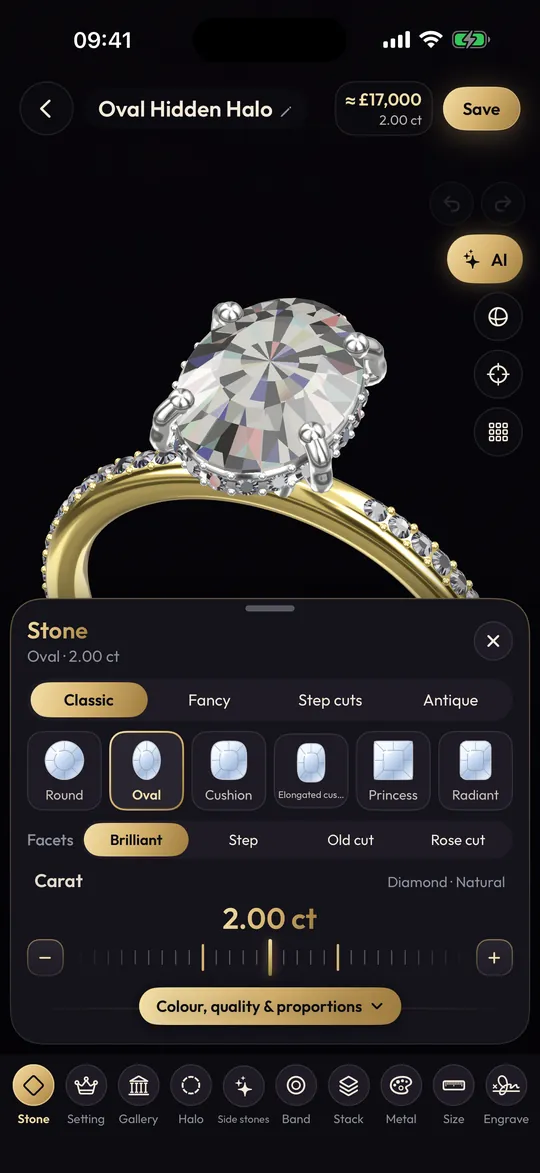
You can also ask the AI ring designer for "an Art Deco emerald cut with tapered baguettes in platinum" and refine by chat.
Emerald cut vs radiant and Asscher
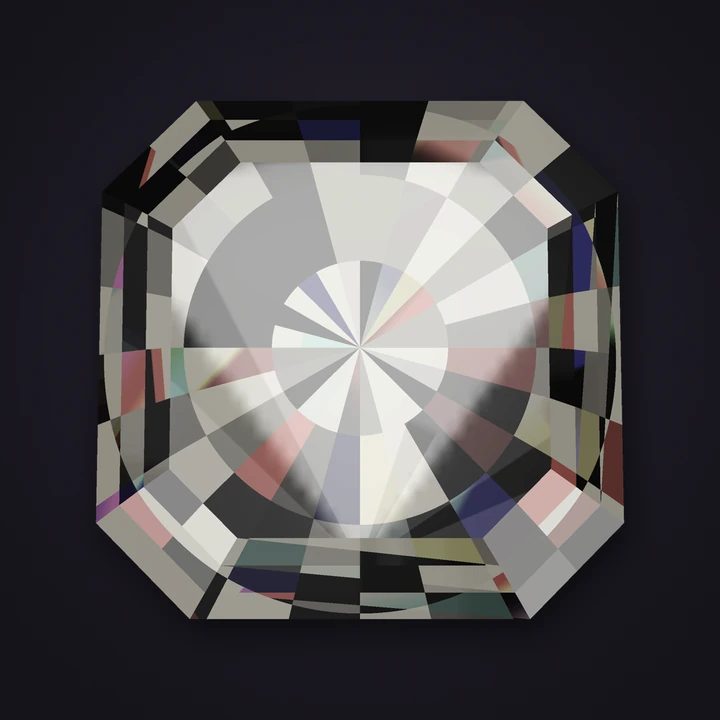
Want the outline with more sparkle? A radiant has the same clipped rectangle with brilliant facets; see emerald vs radiant. Prefer a square? The Asscher is the emerald cut's square cousin, compared in emerald cut vs Asscher.
Frequently asked questions
Is an emerald cut diamond an emerald?
No. Emerald cut describes the shape and step faceting, not the gemstone. Emerald cut diamonds are very popular, and the cut is also used for emeralds, sapphires and many other stones.
What clarity do I need for an emerald cut diamond?
Because step cuts have large open facets, inclusions are easier to see. Many buyers aim for VS2 or better and check the stone is eye-clean, rather than relying on the grade alone.
Do emerald cuts sparkle?
They sparkle differently. Instead of lots of small flashes, they show broad flashes of light and dark known as the hall-of-mirrors effect. Some people find this calmer and more sophisticated.
How big is a 1 carat emerald cut?
Roughly 7.0 x 5.0 mm for a classic 1.40 ratio. The long outline and big table make it look larger than a round of the same weight from above.
What is the best ratio for an emerald cut?
Around 1.40 to 1.50 is the classic look. Ratios of 1.30 look squarer and softer; 1.60 and above look long and slender.
Keep reading
 Asscher Cut Engagement RingsAsscher engagement ring guide: the windmill pattern, step-cut clarity and colour advice, carat-to-mm sizes, Art Deco set…Diamond Clarity Chart: FL to I3 ExplainedDiamond clarity chart from FL to I3: what each grade means, which inclusions matter, the eye-clean sweet spot by shape a…Art Deco Engagement RingsArt Deco engagement ring guide: 1920s-30s design traits, asscher, emerald, octagon and hexagon cuts, calibré colour, mil…Three Stone Engagement RingsThree stone engagement ring guide: side stone sizes and shapes that balance the centre, pears vs baguettes vs trillions,…