 Ring Studio
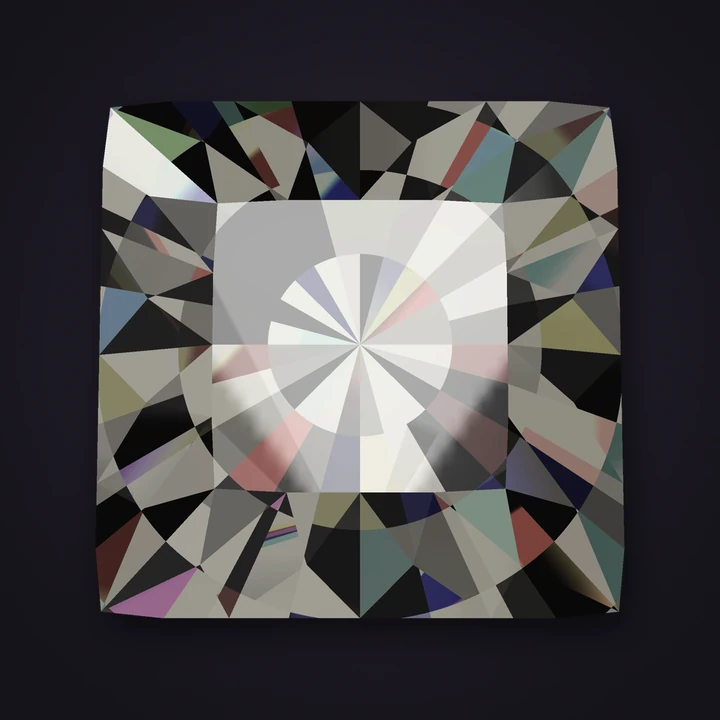
Princess Cut Engagement Rings: A Practical Guide
A princess engagement ring features a square diamond with sharp corners and a brilliant facet pattern, giving crisp geometry and plenty of sparkle. Its main weakness is the corners, so the setting matters as much as the stone.
On this page
- Where the princess cut came from
- Princess cut carat to mm sizes
- What to look for in a princess cut diamond
- Best settings for a princess engagement ring
- Wedding bands with a princess cut
- Princess cut pros and cons
- Princess cut ring prices
- Is a princess cut right for your lifestyle?
- Designing a princess cut ring in Ring Studio
- Princess vs other square shapes
- Facets
- Usually 57 to 76, depending on the number of chevron rows
- Length-to-width
- 1.00 to 1.05 for a true square
- Look
- Sharp square outline, bright cross-shaped sparkle
- Best settings
- 4 prong with V or claw tips at the corners, bezel, channel-set bands
- Price vs round
- Typically lower per carat than a comparable round
Where the princess cut came from
The square modified brilliant was developed in the 1960s and 1970s and refined into the princess cut most people know by around 1980. It answered a demand for a square stone with the sparkle of a brilliant rather than the hall-of-mirrors look of step cuts. By the 1990s it was the second most popular engagement shape.
Today it is less common than ovals or rounds, which works in its favour if you want something clean and architectural that won't look like every other ring at the party.
Princess cut carat to mm sizes
Princess cuts carry a lot of weight in their deep pavilion, so they look smaller across than rounds of the same carat. The diagonal, though, is long, which is why a princess can look big when set with a point facing up the finger.
| Carat | Approx. side length | Approx. diagonal |
|---|---|---|
| 0.50 ct | 4.4 mm | 6.2 mm |
| 0.75 ct | 5.0 mm | 7.1 mm |
| 1.00 ct | 5.5 mm | 7.8 mm |
| 1.50 ct | 6.3 mm | 8.9 mm |
| 2.00 ct | 6.9 mm | 9.8 mm |
| 3.00 ct | 7.9 mm | 11.2 mm |
All figures are approximate and assume a well-proportioned square stone.
What to look for in a princess cut diamond
- Squareness: a ratio of 1.00 to 1.04 looks square to the eye. Above about 1.05, it starts to look rectangular.
- Depth: roughly 64 to 75%. Princess cuts are naturally deep, but very deep stones look small.
- Table: about 64 to 75% is common.
- Corners and girdle: avoid extremely thin girdles at the corners, and check the report for existing chips or naturals there.
- Inclusions near the corners: a feather close to a corner is the one inclusion that can affect durability, so weigh it more heavily than a crystal in the middle.
- Colour: princess cuts show colour slightly more in the corners than rounds do; G to H in white metal is a common choice.
The single most useful thing you can do for a princess ring is make sure every corner sits under metal. A beautiful stone with an exposed corner is one bump away from a chip.
Best settings for a princess engagement ring
Four prongs at the corners
The standard solitaire uses four prongs, one at each corner. Ideally these are V-shaped tips that wrap the point. Ring Studio doesn't offer a V-tip option, but claw tips on a 4 prong head give the closest look; mention V-prongs to your jeweller. The four prong guide shows how prongs affect the outline.
Compass or kite set
Turn the square 45 degrees and set prongs at north, south, east and west, and a princess becomes a diamond shape. It looks bigger and very graphic. See compass set engagement rings.
Bezel
A full bezel protects all four corners and suits a minimalist, modern look, at the cost of a little sparkle from the sides.
Halo
A square halo makes the centre look noticeably larger and adds some protection to the corners.
Wedding bands with a princess cut
Princess cuts pair well with straight bands because their square outline sits naturally beside a straight edge. Channel-set princess or baguette bands echo the geometry. A plain band in platinum or white gold keeps things crisp, and a full eternity band adds sparkle.
Princess cut pros and cons
| Pros | Cons |
|---|---|
| Bright sparkle in a geometric outline | Sharp corners need protection |
| Usually good value per carat | Looks smaller across than a round of the same weight |
| Long diagonal can look large when set point-up | Less fashionable than in the 2000s |
| Pairs neatly with straight bands | Corners can snag on knitwear in a high setting |
Princess cut ring prices
Princess cuts usually cost less per carat than rounds of similar quality because more of the rough crystal is kept. Lower current demand can also mean better value. Lab-grown princess cuts are widely available and much cheaper than natural, as lab-grown prices have dropped sharply. Prices vary by retailer and metal; see diamond price per carat for context.
Is a princess cut right for your lifestyle?
Princess cuts reward a little care. If your partner works with their hands, goes climbing or does a lot of gardening, choose a setting that encloses the corners, such as a bezel or a halo, and keep the head low. A princess also suits people who prefer a modern, tailored look: it pairs naturally with white metals, knife edge bands and straight-sided wedding bands. On shorter fingers, a princess set with a corner pointing up the finger (the compass orientation) adds length; on longer fingers, the standard square orientation looks balanced. For broader advice, read engagement rings for an active lifestyle.
Designing a princess cut ring in Ring Studio
Princess is one of the free shapes in Ring Studio.
- Choose Princess from the stone tray and set the carat.
- Use a 4 prong head and set prong tips to claw so each corner is covered.
- Try a bezel for a protective, modern look, and compare it with the prong version.
- Add baguette side stones for a geometric three stone design.
- Pick a knife edge or plain band; platinum and white gold suit the crisp lines.
The compass setting, which turns the prongs to north, south, east and west, is available with Pro. Once you have a design, share a ring code or screenshots with your jeweller so they can recreate it.
Princess vs other square shapes
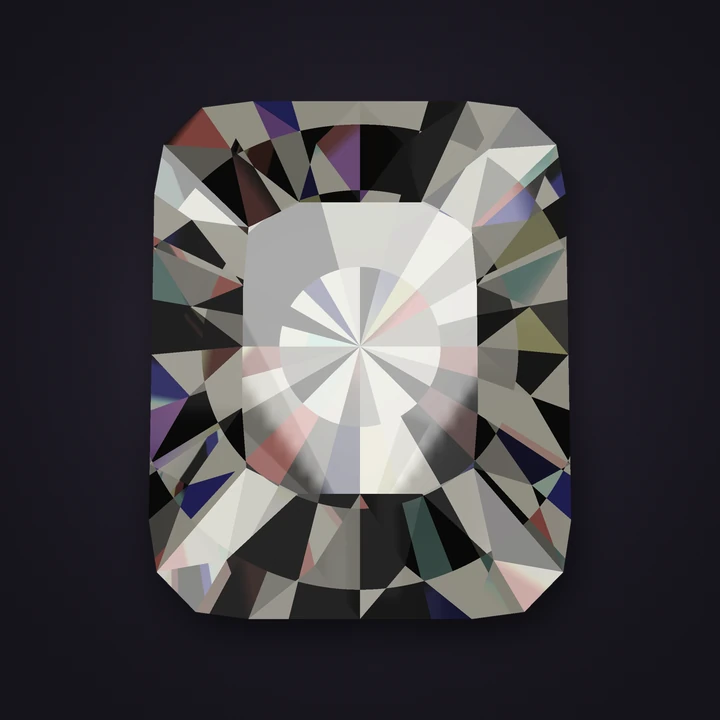
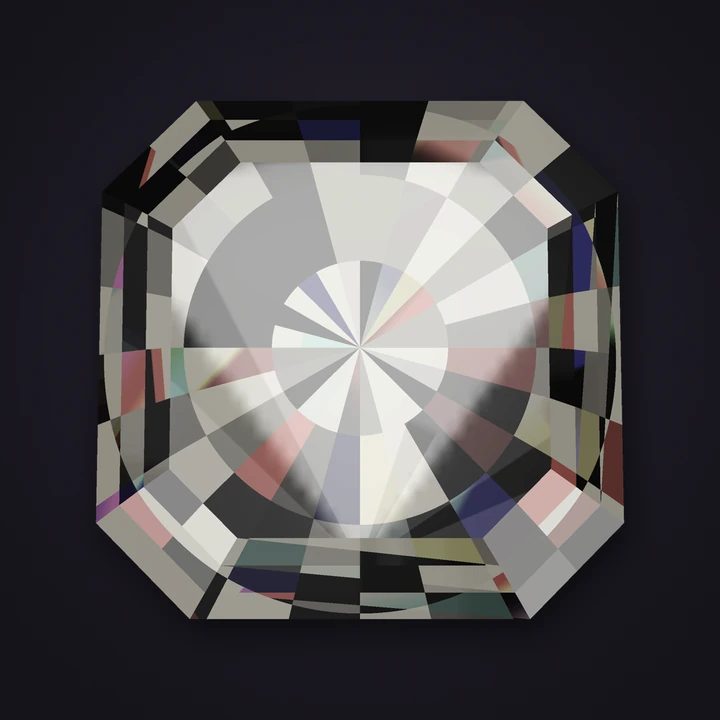
A princess sparkles like a brilliant; an Asscher shows step-cut flashes; a radiant clips the corners for durability. If you are also considering a softer square, read princess vs cushion.
Frequently asked questions
How big is a 1 carat princess cut diamond?
Roughly 5.5 x 5.5 mm. It looks a little smaller than a 6.5 mm round across, but because it is square, its diagonal measures closer to 7.8 mm.
Do princess cut diamonds chip easily?
Their pointed corners are the most vulnerable part and can chip if knocked. Setting the stone with prongs that cover each corner, such as V-shaped tips, greatly reduces the risk.
Are princess cut diamonds cheaper than round?
Yes, generally. The princess cut keeps more of the original rough crystal than a round, so similar quality stones usually cost less per carat.
Are princess cut engagement rings out of style?
They were most popular in the 1990s and 2000s, and fewer couples choose them today than ovals or rounds. That makes a princess feel more distinctive, and clean modern settings keep it current.
What wedding band goes with a princess cut ring?
A straight channel-set or pavé band in the same metal is the classic pairing, and square or princess-cut eternity bands echo the geometry.
Keep reading
 Radiant Cut Engagement RingsRadiant engagement ring guide: square vs rectangular ratios, carat-to-mm sizes, depth and colour tips, best settings, ba…
 Asscher Cut Engagement RingsAsscher engagement ring guide: the windmill pattern, step-cut clarity and colour advice, carat-to-mm sizes, Art Deco set…Compass Set Engagement RingsCompass set engagement rings place four prongs at north, south, east and west. See how it changes the look, which shapes…Four Prong Engagement RingsFour prong engagement rings show the most stone with the least metal. Learn how secure they are, which shapes suit four …Eternity Engagement RingsEternity engagement ring guide: full vs half eternity, using an eternity band as the engagement ring, stone shapes, sizi…