 Ring Studio
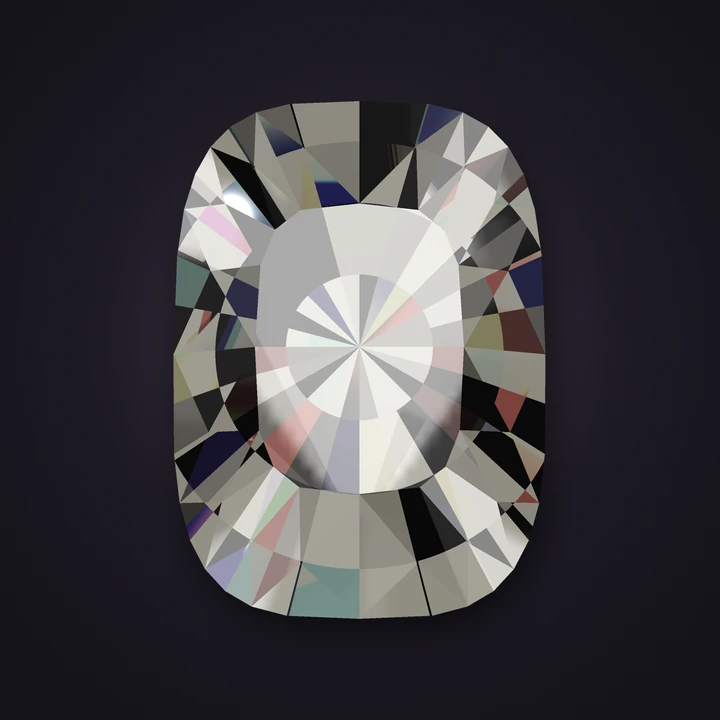
Stone shapes
Elongated Cushion Engagement Rings
An elongated cushion engagement ring stretches the soft, pillow-shaped cushion cut into a rectangle with rounded corners. It looks longer on the finger than a square cushion and has a more vintage, substantial feel than an oval.
On this page
- Why choose an elongated cushion
- Elongated cushion size chart
- What to look for in an elongated cushion
- Settings that suit an elongated cushion
- Wedding bands for elongated cushions
- Elongated cushion pros and cons
- Elongated cushion prices
- Who should choose an elongated cushion?
- Design an elongated cushion ring in Ring Studio
- Elongated cushion or oval?
- Facets
- Typically 58 to 64 (cushion modified brilliant)
- Length-to-width
- 1.15 to 1.40; most popular 1.20 to 1.35
- Look
- Rectangular pillow with soft corners, chunky or crushed-ice sparkle
- Best settings
- 4 prong (often double claw), hidden halo, solitaire, three stone
- Price vs round
- Usually lower per carat; long, well-cut stones command a premium within the shape
Why choose an elongated cushion
For years, square cushions were the norm and longer ones were a by-product of whatever rough crystal the cutter had. As oval rings became popular, people began asking for the same flattering length in a cushion. The result is a stone with the presence of an oval but more structure: flatter sides, slightly squared shoulders and that pillowy softness at the corners.
It suits people who find ovals a little too sleek and radiants a little too sharp. It also looks particularly good in yellow gold and with vintage-inspired details.
Elongated cushion size chart
These approximate dimensions assume a ratio around 1.25 and typical cushion depth. Real stones vary by several tenths of a millimetre.
| Carat | Approx. L x W | Notes |
|---|---|---|
| 0.50 ct | 5.4 x 4.4 mm | Fine and understated |
| 0.75 ct | 6.2 x 5.0 mm | Good everyday size |
| 1.00 ct | 6.8 x 5.4 mm | Similar length to a 1.1 ct round's diameter |
| 1.50 ct | 7.8 x 6.2 mm | Clearly elongated on the hand |
| 2.00 ct | 8.5 x 6.8 mm | A substantial, vintage-looking centre |
| 3.00 ct | 9.8 x 7.8 mm | Bold; best with a sturdy 4 or 6 claw head |
What to look for in an elongated cushion
Because the cut is not standardised, your eye matters more than the report.
Ratio and outline
Between 1.20 and 1.30 reads clearly elongated without looking like a radiant. Check the corners are equally rounded and the long sides are gently curved, not straight or bulging. Asymmetry is common and easier to spot in elongated stones.
Colour retention
Like all cushions, elongated cushions hold colour, and length concentrates it at the ends. In white metal, G or H is a typical safe range; in yellow gold, I or J often looks fine. The diamond colour chart explains why.
Depth and spread
Depths above about 70% make the stone look small for the weight. Ask for the mm measurements and compare them with the table above.
Bow-tie and facet pattern
Elongated cushions can show a mild bow-tie. Crushed ice faceting tends to blur it; chunkier antique-style faceting gives bolder flashes but more visible contrast.
If a stone is listed as "cushion brilliant" or "cushion modified brilliant", both can be elongated. The ratio, which you can work out by dividing length by width on the report, is what tells you.
Settings that suit an elongated cushion
- Four claw prongs at the corners: the most popular solitaire look; double prongs strengthen it and add vintage detail.
- Hidden halo: a ring of pavé below the stone gives a sparkle from the side while keeping the clean outline. See hidden halo engagement rings.
- Classic halo: increases spread and suits a more glamorous style.
- Three stone with trapezoids or tapered baguettes: step-cut sides contrast well with the soft cushion.
- East-west: less common than with ovals, but a sideways elongated cushion makes a striking modern ring.
Wedding bands for elongated cushions
A low four-prong solitaire usually sits flush against a straight band. With a halo or a high basket, a slightly curved band avoids a gap. A thin eternity band matches the sparkle; a plain band in the same metal keeps the cushion centre stage. The wedding band stack designer lets you test both.
Elongated cushion pros and cons
| Pros | Cons |
|---|---|
| Lengthens the finger like an oval | Harder to find in good symmetry |
| Softer than a radiant, more structured than an oval | Holds colour, especially at the ends |
| Rounded corners are less prone to chipping | Deep cuts can hide weight |
| Strong vintage character | Smaller choice of stones than ovals |
Elongated cushion prices
Elongated cushions generally price below rounds of similar quality. Within the shape, attractive ratios and good symmetry can cost more than square cushions because fewer stones are cut that way. Lab-grown elongated cushions are easier to find in specific ratios, and lab-grown prices have fallen sharply. All figures vary by retailer and market; our ring price estimator helps compare.
Who should choose an elongated cushion?
Elongated cushions suit people who love vintage character but want the flattering length that ovals made popular. They look especially good on medium to long fingers, where the slightly squared shoulders read clearly, and in yellow gold, which complements any warmth in the stone. Because the corners are rounded, they are a sensible choice for active hands, though a low setting is still wise. If you are buying as a surprise, the shape is a safe middle ground between a classic cushion and an oval: it rarely feels too plain or too trendy.
Design an elongated cushion ring in Ring Studio
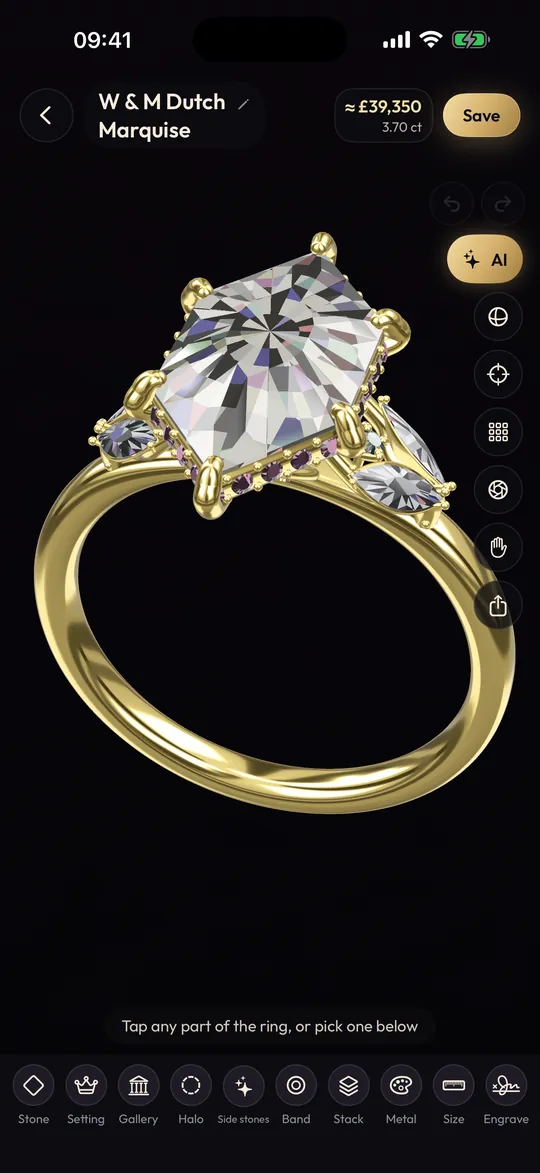
The elongated cushion is one of the Pro shapes in Ring Studio, sitting alongside the free square cushion.
- Choose Elongated cushion in the stone tray and set the carat.
- Start with a 4 prong head and try claw or double tips.
- Add a hidden halo, and compare an open gallery with a tulip gallery from the side.
- Switch to the square Cushion or Oval on the same setting to see which outline you prefer.
- Stack a matching band to check it sits flush.
Elongated cushion or oval?
Ovals give a little more brilliance and a sleeker line; elongated cushions give more character and a softer rectangle. Our oval vs elongated cushion comparison goes through sparkle, size and price. If you prefer straight sides, look at the radiant.
Frequently asked questions
What ratio is an elongated cushion?
Cushions with a length-to-width ratio of roughly 1.15 or above are usually called elongated. Most popular stones sit between 1.20 and 1.35; beyond about 1.40 they start to look like a rectangle with soft corners.
Is an elongated cushion the same as a radiant?
No. A radiant has straight sides and clipped corners, while an elongated cushion has gently curved sides and rounded corners. The two can look similar from a distance, but the cushion outline is softer.
Does an elongated cushion look bigger than a square cushion?
Slightly. Spreading the same weight over a longer outline gives more visible length, though cushions are often cut deep, so check the mm measurements rather than relying on carat.
Do elongated cushions have a bow-tie?
Some do, though usually less dramatically than ovals or pears. Look for a stone whose centre stays lively as it moves rather than showing a fixed dark band.
Is an elongated cushion good for small hands?
Yes. The length makes fingers look slimmer, and a 1 carat stone around 6.8 x 5.4 mm is substantial without overwhelming a petite hand.
Keep reading
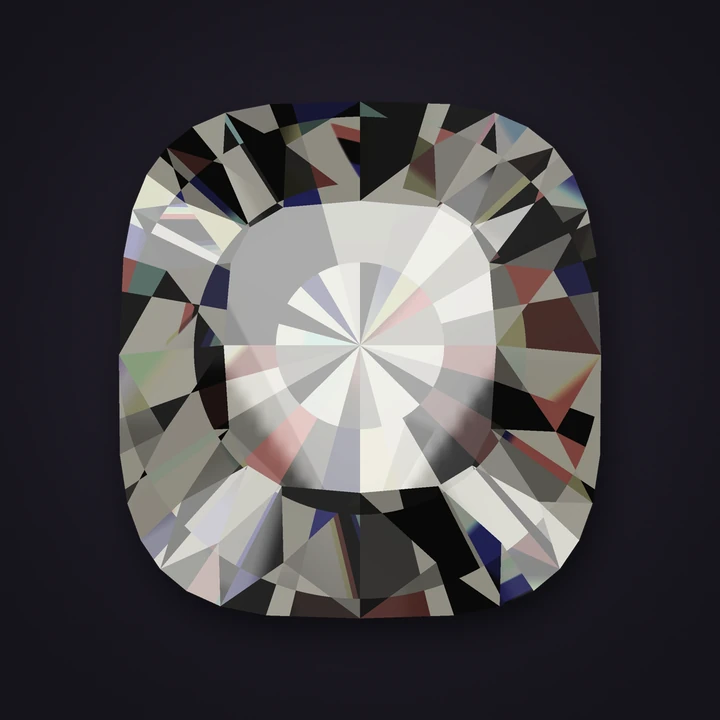 Stone shapesCushion Engagement Rings: Choosing the Right Cushion CutCushion engagement ring guide: crushed ice vs antique cushions, carat-to-mm sizes, colour tips, settings and wedding ban…
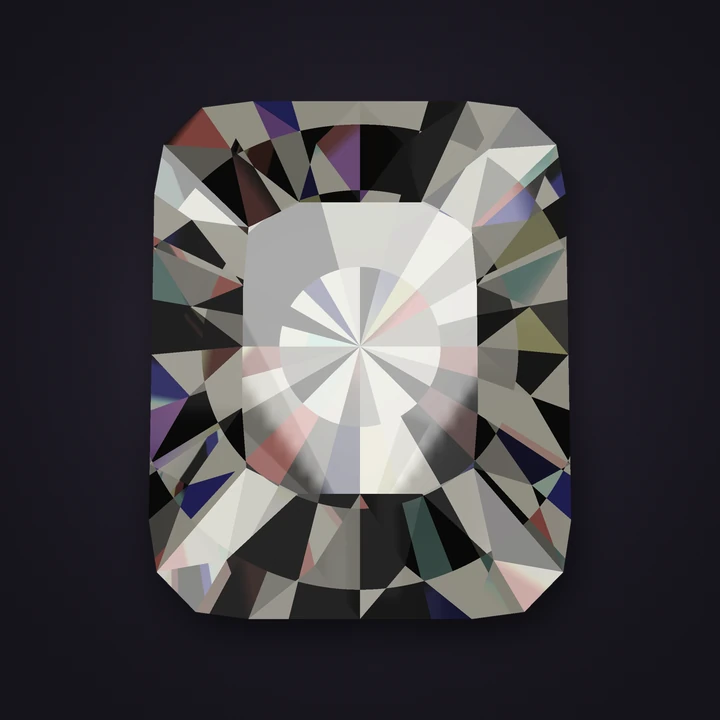 Stone shapesRadiant Cut Engagement RingsRadiant engagement ring guide: square vs rectangular ratios, carat-to-mm sizes, depth and colour tips, best settings, ba…
 Stone shapesOval Engagement Rings: How to Choose a Beautiful OneOval engagement ring guide: the best length-to-width ratio, judging the bow-tie, carat-to-mm sizes, flattering settings …Settings & stylesHidden Halo Engagement RingsHidden halo engagement ring explained: where the stones sit, which shapes suit it, how it looks from above vs the side, …GuidesBest Engagement Ring for Your Hand ShapeFind the best engagement ring for your hand shape: the stone shapes, sizes, settings and band widths that flatter short,…