 Ring Studio
Pavé Engagement Rings
A pavé engagement ring has small diamonds set closely along the band, held by tiny beads of metal so the surface looks paved with sparkle. It adds brilliance around the centre stone without changing its outline.
On this page
- What it is
- Small diamonds set closely along the band
- Types
- Classic, micro-pavé, French (V-cut), U-cut, scalloped
- Coverage
- Shoulders only, half-way or full eternity
- Durability
- Moderate; small stones can loosen
- Resizing
- Possible with half-way pavé; hard with full
- Cost impact
- Adds stones and skilled labour to the band
How pavé is set
The setter drills a row of seats into the band, drops in small round diamonds, then raises tiny beads of metal from the surrounding band with a graver and pushes them over the edges of the stones. Each bead often holds two neighbouring stones. Done well, the metal almost disappears and the band looks like a continuous strip of light.
The type of cut around the stones changes the look:
- Classic or bead pavé: visible round beads between stones; traditional.
- Micro-pavé: smaller stones and beads set under a microscope; finer sparkle.
- French pavé (V-cut): a V-shaped cut below each stone exposes more of its side; very bright.
- U-cut or scalloped pavé: a curved cut-out under each stone; delicate and lacy from the side.
- Shared prong: tiny prongs instead of beads; slightly more open.
How far should the pavé go?
| Coverage | Look | Practical notes |
|---|---|---|
| Shoulders only (a few stones each side) | A hint of sparkle near the head | Easy to resize; least maintenance |
| Half-way (top half of the band) | Looks fully set when worn | The best balance for most people |
| Three-quarter | More sparkle from the side | Limited resizing |
| Full eternity | Sparkle all the way round | Very hard to resize; underside wear |
The underside of a band takes the most abrasion from desks, handles and bags, so stones there wear their beads down fastest. Most jewellers recommend half-way pavé for an engagement ring you will wear every day. For the fully set version, see eternity engagement rings.
Which centre stones suit a pavé band?
Pavé works with every shape. With round, oval and cushion stones it continues the brilliant sparkle down the band. With step cuts such as emerald and asscher, a pavé band adds a contrasting glitter to the stone's broad flashes. If you want the ring to feel cohesive, combine a pavé band with a halo or hidden halo.
Effect on apparent size
A pavé band does not add face-up width to the centre stone, but a thin pavé band (around 1.8 to 2 mm) makes a strong contrast with the stone and keeps the eye on the head. A wide pavé band can compete with a small centre stone. If size matters, keep the band slim and taper it towards the head.
Durability and care
Pavé is the main source of lost-stone repairs in engagement rings. Reduce the risk by taking the ring off for weights, gardening and heavy cleaning, and by having it checked each year. Use warm soapy water and a soft brush; avoid home ultrasonic cleaners. White gold pavé rings need re-rhodium plating periodically to keep the band bright; read about rhodium plating. Our care guide has a full routine.
Resizing a pavé ring
A jeweller resizes by cutting the band at the bottom and adding or removing metal. With half-way pavé there is plain metal to cut, so a size up or down is routine. With full pavé, cutting means removing and resetting stones, and stretching risks loosening them. Get the size right first; see ring resizing costs.
Wedding bands and pavé
A pavé engagement ring pairs naturally with a pavé or plain wedding band of the same width. Two pavé bands rubbing together can wear the beads on both rings, so some people choose a plain band for contrast and durability.
How much does pavé add to the cost?
Pavé adds the cost of the small stones and the setter's time. As an estimate, a half-way pavé band typically adds from a couple of hundred to several hundred pounds over a plain band in gold, more in platinum or with higher-quality stones. Prices vary by retailer, quality and market. Our pavé vs plain band comparison lays out the trade-offs.
Designing a pavé ring in Ring Studio
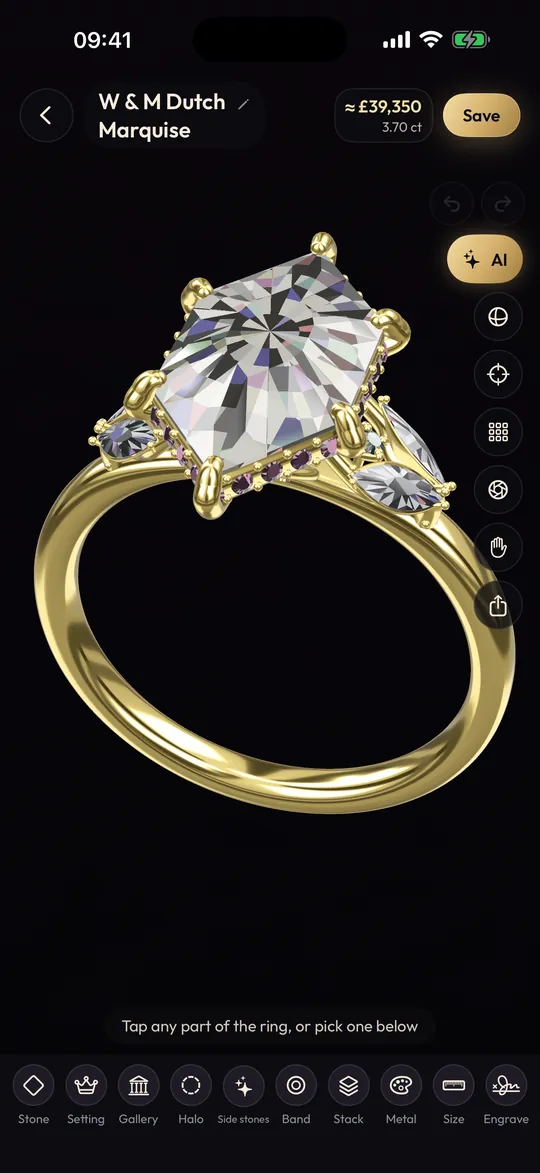
- Choose a centre stone, carat and setting.
- Pick pavé as the band type, then set it straight or tapered and adjust the width.
- Rotate to the side to see how the pavé meets the head.
- Add a hidden halo or classic halo if you want sparkle continuing into the head.
- Open the wedding band stack to try a plain or pavé band alongside it.
Ring Studio is free to start, with Pro unlocking the AI, try-on and advanced options. You can also ask the AI for "an oval on a thin pavé band in white gold" and adjust from there.
Is a pavé band right for you?
Pavé suits anyone who wants extra sparkle without changing the shape of the head. If you are hard on your hands, keep it to the shoulders or choose a plain band. To compare the two directly, see pavé vs plain band.
Frequently asked questions
What is a pavé engagement ring?
It is a ring whose band is set with rows of small diamonds held by tiny metal beads or prongs. The name comes from the French for paved, because the stones cover the surface like cobbles.
Do pavé diamonds fall out?
They can, occasionally, because each one is held by very small beads. Good setting work, avoiding knocks and an annual check keep losses rare, and replacing a single pavé stone is usually inexpensive.
Can a pavé ring be resized?
Usually by a size or so, but resizing a band that is pavé all the way round is difficult and can loosen stones. Half-way pavé leaves plain metal at the bottom for the jeweller to work on.
What is the difference between pavé and micro-pavé?
Micro-pavé uses smaller stones, often under about 1.5 mm, set under magnification for a finer, more continuous sparkle. Standard pavé uses slightly larger stones and shows more distinct beads.
Does a pavé band make the centre stone look bigger?
Not directly, but it adds sparkle and draws light up to the head, which makes the whole ring look brighter. A thin pavé band contrasts well with the centre stone and can make it read a little larger.