 Ring Studio
Comparisons
Oval vs Pear Diamond
In oval vs pear, both shapes look big for their weight and flatter the finger. The oval is symmetrical, point-free and easy to wear; the pear is bolder and more distinctive, but its tip needs protecting. A 1 ct oval is about 7.7 x 5.7 mm, a 1 ct pear about 8.0 x 5.5 mm.
On this page
- Oval vs pear comparison table
- The real difference: one end is a point
- Size: almost a draw
- Durability and setting
- Symmetry and sparkle
- Stacking with a wedding band
- Which way the pear points
- Price and colour: small but real differences
- Choose oval if... choose pear if...
- Compare them side by side in Ring Studio
Oval vs pear comparison table
| Oval | Pear | |
|---|---|---|
| Look | Balanced, elegant, symmetrical end to end | Teardrop; romantic and more striking |
| 1 ct size | About 7.7 x 5.7 mm | About 8.0 x 5.5 mm |
| Durability | No points | One point that can chip if unprotected |
| Maintenance | Standard prong checks | Check the tip prong regularly |
| Sparkle | Bright; bow-tie common | Bright; bow-tie possible across the shoulders |
| Price per carat | Lower than round | Similar to oval, lower than round |
| Wedding band fit | Straight bands sit fairly close | Often needs a curved or contoured band to sit flush |
| Best for | Daily wear and a classic-modern look | A distinctive ring with personality |
The real difference: one end is a point
A pear is essentially an oval at one end and a marquise at the other. That single point changes three things: how the ring looks, how carefully it must be set, and how a wedding band fits next to it. Everything else, including the brilliant faceting, the elongated finger-flattering line and the strong size per carat, is shared.
Size: almost a draw
Both shapes spread well. A 1 ct oval is typically around 7.7 x 5.7 mm; a pear of the same weight around 8.0 x 5.5 mm, depending on ratio. The pear's taper concentrates attention on its length, so some people find it looks slightly larger; others find the oval's fuller ends more substantial. Pear ratios vary more, roughly 1.45 to 1.75, so a slender pear can look much longer than any oval. See the carat size chart for other weights.
Durability and setting
An oval has nothing to snag or chip, so it is relaxed in four or six prongs. A pear's point is thin and is the most likely place to chip if knocked against a door frame or worktop. Jewellers protect it with a V-shaped prong over the tip or a full or partial bezel. Ring Studio does not have a dedicated V-prong, but you can preview the protective look with a bezel setting or claw prong tips, then ask your jeweller to add a V-tip in the final CAD.
Symmetry and sparkle
Both can show a bow-tie. In pears, symmetry is the bigger buying issue: the two shoulders should match and the point should sit on the centre line. A lopsided pear is very noticeable once set. Look for a gently rounded head, a straight point, and evenly curved sides. Ovals are more forgiving because their two ends match.
Stacking with a wedding band
A straight band can sit close to an oval, especially in a low setting. A pear's head and point usually leave an awkward gap, so many pear rings are paired with a curved or contour band or a chevron. Plan the band at the same time as the engagement ring.
Which way the pear points
Tradition puts the point towards the fingertip, which makes the finger look longer. Pointing it towards the wrist is a modern twist. You can also set either shape east-west for a sideways, contemporary look.
Price and colour: small but real differences
Oval and pear diamonds tend to be priced similarly per carat, and both cost less than a round. A well-made pear with good symmetry can command a premium over a lopsided one, so do not compare on grades alone. See diamond price per carat for typical ranges.
Colour behaves a little differently. Both shapes can concentrate a tint at the ends, and the pear's point is where colour often shows first. If you are buying in white metal, staying within the near-colourless range helps; in yellow gold you can go a grade or two warmer. Our diamond colour chart shows where the differences become visible.
On the hand, both shapes lengthen the finger. A pear with its point towards the fingertip has the strongest slimming effect; an oval is gentler and more balanced. See our guide to the best ring for your hand shape.
Choose oval if... choose pear if...
- Choose oval if you want a practical everyday ring, an easy wedding band pairing, and a balanced shape that is easy to source well-cut.
- Choose pear if you want something more individual and dramatic, you love the teardrop symbolism, and you are happy to protect the tip and plan a curved band.
Compare them side by side in Ring Studio
Oval and pear are both free shapes in Ring Studio, so you can design both versions of the same ring and flick between them.
- Design your ring with an oval at the carat you are considering.
- Switch the stone to pear and rotate to check the point from the side; try a bezel or claw tips for protection.
- Add a wedding band in a stack (Pro), choosing a curved or chevron contour for the pear so it sits flush.
- Compare the live price estimates and try each design on your hand with the camera (Pro).
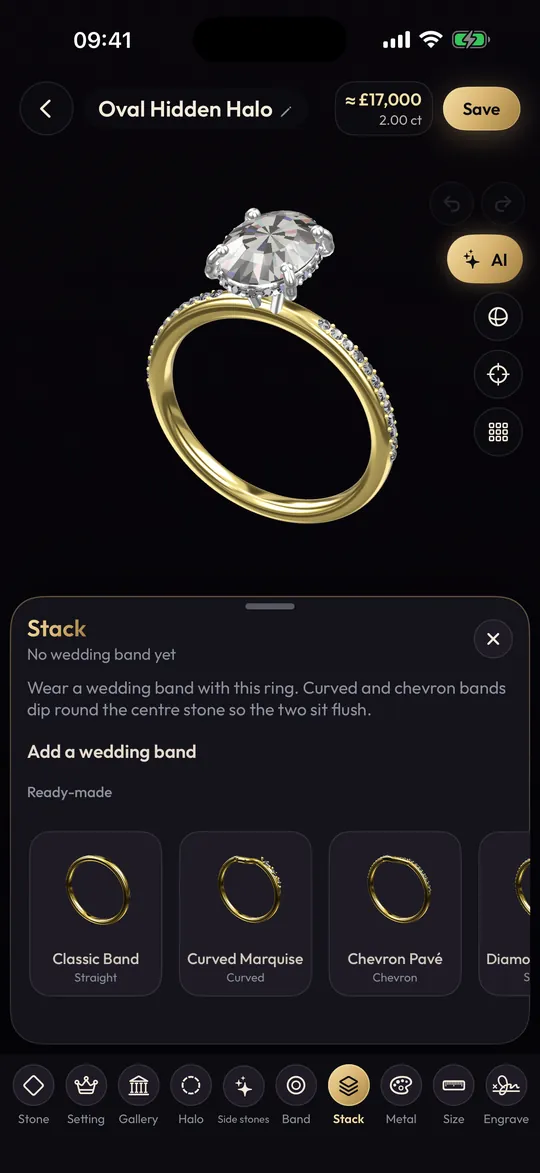
Our wedding band stack designer page explains the band options in more detail.
Verdict
The oval is the easier, more practical choice: no points, simple band pairing and a look that suits almost everyone. The pear is the more distinctive one and looks just as large, but needs a protected tip, careful attention to symmetry and a curved band. If you love the pear, those are small prices to pay.
Frequently asked questions
Does a pear or oval diamond look bigger?
They are very close. A 1 ct pear is typically a little longer, about 8.0 x 5.5 mm, while a 1 ct oval is around 7.7 x 5.7 mm. Both look larger than a 6.5 mm round of the same weight.
Which way should a pear diamond point?
Traditionally the point faces towards the fingertip, which lengthens the finger. Pointing it towards the wrist is a personal choice and perfectly acceptable.
Is a pear diamond more fragile than an oval?
Its point is the vulnerable part and can chip if knocked. A prong or bezel over the tip protects it. Ovals have no points, so they are more forgiving.
Do pear diamonds have a bow-tie?
Yes, pears can show a bow-tie across the widest part, just like ovals. Look for one where the dark area is faint and moves with the light.
Is a pear diamond cheaper than an oval?
They are often similarly priced per carat and both cost less than a round. Exact prices depend on the individual stone, its symmetry and grades.
Keep reading
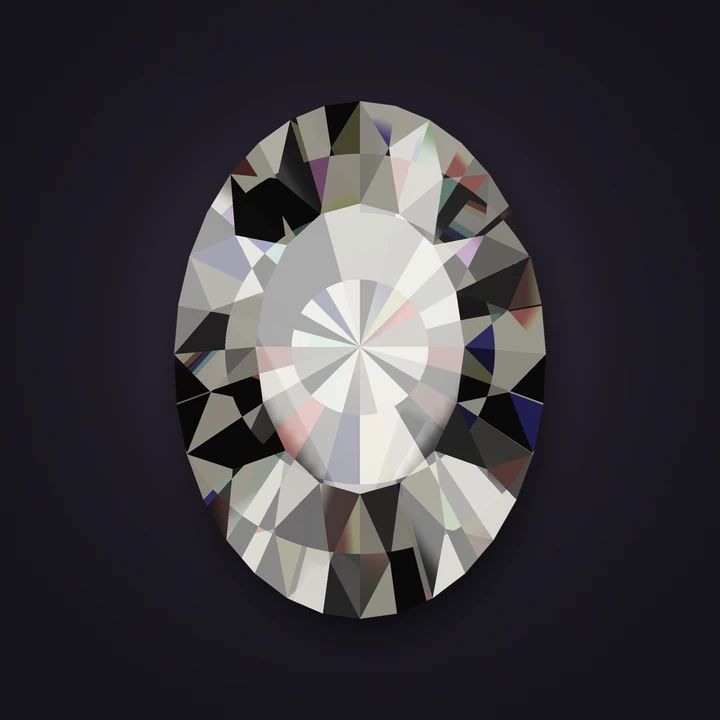 Stone shapesOval Engagement Rings: How to Choose a Beautiful OneOval engagement ring guide: the best length-to-width ratio, judging the bow-tie, carat-to-mm sizes, flattering settings …
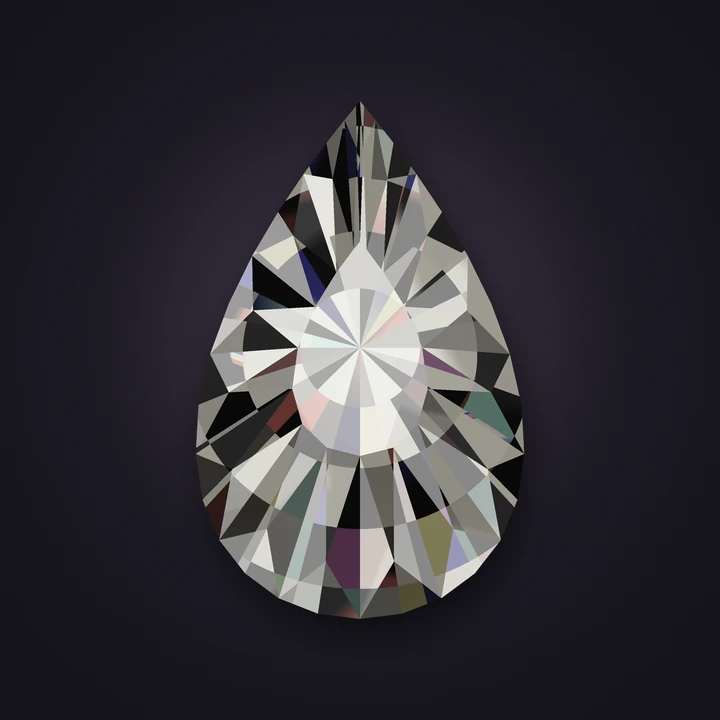 Stone shapesPear Engagement Rings: Choosing a Teardrop DiamondPear engagement ring guide: the best ratios, judging the bow-tie and shoulders, carat-to-mm sizes, protecting the tip, b…ComparisonsOval vs Round DiamondOval vs round diamond: a 1 ct oval measures about 7.7 x 5.7 mm against 6.5 mm for a round, and usually costs less per ca…ComparisonsPear vs Marquise DiamondPear vs marquise diamond: the marquise looks biggest per carat but has two fragile points; the pear has one point and a …GemstonesDiamond Carat Size Chart (mm)Diamond carat size chart in mm: approximate sizes for round diamonds from 0.25 to 5 carats, plus oval, cushion, princess…Settings & stylesBezel Set Engagement RingsBezel set engagement ring guide: full vs half bezels, how a metal rim affects sparkle and size, best shapes, durability,…