 Ring Studio
Round Engagement Rings: The Complete Buyer's Guide
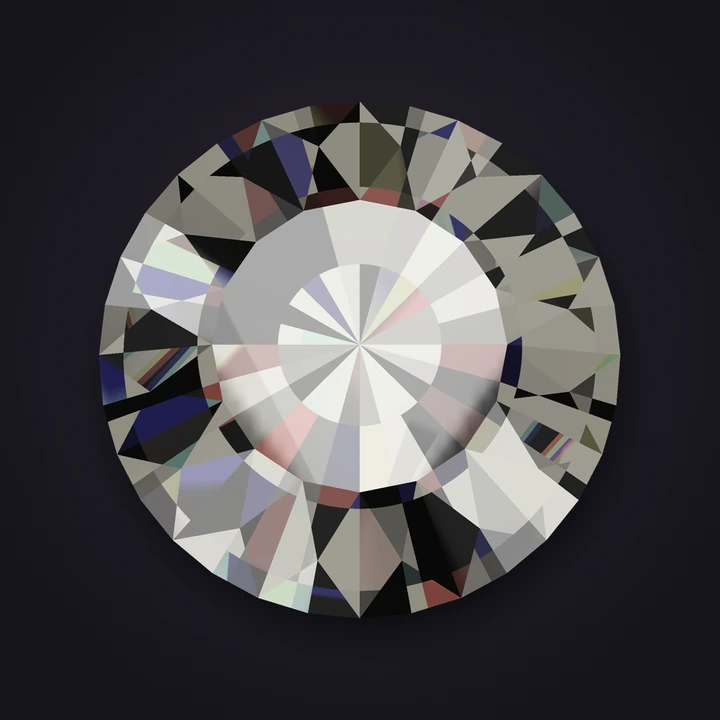
A round engagement ring uses the round brilliant cut, the most fiery and most popular diamond shape. Here is how big each carat looks, which proportions to insist on, and the settings that suit it best.
On this page
- Why the round brilliant is still the most chosen shape
- Round diamond carat to mm size chart
- Ideal proportions: what to look for on the certificate
- Best settings and prong placement for a round diamond
- Wedding bands that pair well with a round ring
- Pros and cons of round engagement rings
- How much does a round engagement ring cost?
- Design a round engagement ring in Ring Studio
- Is a round engagement ring right for you?
- Facets
- 57 or 58 (58 counts a culet facet)
- Length-to-width
- 1.00 to 1.02, essentially perfectly round
- Look
- Maximum sparkle, balanced fire and brilliance, classic outline
- Best settings
- 4 or 6 prong solitaire, halo, bezel, three stone
- Price vs round
- The benchmark: rounds carry the highest price per carat of any shape
Why the round brilliant is still the most chosen shape
The modern round brilliant is the most researched cut in the diamond trade. Its proportions were refined through the twentieth century, building on Marcel Tolkowsky's 1919 work on how light travels through a diamond, until cutters could predict sparkle with real precision. No other shape returns light as consistently, which is why a round engagement ring looks bright even in dim restaurant lighting.
It is also the most forgiving shape to live with. There are no points to chip, no corners to snag, and every setting style ever invented was designed with a round centre in mind. If you are unsure what your partner likes, a round solitaire is the least risky choice you can make.
Round diamond carat to mm size chart
Carat is weight, not size, so the figure that matters on the hand is diameter. These are typical face-up measurements for well-cut stones. Treat them as approximate: depth and cut quality move them by a tenth of a millimetre or more.
| Carat weight | Approx. diameter | How it reads on the hand |
|---|---|---|
| 0.50 ct | 5.1 to 5.2 mm | Delicate, suits slim fingers and fine bands |
| 0.75 ct | 5.8 to 5.9 mm | Noticeably fuller, a popular sweet spot |
| 1.00 ct | 6.4 to 6.5 mm | The classic reference size |
| 1.50 ct | 7.3 to 7.4 mm | Clearly a statement stone |
| 2.00 ct | 8.0 to 8.2 mm | Bold; needs a sturdy head |
| 3.00 ct | 9.2 to 9.4 mm | Very large; covers much of a size L finger |
Notice that doubling the weight from 1 to 2 carats adds only about 1.6 mm of diameter. If size on the hand matters more than the number on the certificate, our carat size chart and carat size visualiser show how small steps compare.
Ideal proportions: what to look for on the certificate
Rounds are the only shape that receives a full cut grade from GIA, so you can lean on the report more than with fancy shapes. Start with an Excellent (GIA) or Ideal (other labs) cut, then check the numbers:
- Table: roughly 54 to 58% of the diameter.
- Total depth: roughly 59 to 62.5%. Deeper stones hide weight underneath and face up smaller.
- Crown angle around 34 to 35 degrees and pavilion angle around 40.6 to 41 degrees, the combination most associated with strong fire and brilliance.
- Girdle: thin to slightly thick. Very thin girdles chip; very thick ones waste weight.
- Polish and symmetry: Excellent or Very Good.
Because the brilliant pattern scatters light so well, rounds are good at hiding small inclusions and faint warmth. Many buyers are happy with G or H colour and VS2 or SI1 clarity, provided the stone is eye-clean. Our cut grades explainer and guide to the 4Cs go deeper.
Two diamonds with identical 4C grades can look very different. If you can, compare light performance images or see the stones in person before committing, especially above 1 carat.
Best settings and prong placement for a round diamond
Almost every setting suits a round, so the decision is really about look and lifestyle.
Four prongs vs six prongs
Four prongs placed at the diagonals show the most diamond and give a clean, modern look, though from above the outline reads very slightly square. Six prongs make the stone look rounder and spread the load, which helps on larger stones or hands that knock things. The four vs six prong comparison covers the trade-offs in detail.
Halo, hidden halo and bezel
A classic halo of small diamonds can make a round look roughly half a millimetre to a millimetre larger across. A hidden halo sits under the stone and only shows from the side. A bezel wraps the edge in metal, the most protective option for active hands, at the cost of a little light.
Metal choice
If you buy a D to G diamond, white metals keep it looking icy; platinum is the most durable for prongs. Yellow or rose gold heads warm the stone slightly, which can let you drop a colour grade without anyone noticing.
Wedding bands that pair well with a round ring
A round solitaire on a low setting will usually sit flush against a straight band, which is the simplest pairing. If the head sits low or has a hidden halo, a curved or contour band may be needed to avoid a gap. Pavé bands match a round centre's sparkle; a plain polished band lets it stand alone. For more ideas, browse ring stacking ideas.
Pros and cons of round engagement rings
| Pros | Cons |
|---|---|
| Brightest, most consistent sparkle of any shape | Highest price per carat |
| Hides inclusions and tint well | Very common, so less distinctive |
| No points or corners to chip | Looks smaller than an elongated stone of the same weight |
| Suits every setting and band style | Easy to overpay for a high grade you cannot see |
How much does a round engagement ring cost?
As of late 2026, a 1 carat natural round with a strong cut, G to H colour and VS to SI clarity typically sells for roughly £3,000 to £7,000 for the stone alone in the UK, with wide variation by retailer and certificate. Lab-grown rounds of similar appearance cost a fraction of that, as lab-grown prices have fallen sharply in recent years. Add the setting: a simple gold or platinum solitaire mount is often a few hundred to around £1,500. These are estimates only; see the 1 carat ring price guide for a fuller breakdown.
Design a round engagement ring in Ring Studio
Round is one of the free shapes in Ring Studio, so you can build and compare options without paying anything.
- Open the 3D designer and choose Round from the stone tray.
- Set the carat and pick natural or lab-grown diamond; the live price estimate updates as you go.
- Try 4 prong against 6 prong, and switch prong tips between round, claw and petite to see how much stone each shows.
- Add a hidden halo or classic halo, choose an open, rail or tulip gallery, then pick a plain, pavé or knife edge band.
- Rotate to the side view to check how high the stone sits before you think about a wedding band.
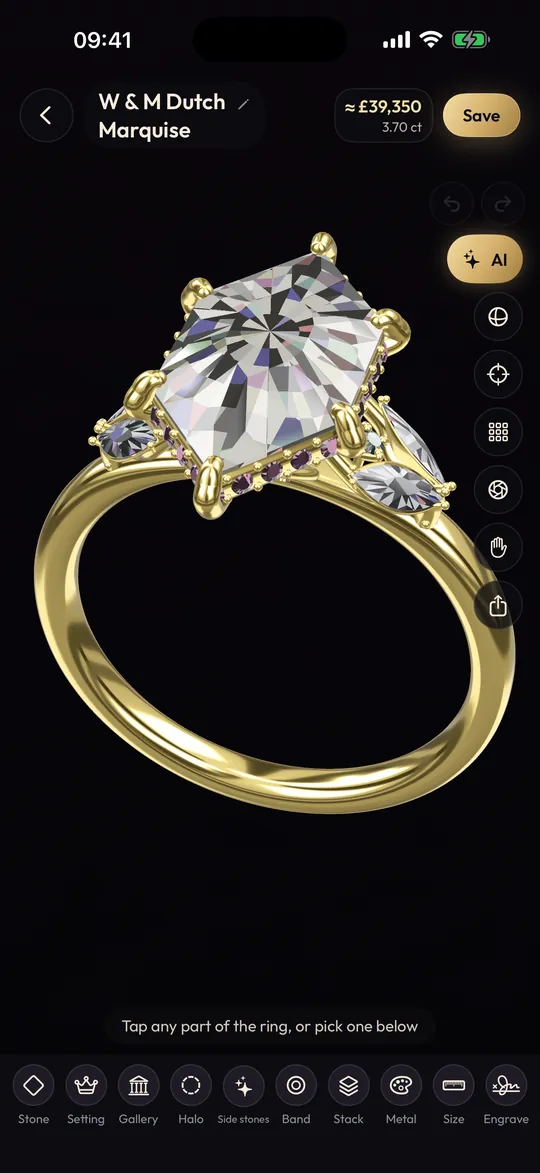
If you would rather describe it, the AI ring designer can build "a 1.5 carat round solitaire on a thin platinum band with a hidden halo" in seconds, and you can refine it by chatting. When you are happy, take screenshots or a ring code to your jeweller, who will recreate it in their own CAD.
Is a round engagement ring right for you?
Choose a round if you want the most sparkle per pound of quality, a shape that never dates, and the widest choice of settings. Look at an oval or cushion if you want more spread for the money or a softer, more individual look; the oval vs round and cushion vs round comparisons lay the differences side by side.
Frequently asked questions
How big is a 1 carat round diamond?
A well-cut 1 carat round brilliant measures about 6.4 to 6.5 mm across. A deep, poorly cut stone of the same weight can face up nearer 6.2 mm, so diameter is worth checking on the certificate.
Why are round diamonds more expensive than other shapes?
Cutting a round from rough crystal wastes more material than most fancy shapes, and demand for rounds is the highest of any shape. Both push the price per carat above ovals, cushions and pears of similar quality.
Is 4 or 6 prongs better for a round diamond?
Four prongs show more of the diamond and look slightly square from above; six prongs hold the stone more securely and keep the outline looking perfectly round. Both are sound choices on a well-made head.
What cut grade should I buy for a round diamond?
For round brilliants, aim for Excellent on a GIA report or Ideal or Excellent from other labs. Cut has the biggest effect on sparkle, so it is the last grade to compromise on.
Do round diamonds hide colour and inclusions well?
Yes. The brilliant facet pattern masks small inclusions and a hint of body colour better than step cuts, so many buyers comfortably choose G to H colour and VS2 to SI1 clarity.