 Ring Studio
Platinum Engagement Rings
Platinum engagement rings are naturally white, dense and hypoallergenic, and most are about 95% pure platinum. They cost more than gold, but need no plating and keep their metal when they wear.
On this page
- What platinum engagement rings are made of
- Why jewellers like platinum for holding diamonds
- The platinum patina: feature or flaw?
- Platinum vs white gold vs palladium
- How much does a platinum engagement ring cost?
- Which diamonds and stones look best in platinum?
- Designing a platinum engagement ring in Ring Studio
- Looking after a platinum ring
- Purity
- Usually 950 (about 95% platinum)
- Colour
- Naturally white with a grey lustre; no plating
- Feel
- Heavy and dense
- Wear pattern
- Develops a satin patina; metal moves rather than wears away
- Allergy
- Hypoallergenic for almost everyone
What platinum engagement rings are made of
Platinum is a rare, dense precious metal from the platinum group, which also includes palladium and rhodium. In jewellery it is used at very high purity. The common standard in the UK, Europe and the US is platinum 950: 95% platinum and 5% of another metal, often ruthenium, iridium or cobalt, chosen to make it easier to cast and polish.
You will occasionally see 900 or 850 platinum, especially in older or Asian-made pieces. They are still platinum, just with more alloy. Your hallmark tells you which you have.
Compare that to gold, where an 18k ring is 75% gold. Platinum's high purity is a big part of why it is hypoallergenic and why it costs more.
Why jewellers like platinum for holding diamonds
Platinum is not harder than gold in the scratch-resistant sense. In fact it scratches readily. What makes it special is that it is tough and dense. When platinum is knocked, the metal tends to push aside rather than chip off, and prongs bend rather than snap. That is why many jewellers make claws or the head of a ring in platinum, even on a gold band.
For a ring worn every day for decades, that means less metal lost over time. A gold prong that has thinned may need re-tipping sooner; a platinum one typically lasts longer between repairs. It is a good choice for six prong and claw prong settings where each prong is slim.
The platinum patina: feature or flaw?
New platinum is polished to a bright white shine. Within weeks of daily wear it picks up fine scratches that give it a soft, satin look called a patina. Some people love this lived-in look, and in Europe it is often seen as a sign of quality. Others prefer the mirror finish and have the ring polished every year or two. Both are fine: polishing platinum mostly smooths the metal rather than removing it.
If you want a ring that never changes, no metal will do that. Platinum's change is a softening of the surface; white gold's change is the plating wearing to show a warmer colour beneath. Pick the one that bothers you less.
Platinum vs white gold vs palladium
| Platinum 950 | 18k white gold | Palladium 950 | |
|---|---|---|---|
| Natural colour | White-grey | Creamy grey (plated white) | White-grey, slightly darker |
| Plating needed | No | Usually rhodium | No |
| Weight | Heaviest | Medium | Light |
| Hypoallergenic | Yes | Depends on alloy | Yes |
| Relative price | Highest | Middle | Varies with market |
See platinum vs white gold and palladium vs platinum for the detail.
How much does a platinum engagement ring cost?
Platinum's price per gram has at times been lower than gold's, yet platinum rings usually cost more. Three reasons: a platinum ring uses more metal by weight because the metal is denser; it is 95% pure rather than 58% or 75%; and it is harder to cast and finish, so labour costs are higher. A simple platinum solitaire mounting typically costs noticeably more than the same design in 18k gold. The size of the gap depends on the design weight, the retailer and metal markets, which move constantly. Our platinum ring price guide has ranges to plan with.
Which diamonds and stones look best in platinum?
Platinum's white colour shows a diamond's body colour honestly. Top colour D to F stones look their iciest here, and a halo or pavé band in platinum gives an all-white, glittering look. If your diamond is in the warmer H to J range, platinum is still fine, but you may notice the warmth more than in yellow gold.
Blue sapphires look especially vivid in platinum, which is one reason the metal is popular for sapphire rings. Emeralds and rubies also look clean and modern against it.
Designing a platinum engagement ring in Ring Studio
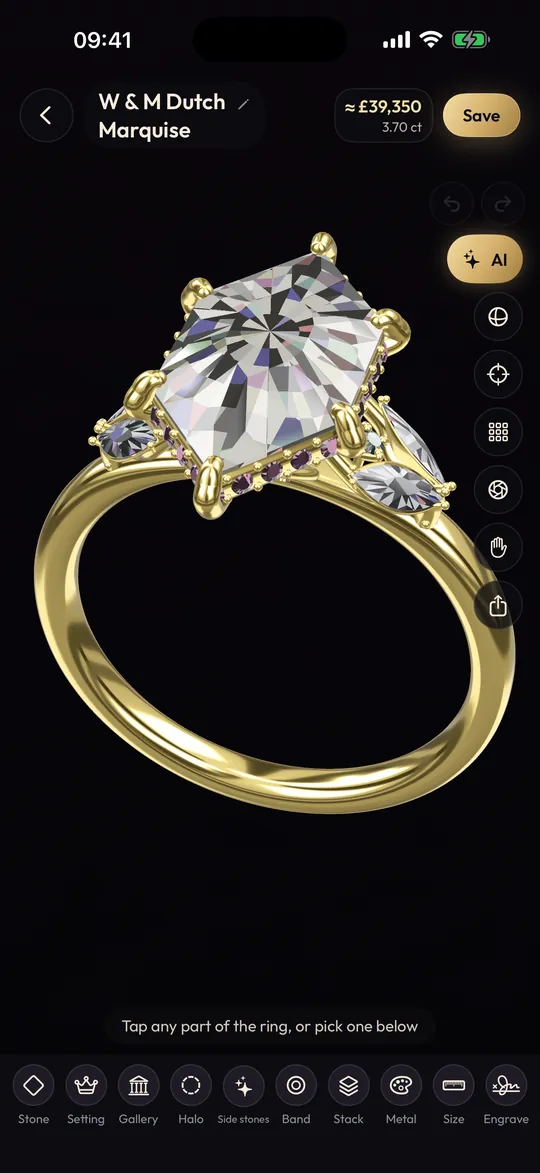
Ring Studio includes platinum as a metal option, so you can build the whole ring in 3D and see how a white metal frames your stone.
- Pick your shape and carat, for example a 1.5 ct emerald cut.
- Choose platinum, then compare a 4 prong, 6 prong or bezel setting.
- Add a hidden halo or pavé band if you want extra sparkle from the side.
- Switch to white gold to compare the live price estimate. The two look very similar on screen, which mirrors real life.
- Try a two-tone version with Pro: platinum head with a yellow gold band.
When you are happy, share the ring code with your jeweller and ask them to quote it in platinum 950. Remember the app is a design and visualisation tool; the jeweller remakes the design in their own CAD for casting.
Looking after a platinum ring
- Clean it with warm soapy water and a soft brush; platinum does not tarnish.
- Have prongs checked once a year, even though they wear slowly.
- Polish when you want the bright finish back, or leave the patina.
- Store it apart from other rings; platinum can scuff softer gold bands and vice versa.
Our engagement ring care guide covers cleaning in more depth, and rings for an active lifestyle looks at which settings survive hard wear best.
Frequently asked questions
What does 950 platinum mean?
It means 950 parts per thousand, or 95%, is platinum. The remaining 5% is usually ruthenium, iridium or cobalt, which make it workable. 950 is the most common standard for platinum jewellery.
Does platinum scratch?
Yes, platinum scratches like any metal. The difference is that a scratch on platinum mostly displaces the metal rather than removing it, so the surface develops a soft matte patina over time instead of thinning quickly.
Is platinum worth it over white gold?
If you want a white metal that never needs plating, is hypoallergenic and holds prongs securely for decades, platinum is usually worth the extra. If budget is tight, white gold looks almost the same on day one.
Is platinum heavier than gold?
Yes. Platinum is denser than 18k gold, so the same ring design feels noticeably heavier and uses more metal by weight, which is part of why it costs more.
Can platinum rings be resized?
Yes, platinum can be resized, though it needs a jeweller with the right equipment because it melts at a much higher temperature than gold. Expect resizing to cost a little more than for gold.