 Ring Studio
Claw Prong Engagement Rings
A claw prong engagement ring finishes each prong in a tapered, pointed tip that hooks over the stone like a talon, rather than a rounded bead. The pointed claws cover less of the stone and give the ring a sharp, refined outline.
On this page
- What it is
- A prong tip that tapers to a point (eagle claw), not a round bead
- Look
- Sharp, delicate, shows more of the stone
- Snagging
- Depends on finish; well-polished claws lie flat
- Wear
- Thin points wear sooner; check and re-tip as needed
- Best shapes
- Oval, pear, marquise, round, cushion
- In Ring Studio
- Claw is one of four prong tip options
Claw vs prong: clearing up the words
If you shop in the UK, Ireland or Australia, you will hear jewellers say claw where Americans say prong. A "four claw solitaire" and a "four prong solitaire" are the same ring. So when someone searches for a claw prong engagement ring, they usually mean one of two things: a standard prong setting, or a ring with specifically pointed claw tips. This page is about the second, the tip shape, which is a design decision in its own right. For general prong counts, see our pages on four prong and six prong rings, and the ring design glossary.
What makes a claw tip different?
A standard round prong ends in a small dome that sits on the crown of the stone. A claw tip is filed so that it narrows as it curves over the girdle, finishing in a point that follows the angle of the crown. From above, each claw looks like a thin sliver of metal rather than a dot.
| Tip style | Shape | Stone coverage | Character |
|---|---|---|---|
| Round | Small dome | Moderate | Classic, soft, durable |
| Claw | Tapered point | Low | Sharp, sleek, modern |
| Petite | Very small, low | Low | Minimal, delicate |
| Double | A pair at each point | Higher | Decorative, vintage |
Why people choose claw tips
- More stone, less metal: the point covers a smaller area of the crown, so the stone's outline looks cleaner and fractionally larger.
- Directional elegance: on elongated shapes, claws angled along the length of the stone emphasise its line.
- A sharper silhouette: the ring looks crisp and tailored, which suits modern and minimalist designs.
Do claw prongs snag?
They can if they are poorly finished. A pointed tip that stands slightly proud of the stone will catch on wool, lace and hair. The fix is craftsmanship: the claw should be thinned and laid tight to the crown, then polished so the point has no burr. Run the ring gently over a pair of tights or a silk scarf when you collect it. If it catches, ask the jeweller to adjust it before you leave.
Security and maintenance
Tip shape does not make a setting insecure, but it changes how it ages. A claw holds the stone with the same wire as any prong; the difference is the thin end. Over years of contact with desks, door handles and gym equipment, a thin point wears through sooner than a rounded bead. That means:
- Have the claws checked every six to twelve months.
- Expect re-tipping a little sooner than with round tips. It is a routine job: the jeweller adds new metal and files a fresh point.
- Platinum claws tend to bend and move rather than wear away, while gold claws lose metal more readily. Either way, inspection is the safeguard. Our platinum vs white gold page explains more.
For an active lifestyle, consider claws on a lower head, or a bezel instead of prongs.
Best shapes for claw prongs
- Oval: four claws angled along the length make the stone look longer and sleeker. See oval rings.
- Pear: claws on the rounded end, with a V-prong protecting the point. See pear rings.
- Marquise: claws at the sides plus V-prongs on both points.
- Round: four or six claw tips give a refined twist on the classic solitaire.
- Cushion and radiant: claws on the corners look crisp and modern.
- Princess: claws are less suitable on the sharp corners; V-prongs are safer.
Designing a claw prong ring in Ring Studio
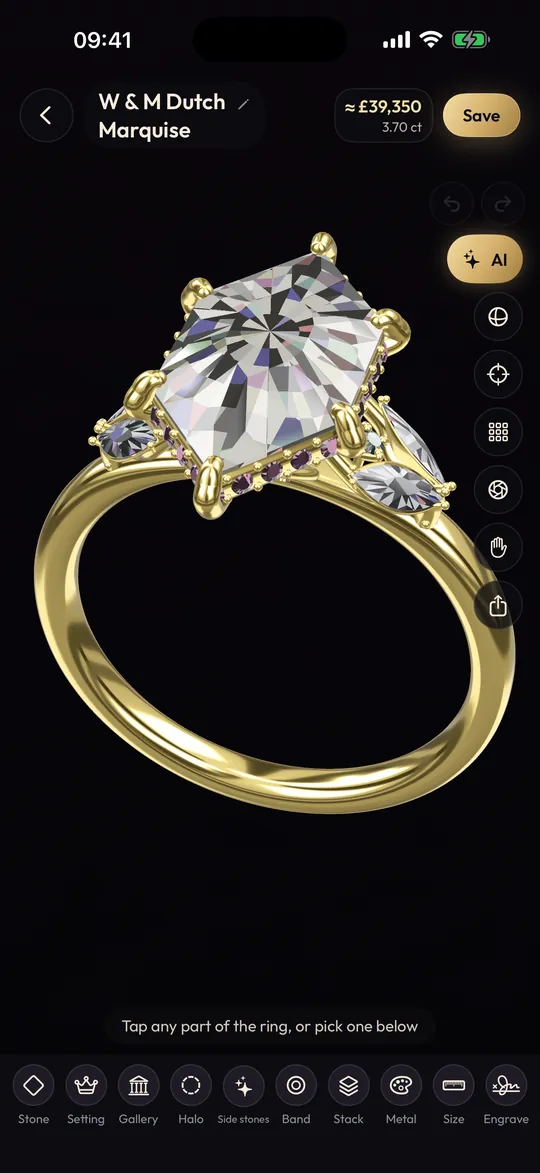
Ring Studio treats prong tips as their own choice, so you can try claw tips on any prong setting and compare them side by side with round, double and petite.
- Choose a stone, for example an oval at your target carat.
- Select a prong setting: 4, 5, 6 or 8 prong.
- Set the tips to claw. Zoom in from above, then rotate to the profile to see how the points sit.
- Switch to round tips and back to compare coverage on your exact stone.
- Add a band and metal; white metals make claws nearly vanish against a colourless diamond, yellow and rose gold make them a feature.
- Share the ring code so your jeweller sees exactly which tips you chose.
You can also ask the AI designer for "an oval solitaire with claw prongs on a thin platinum band" and refine it in conversation.
Should you choose claw tips?
Pick claw tips if you want a sleek, modern outline and as much visible stone as possible, especially on an oval, pear or round. Pick round tips if you want the most hard-wearing, low-fuss option, or double prongs if you would rather trade a little visibility for extra grip. Whatever you choose, regular checks are what keep a stone safe, as our ring care guide explains.
Frequently asked questions
What is the difference between claw and prong?
In the UK, claw is the everyday word for any prong, so a claw setting simply means a prong setting. In ring design, a claw tip or eagle claw specifically means a prong that tapers to a point instead of ending in a rounded bead.
Do claw prongs snag on clothes?
Pointed tips catch more readily than round ones if they are not finished well. A good jeweller tapers and polishes them so the point lies flat against the crown, which keeps snagging to a minimum.
Are claw prongs less secure than round prongs?
Not inherently. Security depends on the prong's thickness and how firmly it sits on the stone. Because the tip is thinner, it can wear through sooner, so regular checks and occasional re-tipping matter.
Which diamond shapes suit claw prongs?
Oval, pear, marquise and round stones look especially elegant with claw tips because the points follow the curves. They also work on cushions and radiants for a crisp, modern look.
What is an eagle claw prong?
Eagle claw is a common name for a claw tip: a prong that curves over the girdle and tapers to a sharp point, resembling a bird's talon. It is chosen to show more of the stone and add a sleek line.
Keep reading
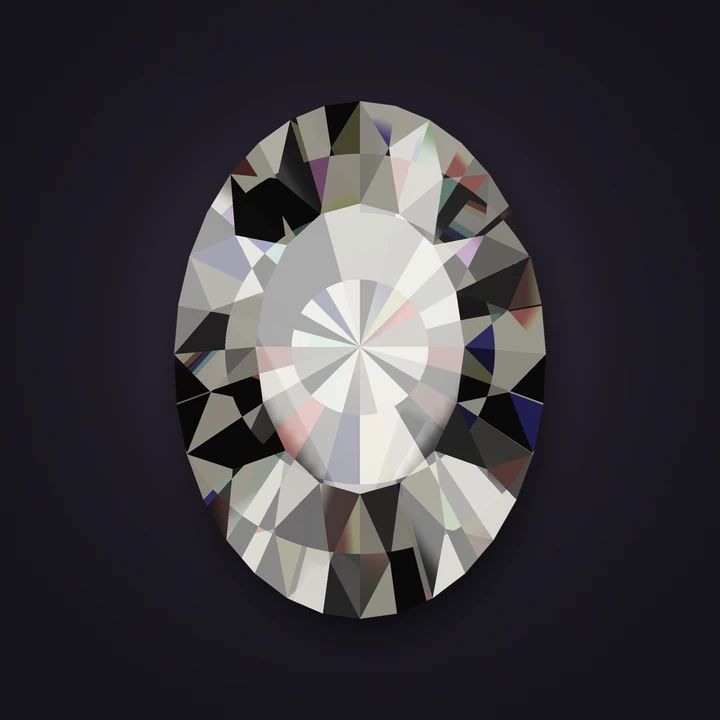 Oval Engagement Rings: How to Choose a Beautiful OneOval engagement ring guide: the best length-to-width ratio, judging the bow-tie, carat-to-mm sizes, flattering settings …
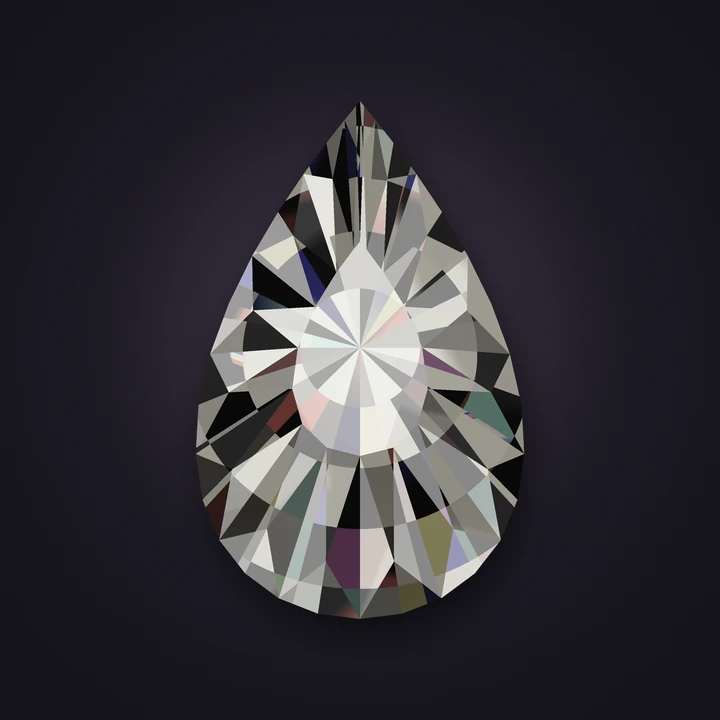 Pear Engagement Rings: Choosing a Teardrop DiamondPear engagement ring guide: the best ratios, judging the bow-tie and shoulders, carat-to-mm sizes, protecting the tip, b…Ring Design GlossaryA ring design glossary of 90+ terms from Asscher to yellow gold: settings, galleries, cuts, bands and diamond grading wo…