 Ring Studio
Four Prong Engagement Rings
A four prong engagement ring holds the centre stone with four claws, usually at the corners, so more of the stone is on show and less metal gets in the way. It is the cleanest, most open way to set a stone, at the cost of having no spare prong if one fails.
On this page
- Prongs
- Four, normally at the corners or diagonals
- Main appeal
- Maximum stone, minimum metal
- Weak point
- No spare prong: one failure can loosen the stone
- Best shapes
- Princess, cushion, radiant, emerald, asscher, oval
- Snagging
- Low with rounded or petite tips
- In Ring Studio
- 4 prong setting, plus compass for prongs at the cardinal points
What is a four prong engagement ring?
A four prong ring is the simplest way to hold a stone above a band. Four metal wires rise from the base of the head and bend over the girdle, gripping the stone at four points. On square and rectangular stones the prongs sit on the corners. On round and oval stones they sit on the diagonals, so from above you see a neat frame of four small tips.
The appeal is mostly visual. Less metal means more of the stone is visible and more light reaches it from the sides. It is the go-to setting for minimalist engagement rings and for small stones that benefit from every millimetre of exposure.
How much of the stone does four prong show?
More than any other prong count. Each prong covers a small arc of the girdle, so four prongs cover two-thirds of what six would. The difference is modest on a 1.5 carat stone and much clearer on a 0.4 carat one. If you are working to a budget and want the stone to look as large as possible, four prongs in the same metal colour as the stone (white metal with a colourless diamond) is a simple, effective choice.
Are four prong settings secure enough?
For most people, yes. Four prongs hold a stone firmly in daily wear, and countless rings have lasted decades this way. The honest caveat is redundancy. If one prong is bent back by a knock or worn through over years, the stone has only three points of contact and may tilt, rattle or fall out. With six prongs, the remaining five usually keep it in place.
You can reduce the risk in a few ways:
- Choose a sturdier prong gauge for larger stones (ask your jeweller what thickness they use).
- Keep the head at a moderate height so the stone is less exposed.
- Use V-prongs on any pointed corners.
- Have the tips checked every six to twelve months and re-tipped when they wear thin.
- Take the ring off for the gym, gardening and heavy lifting.
If you are especially hard on your hands, read our guide to rings for an active lifestyle, which also covers bezel settings.
Best stone shapes for four prongs
| Shape | Four prong fit | Notes |
|---|---|---|
| Princess | Excellent | Corners are fragile; four corner prongs (ideally V-shaped) protect them |
| Cushion | Excellent | Prongs sit on the rounded corners; double tips are also popular |
| Emerald and asscher | Excellent | Cut corners hold four prongs securely |
| Radiant | Excellent | Same logic as emerald, with more sparkle |
| Oval | Very good | Clean and modern; six prongs add security at the ends |
| Round | Good | Shows most stone, can read slightly square |
| Pear, marquise, heart | Needs care | Points need V-prongs, so counts are usually five or more |
Our guides to princess and cushion rings go into each in more depth.
Does a four prong ring snag?
Snagging is about tips, not numbers. Four prongs means fewer tips to catch, but each one is often a little bulkier. Rounded or petite tips that sit snugly on the crown rarely snag. Claw tips, which taper to a point, look sharp and elegant but catch knitwear more readily if not finished smoothly.
Variations on the four prong setting
- Compass set: the four prongs move to north, south, east and west. On square stones this turns the stone on point. See compass set engagement rings.
- Double prong: four positions, each with a pair of tips, giving eight tips in total for extra grip. See double prong rings.
- Claw tips: pointed, tapering tips for a crisper look. See claw prong rings.
- Rail or tulip gallery: joins or shapes the prongs below the stone for extra rigidity and a different profile.
Designing a four prong ring in Ring Studio
Four prong is a core setting in the free version of Ring Studio, so you can try it straight away.
- Choose a stone shape (the free shapes include round, oval, cushion, princess, emerald and more) and set the carat.
- Select 4 prong. Toggle to 6 prong and back while looking from the top to see exactly how much more stone four prongs reveal.
- Try the tip styles: round, claw, double and petite.
- Choose a gallery (open, rail or tulip) and look at the profile.
- Pick a band, width and metal. The live price estimate updates as you go.
- Save the design and share it with your jeweller.
The bottom line on four prongs
Four prongs are right if you want the stone to be the whole story, you have a square-cornered shape, or your stone is under about 0.7 carats. Look at six prongs, or double tips, if security is your top priority or you have a large round. And whichever you choose, the habit that matters most is getting the prongs checked regularly. For a direct comparison, see 4 prong vs 6 prong.
Frequently asked questions
Are four prong settings secure?
Yes, when they are well made and maintained. Four prongs hold a stone firmly, but there is no spare: if one prong bends or breaks, the stone can loosen quickly. Regular checks matter more than with six prongs.
Do four prongs make a round diamond look square?
Slightly, from some angles. Four prongs at the diagonals frame a round stone like a square, which some people like and others notice. Six prongs keep a round looking rounder.
What diamond shapes are best for four prongs?
Princess, cushion, radiant, emerald and asscher cuts suit four prongs perfectly because each corner gets a prong. Ovals and rounds also look excellent with four, especially in smaller sizes where less metal is better.
How often should four prong rings be checked?
Have a jeweller inspect the prongs every six to twelve months, and straight away if the ring catches on fabric, the stone looks tilted, or you have knocked it hard.
Is four prong or six prong better for a small diamond?
Four prong usually suits small diamonds better. Fewer prongs cover less of the stone's outline, so a 0.3 to 0.5 carat stone looks larger and cleaner.
Keep reading
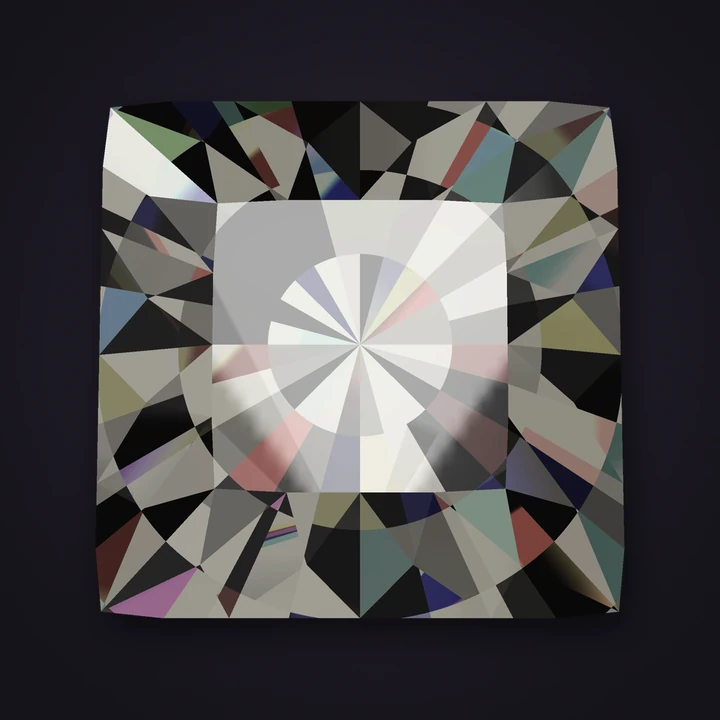 Princess Cut Engagement Rings: A Practical GuidePrincess engagement ring guide: square brilliant sizes in mm, protecting the corners, best prong settings, band pairings…
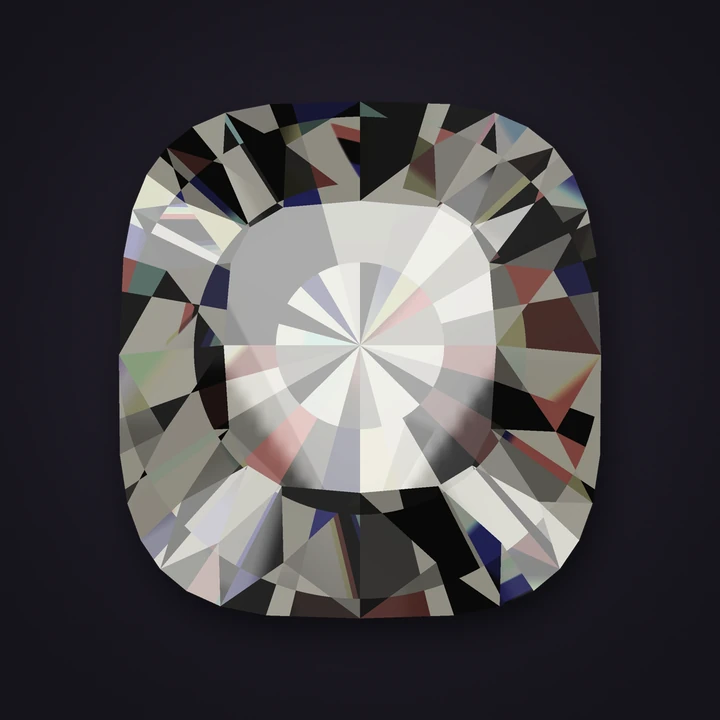 Cushion Engagement Rings: Choosing the Right Cushion CutCushion engagement ring guide: crushed ice vs antique cushions, carat-to-mm sizes, colour tips, settings and wedding ban…Minimalist Engagement RingsMinimalist engagement ring guide: thin bands, low settings, bezels and small stones, how to make a simple ring look inte…