 Ring Studio
Comparisons
Princess vs Cushion Cut
Princess vs cushion is sharp versus soft: the princess cut is a crisp, modern square with pointed corners and bright, even sparkle, while the cushion has rounded corners, a romantic vintage feel and bigger flashes of fire. At 1 ct both face up around 5.5 to 6.0 mm square.
On this page
Princess vs cushion: the comparison table
| Princess | Cushion | |
|---|---|---|
| Look | Sharp-cornered square, geometric and modern | Pillow-shaped square, soft and vintage |
| 1 ct size | About 5.5 x 5.5 mm (about 7.8 mm corner to corner) | About 5.5 to 6.0 mm square |
| Sparkle | Bright, even, close to a round | Big flashes or crushed ice; strong fire |
| Durability | Four pointed corners need protection | Rounded corners; no sharp points |
| Maintenance | Check corner prongs regularly | Standard; deep base collects dirt |
| Price per carat | Good value | Good value |
| Best for | Clean, contemporary and minimalist designs | Romantic, vintage and halo designs |
Two squares, two personalities
Both are square brilliant cuts, so at a glance they share a footprint. The princess is all straight lines and sharp corners, introduced in the late twentieth century and associated with clean, modern rings. The cushion's rounded corners and gently bowed sides trace back to antique cuts made for candlelight. Put simply: princess is architectural, cushion is soft.
Elongated versions exist for both, but the elongated cushion is far more common. If you want a long rectangle with crisp corners, look at the radiant cut instead.
Size and spread
At 1 ct, a princess is typically about 5.5 mm square and a cushion around 5.5 to 6.0 mm, with deeper cushions at the smaller end. The princess's corners extend its diagonal to roughly 7.8 mm, and set with its points north-south, it can look bigger than its side length suggests. Cushions trade a little face-up size for depth and fire. The carat size chart lists more sizes.
Durability: the corner question
This is the biggest practical difference. A princess's corners are thin points and the most likely place to chip. Every corner should sit under a protective prong; jewellers typically use V-prongs or claw prongs, and a bezel gives the most protection. A cushion's rounded corners are much less vulnerable, which makes it the easier choice for very active hands. If you choose a princess, have the prongs checked at least once a year.
Sparkle
A good princess delivers bright, lively sparkle, second only to the round among popular shapes, spread evenly across the square face with a characteristic cross pattern. Cushions are more variable: some show broad, dramatic flashes, others a fine crushed-ice glitter. Cushions also tend to show a little more body colour, so you may want to go one colour grade higher.
Price
Both shapes use their rough efficiently, so both sit at the lower end of price per carat. The princess was very fashionable in the early 2000s and less so now, which can mean good value. Choose the stone for its grades, cut quality and look; the shape alone will not decide the price.
Settings and style
A princess looks sharp in a four-claw solitaire, a minimalist band, or flanked by tapered baguettes. It can also be set on its point as a "kite" orientation. A cushion is the classic halo stone and suits double prongs, vintage engraved bands and three-stone designs. Both pair well with straight wedding bands thanks to their square outline.
Colour, clarity and wedding bands
Princess cuts hide inclusions reasonably well thanks to their brilliant faceting, but small flaws near the corners are worth avoiding because they can weaken an already vulnerable point. Cushions also hide inclusions well, especially crushed-ice versions, but tend to hold more body colour. See the clarity chart and colour chart to set sensible minimum grades.
Both square shapes sit nicely beside a straight wedding band, which makes them easy to pair. A princess suits a channel-set or plain band with clean lines; a cushion suits pavé or a delicate vintage band. If you work with your hands, the cushion's rounded corners are the safer daily choice; our guide to rings for an active lifestyle has more tips.
Choose princess if... choose cushion if...
- Choose princess if you want a crisp, modern, geometric look, bright even sparkle, and you are happy to protect the corners.
- Choose cushion if you prefer soft lines and vintage romance, love big fiery flashes, or want a square shape that is more forgiving to wear.
Compare them side by side in Ring Studio
Princess and cushion are both free shapes in Ring Studio, and switching between them on the same setting shows the corner difference instantly.
- Choose princess in the stone tray and build a four-prong solitaire; try claw prong tips to cover the corners.
- Swap the stone to cushion, then try double prongs or a classic halo (Pro) for a vintage version.
- Rotate each ring in 3D and look at the corners from the side.
- Compare the live price estimates and try both on your hand (Pro).
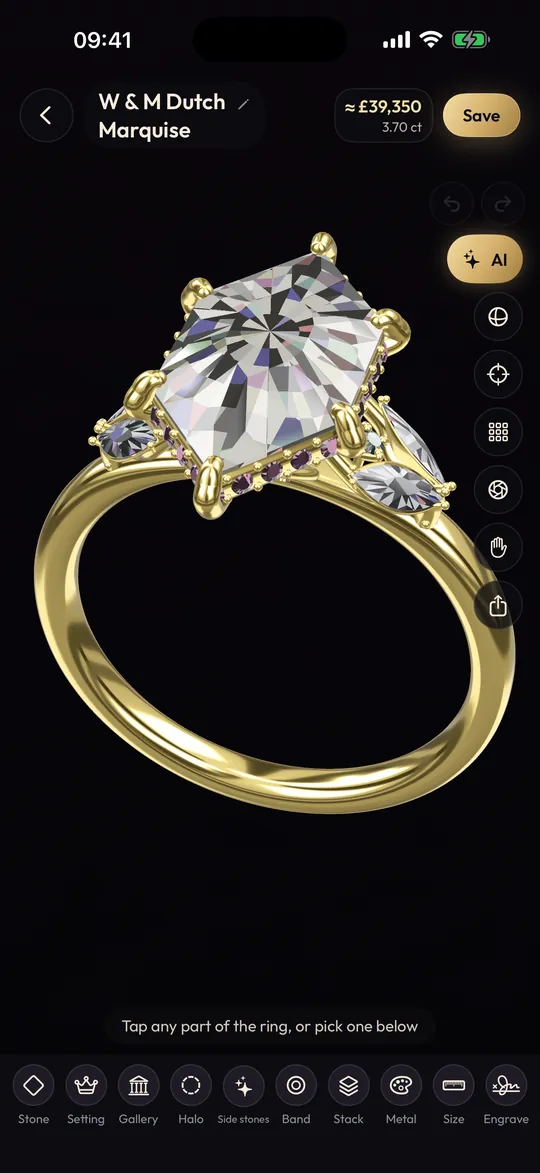
Not sure which suits you? The ring style quiz can point you in a direction.
Verdict
Choose the princess for clean, modern lines and bright sparkle, and give its corners proper protection. Choose the cushion for soft, romantic character and an easier life on the hand. Prices are similar, so let style and lifestyle decide.
Frequently asked questions
Which looks bigger, a princess or cushion cut?
They are similar. A 1 ct princess is about 5.5 mm square and a 1 ct cushion around 5.5 to 6.0 mm, depending on depth. The princess's sharp corners measure about 7.8 mm on the diagonal, which can make it look slightly larger.
Are princess cut corners fragile?
The pointed corners are the weak spots and can chip if knocked. Setting them under V-prongs, claws or a bezel protects them. Cushions have rounded corners and are more forgiving.
Is a princess cut cheaper than a cushion?
Both are among the better-value shapes per carat because they make efficient use of the rough. Price depends more on the stone's grades than on which of the two you choose.
Which sparkles more, princess or cushion?
A princess cut has a bright, even brilliance close to a round's. Cushions often show larger flashes and more visible fire. Which you prefer is personal.
Is princess cut outdated?
Princess cuts were hugely popular in the 1990s and early 2000s and are less fashionable now, which can mean good value. A crisp princess in a minimalist setting still looks very modern.
Keep reading
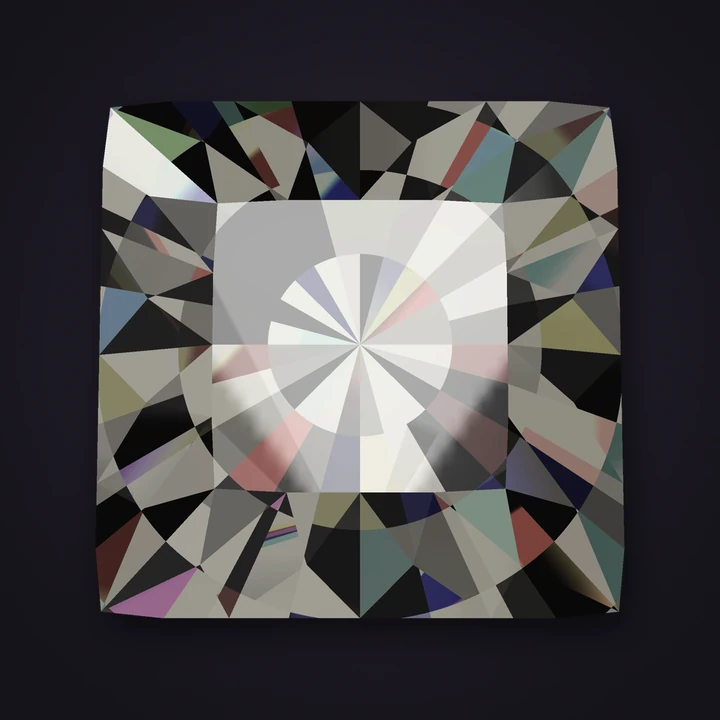 Stone shapesPrincess Cut Engagement Rings: A Practical GuidePrincess engagement ring guide: square brilliant sizes in mm, protecting the corners, best prong settings, band pairings…
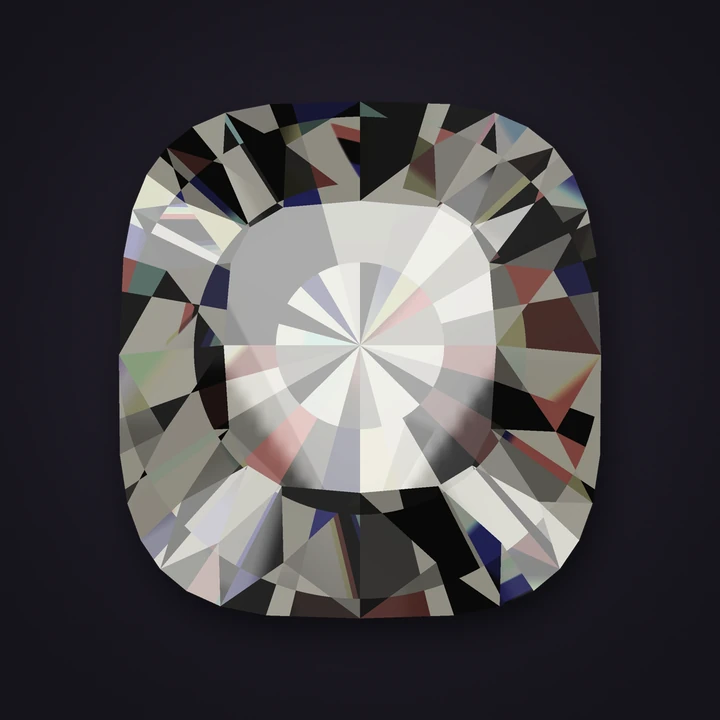 Stone shapesCushion Engagement Rings: Choosing the Right Cushion CutCushion engagement ring guide: crushed ice vs antique cushions, carat-to-mm sizes, colour tips, settings and wedding ban…ComparisonsCushion vs Round DiamondCushion vs round diamond: the round sparkles most and looks bigger per carat; the cushion costs less and has a soft, rom…ComparisonsEmerald Cut vs Asscher CutEmerald cut vs Asscher: both step cuts with a hall-of-mirrors look. The emerald is a long rectangle that looks bigger; t…Settings & stylesMinimalist Engagement RingsMinimalist engagement ring guide: thin bands, low settings, bezels and small stones, how to make a simple ring look inte…Settings & stylesClaw Prong Engagement RingsClaw prong engagement rings use tapered, pointed tips that show more stone and look crisp. Learn about snagging, securit…