 Ring Studio
Comparisons
Emerald Cut vs Asscher Cut
Emerald cut vs Asscher is rectangle versus square: both are step cuts with the same clean, mirror-like flashes, but the emerald cut is long, finger-flattering and looks bigger per carat, while the Asscher is a deep square with a windmill pattern and strong Art Deco character. A 1 ct emerald is about 7.0 x 5.0 mm; a 1 ct Asscher about 5.5 x 5.5 mm.
On this page
Emerald vs Asscher at a glance
| Emerald cut | Asscher cut | |
|---|---|---|
| Outline | Rectangle with cut corners (ratio about 1.3 to 1.5) | Square with large cut corners, almost octagonal |
| Look | Long parallel steps, hall of mirrors | Concentric squares, windmill pattern |
| 1 ct size | About 7.0 x 5.0 mm | About 5.5 x 5.5 mm |
| Apparent size | Looks large and lengthens the finger | Looks compact; deep cut keeps weight underneath |
| Durability | Cut corners resist chipping | Cut corners resist chipping |
| Maintenance | Open table shows smudges | Open table shows smudges |
| Clarity and colour | Shows both; buy carefully | Shows both; buy carefully |
| Price per carat | Below round | Similar to emerald |
| Best for | Elegant, elongated, minimalist rings | Vintage, Art Deco, statement squares |
Same family, different geometry
Both are step cuts: long, flat facets arranged like stairs around a large table. Both produce broad, clean flashes rather than glitter. The differences come from shape and depth. The emerald cut is a stretched rectangle with modest corner cuts. The Asscher, created by the Asscher family of Amsterdam in 1902 and refined in the twentieth century, is a square with large corner cuts, a high crown and a deep pavilion. Looking down into a good Asscher, you see a pattern of concentric squares that seems to spin, often called the windmill effect.
Size: the emerald spreads, the Asscher sinks
This is the most practical difference. An emerald cut is relatively shallow and long, so a 1 ct stone faces up about 7.0 x 5.0 mm. An Asscher's depth hides more weight below the girdle, so a 1 ct faces up only about 5.5 mm square, among the smallest-looking shapes per carat. If face-up size matters, the emerald cut gives you noticeably more for the same weight. Our carat size visualiser helps you picture it.
Clarity and colour
Step cuts are honest. Their open tables and long facets show inclusions and body colour that a brilliant would disguise. That applies to both shapes. Many jewellers recommend VS2 or better for either, chosen by eye, and near-colourless grades if set in white metal. The Asscher's depth can make colour look slightly more saturated, so check it in daylight. See the diamond clarity chart.
Durability and setting
Both have cropped corners, which protect against the chipping that sharp-cornered shapes risk. Four prongs on the corners are standard. The emerald suits a sleek bezel, east-west setting or three-stone design with baguettes or trapezoids. The Asscher looks at home in a vintage halo, with milgrain-style detailing, or simply in a high four-claw setting that shows off its depth.
Style and wearability
The emerald cut has a long, slimming line and reads as quietly glamorous. The Asscher's square, geometric outline is pure Art Deco and feels more vintage and bold. On shorter or wider fingers, the emerald's length tends to flatter; the Asscher can look striking on long, slim fingers.
What does each cost?
Both step cuts are usually priced below rounds per carat, and they are often similar to each other. The catch is the clarity premium: because step cuts show inclusions, you will likely buy a higher clarity grade than you would in a brilliant shape, which pushes the price up. The Asscher's smaller face-up size also means you may want more carat to get the presence you want, so compare equal footprints rather than equal weights. Diamond price per carat and the 1 carat ring price guide give typical ranges.
Lab-grown stones are a popular way to afford the high clarity both cuts need; lab-grown prices have fallen sharply in recent years. See lab-grown diamonds.
Which suits your hand?
An emerald cut set north-south lengthens the finger and suits most hands. An Asscher's square outline can look bold on long, slim fingers and compact on shorter ones; a halo helps it hold its own. Our guide to the best ring for your hand shape explains why.
Choose emerald cut if... choose Asscher if...
- Choose emerald cut if you want the most face-up size per carat, a long elegant line, and an easier-to-find stone.
- Choose Asscher if you love a square, geometric, vintage look, you are captivated by the windmill pattern, and you accept a smaller look per carat.
Compare them side by side in Ring Studio
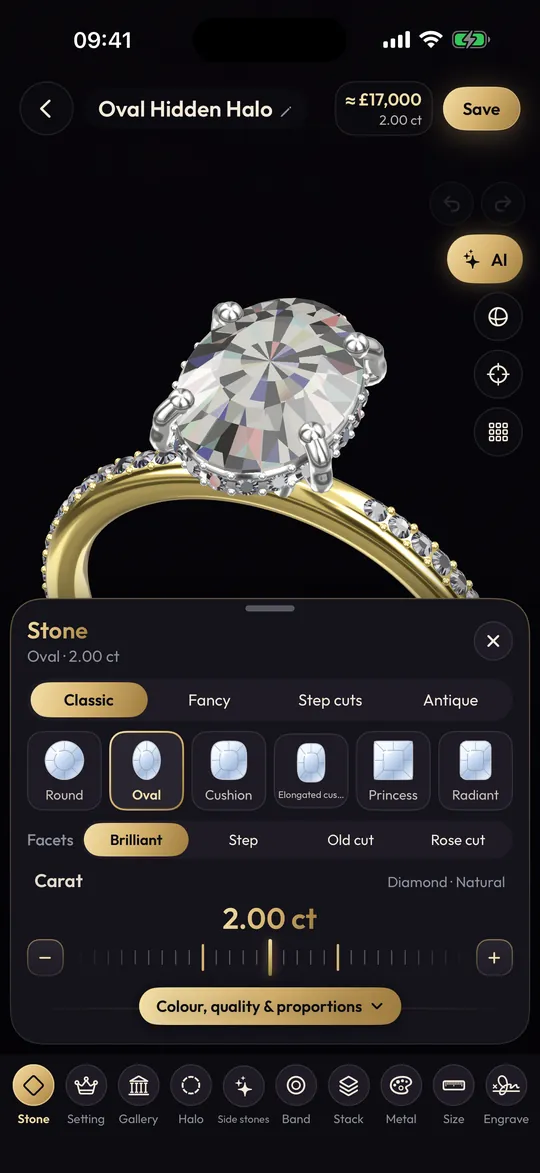
Emerald and Asscher are both free shapes in Ring Studio, so you can compare them on the same ring right away.
- Choose emerald in the stone tray and design your setting, for example a four-prong solitaire on a slim band.
- Switch the stone to Asscher and keep the same carat; notice how much more compact it looks.
- Increase the Asscher's carat until it matches the emerald's footprint and watch the live price estimate.
- Try the Asscher with a classic halo (Pro) and the emerald with baguette side stones, then try both on your hand (Pro).
If you like the octagonal look but want something rarer, the octagon cut is also available in the app.
Verdict
The emerald cut is the practical choice: bigger-looking, finger-lengthening and widely available. The Asscher is the romantic one, with deeper, hypnotic step patterns and a strong vintage identity, at the cost of looking smaller per carat. Buy either with good clarity, because both step cuts show everything.
Frequently asked questions
Is an Asscher cut just a square emerald cut?
Close, but not quite. An Asscher has larger cut corners, giving an almost octagonal outline, a higher crown and a deeper pavilion. Those proportions create its distinctive windmill or concentric-square pattern.
Which looks bigger, emerald or Asscher?
The emerald cut. Its rectangular shape and shallower depth give a 1 ct stone about 7.0 x 5.0 mm, while a deeper 1 ct Asscher is roughly 5.5 mm square.
Do Asscher cuts show inclusions like emerald cuts?
Yes. Both are step cuts with open tables, so inclusions and colour are easier to see than in brilliant cuts. Many buyers choose VS2 clarity or better for both.
Are Asscher cuts more expensive than emerald cuts?
Per carat they are often similar, and both are usually below rounds. Asschers are less common, so the selection of well-cut stones can be smaller.
What setting suits an Asscher cut?
Four prongs on the corners, a bezel, or a vintage-style halo all suit the Asscher. Its Art Deco roots make it a natural fit for geometric, vintage-inspired designs.
Keep reading
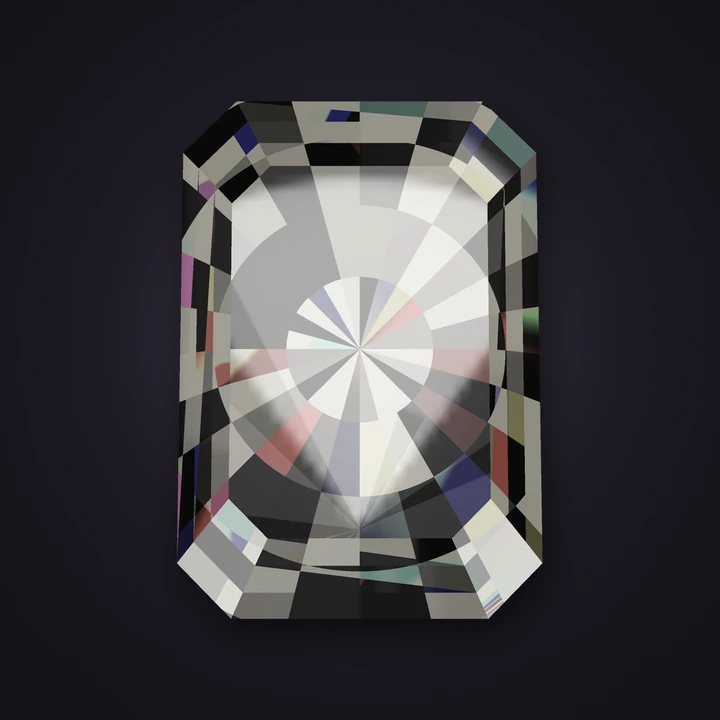 Stone shapesEmerald Cut Engagement Rings: Clarity, Sizes and StyleEmerald cut engagement ring guide: why clarity matters in step cuts, the best ratios, carat-to-mm sizes, settings, bands…
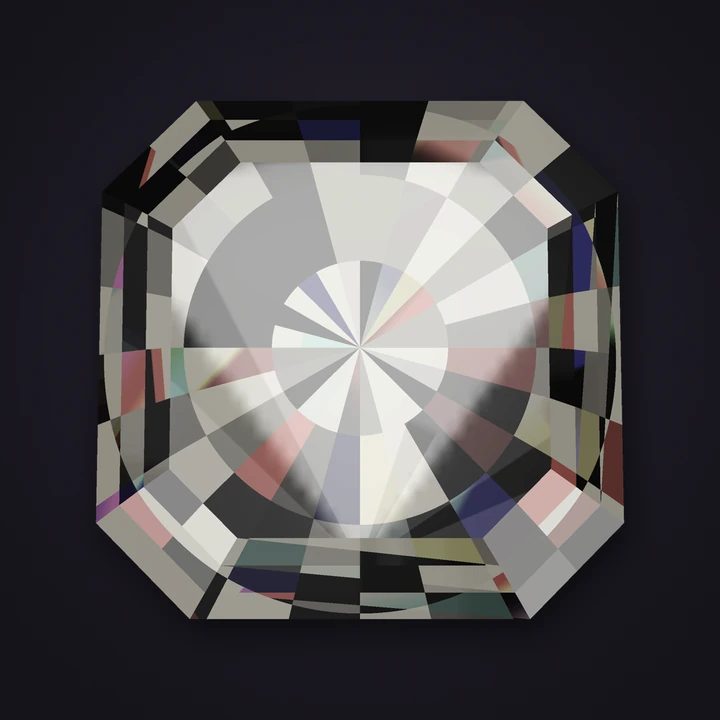 Stone shapesAsscher Cut Engagement RingsAsscher engagement ring guide: the windmill pattern, step-cut clarity and colour advice, carat-to-mm sizes, Art Deco set…ComparisonsEmerald vs Radiant CutEmerald vs radiant cut: same rectangular outline, opposite personalities. Compare step-cut calm with brilliant sparkle, …Settings & stylesArt Deco Engagement RingsArt Deco engagement ring guide: 1920s-30s design traits, asscher, emerald, octagon and hexagon cuts, calibré colour, mil…GemstonesDiamond Clarity Chart: FL to I3 ExplainedDiamond clarity chart from FL to I3: what each grade means, which inclusions matter, the eye-clean sweet spot by shape a…
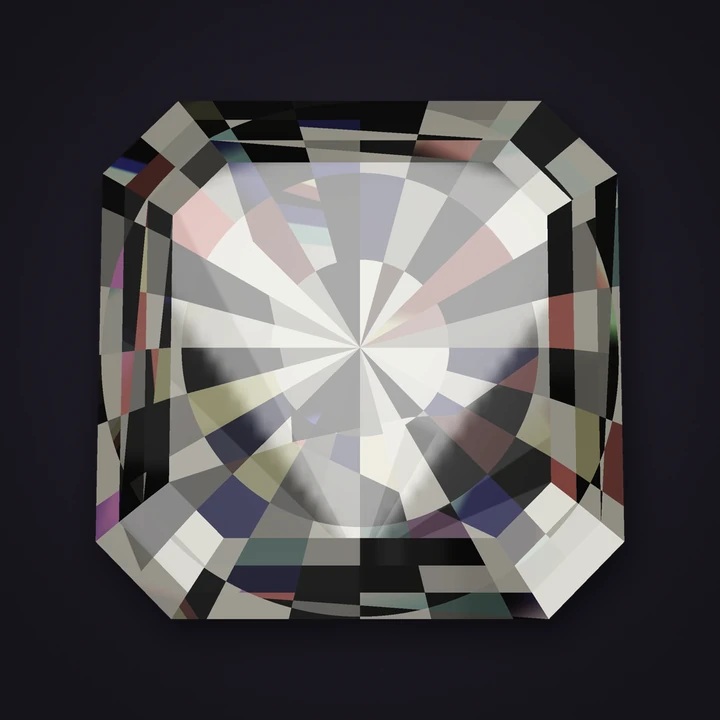 Stone shapesOctagon Engagement RingsOctagon engagement ring guide: how octagons differ from Asscher and emerald cuts, approximate sizes, clarity tips, eight…