 Ring Studio
Stone shapes
Octagon Engagement Rings
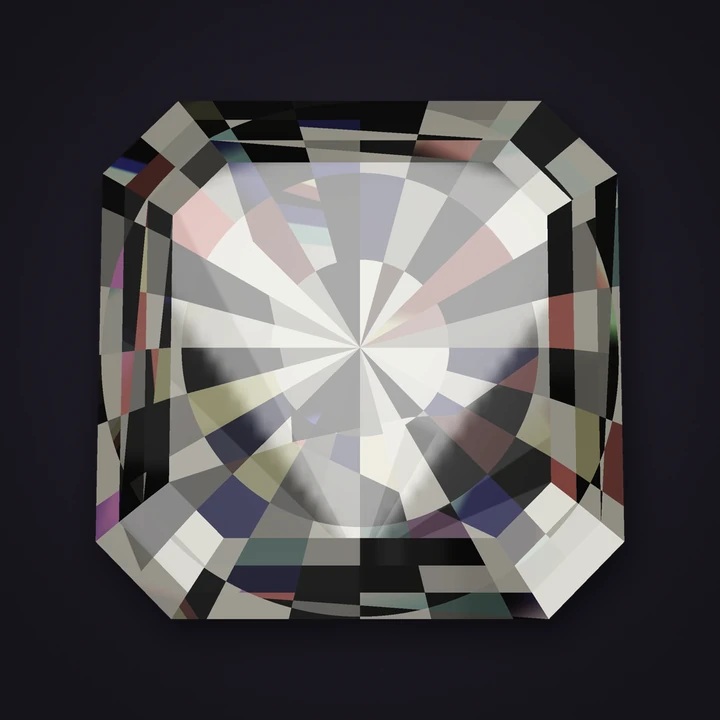
An octagon engagement ring sets an eight-sided stone, usually a step cut with even sides and broad, mirror-like flashes. It is a close cousin of the Asscher, with a softer, almost round silhouette and a clean Art Deco character.
On this page
- What counts as an octagon cut?
- Octagon vs Asscher at a glance
- Octagon sizes: approximate carat to mm
- Choosing a good octagon
- Sourcing an octagon stone
- Best settings and prong placement
- Wedding band pairing
- Octagon pros and cons
- How much does an octagon ring cost?
- Who suits an octagon ring?
- Octagon in coloured gemstones
- Designing an octagon ring in Ring Studio
- Compare related step cuts
- Facets
- Varies; most are step cut with concentric rows of facets
- Length-to-width
- About 1.00 to 1.05 for an even octagon; elongated versions exist
- Look
- Near-round outline with crisp edges and hall-of-mirrors flashes
- Best settings
- 8 prong, 4 prong, bezel, Deco halos
- Price vs round
- Usually lower per carat than a round; custom octagons priced individually
What counts as an octagon cut?
"Octagon" is used in two ways. Gemmologists use "octagonal step cut" for any eight-sided step cut, which includes the emerald cut and the Asscher. As an engagement ring shape, though, an octagon usually means a stone whose eight sides are close to equal, so it reads almost as a circle drawn with straight lines.
That middle ground is the appeal. It has the calm flashes and crisp edges of a step cut, and the friendly, centred feel of a round. Octagonal stones were common in Art Deco jewellery and in coloured gems, and they have found new interest among couples who want something subtly different.
Octagon vs Asscher at a glance
| Octagon | Asscher | |
|---|---|---|
| Outline | Eight near-equal sides | Square with cropped corners |
| Look from a distance | Almost round | Clearly square |
| Typical depth | Often moderate | Deep, with a high crown |
| Signature pattern | Concentric octagons | Windmill "X" of reflections |
| Availability | Less common; often custom | Widely available |
Octagon sizes: approximate carat to mm
Very approximate face-up widths for even-sided step-cut octagons. Real stones vary with depth.
| Carat | Approx. width | Note |
|---|---|---|
| 0.50 ct | 4.8 mm | Delicate |
| 0.75 ct | 5.4 mm | Neat everyday size |
| 1.00 ct | 6.0 mm | A little under a 1 ct round's diameter |
| 1.50 ct | 6.8 mm | Flashes become very visible |
| 2.00 ct | 7.5 mm | Strong statement |
| 3.00 ct | 8.6 mm | Bold Deco scale |
Choosing a good octagon
- Even sides: if the sides vary too much, the stone drifts toward an Asscher or a rectangle. Decide which look you want.
- Clarity: open step facets reveal inclusions. Aim for eye-clean; for diamond that often means VS2 or better.
- Colour: step cuts show body colour more than brilliants; choose a higher grade for white metals.
- Step pattern: concentric rows should be even and centred so the reflections look orderly.
- Depth: too shallow and the stone looks glassy; too deep and it faces up small.
Because octagons are less standardised, two stones called octagon can look quite different. Compare photos from directly above to see the outline clearly.
Sourcing an octagon stone
Octagon diamonds are not a mainstream production shape, so the selection at most jewellers is small. Specialist dealers can source natural stones or have them cut, and lab-grown octagons are readily available. Octagonal cuts are also common in coloured gems such as emeralds and sapphires, where step cuts protect the crystal and show off colour.
Best settings and prong placement
Eight prongs, one at each corner, follow the outline exactly and are the most secure. Four prongs on alternate corners look cleaner and show more stone. A slim bezel traces the eight sides and is excellent for active hands. Deco-style halos with milgrain, or baguette side stones, complete a 1920s look; see Art Deco engagement rings.
Wedding band pairing
The flat sides of an octagon sit well against straight bands. Baguette or channel-set bands reinforce the step-cut theme; a plain band keeps the geometry clean.
Octagon pros and cons
| Pros | Cons |
|---|---|
| Subtle, geometric alternative to a round | Shows inclusions and colour |
| Calm, elegant flashes | Less sparkle than brilliant cuts |
| No sharp points | Limited selection in natural diamond |
| Pairs easily with straight bands | Naming is inconsistent between sellers |
How much does an octagon ring cost?
Octagon diamonds generally cost less per carat than rounds of similar quality, like most step cuts, but because natural octagons are not mass produced, many are quoted individually. You may also pay more for higher clarity, since step cuts show inclusions. Lab-grown octagons are much cheaper, as lab-grown prices have fallen sharply over recent years. An eight-prong head or bezel costs a little more than a standard four-prong mount. Treat all prices as estimates that vary by retailer and market; the ring price estimator helps compare options.
Who suits an octagon ring?
An octagon suits someone who likes the idea of a round but wants it quieter and more architectural, or someone drawn to Art Deco without the full drama of an Asscher. Its near-round outline sits comfortably on almost any finger, and with no sharp points it wears well day to day. It is also a lovely choice in coloured stones, where step cuts show colour richly. If you want more sparkle with a similar footprint, a round brilliant or old European cut is the alternative.
Octagon in coloured gemstones
Octagonal step cuts are traditional for emeralds and common for sapphires and other gems. The flat facets show colour evenly and help protect brittle crystals.
Designing an octagon ring in Ring Studio
Octagon is one of the 12 free shapes in Ring Studio.
- Choose Octagon in the stone tray and set the carat.
- Select the 8 prong setting, then compare 4 prong and bezel.
- Add baguette side stones or a classic halo for an Art Deco feel.
- Try an engraved vintage band in platinum, or a plain band in yellow gold.
- Switch to Asscher on the same ring to compare the two outlines.
When you're happy, share the ring code or screenshots with your jeweller, who will source the stone and recreate the design in their CAD.
Compare related step cuts
See the Asscher for a squarer outline, the emerald cut for length, and emerald cut vs Asscher for a direct comparison. For six sides, read about hexagon rings.
Frequently asked questions
What is an octagon cut diamond?
It is a step-cut diamond with eight sides. In the trade, octagon can describe any eight-sided step cut, but as a centre shape it usually means a stone whose eight sides are roughly equal, giving a near-round outline.
What is the difference between an octagon and an Asscher cut?
An Asscher is a square step cut with cropped corners, so its four long sides are longer than its four corner sides. A true octagon has sides of more equal length and usually a less deep pavilion.
Is an emerald cut an octagon?
Technically, yes. An emerald cut is a rectangular eight-sided step cut, so gemmologists sometimes call it an octagonal step cut. An octagon centre stone is usually much more even-sided.
How many prongs suit an octagon diamond?
Eight prongs, one on each corner or side, mirror the shape. Four prongs work too, and a bezel shows off the geometric outline.
Do octagon diamonds show inclusions?
Yes, more than brilliant cuts. As step cuts, they have open facets, so eye-clean clarity, often VS2 or better, is a sensible target.
Keep reading
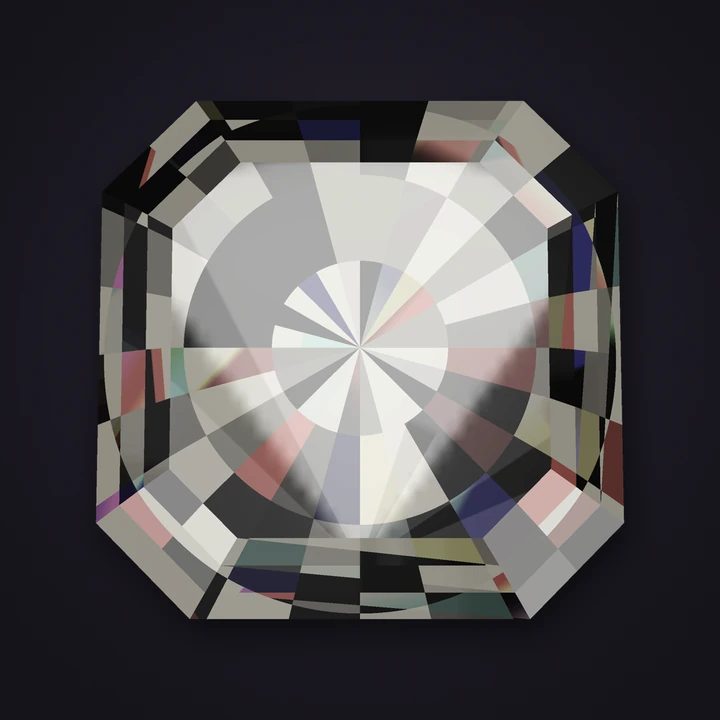 Stone shapesAsscher Cut Engagement RingsAsscher engagement ring guide: the windmill pattern, step-cut clarity and colour advice, carat-to-mm sizes, Art Deco set…
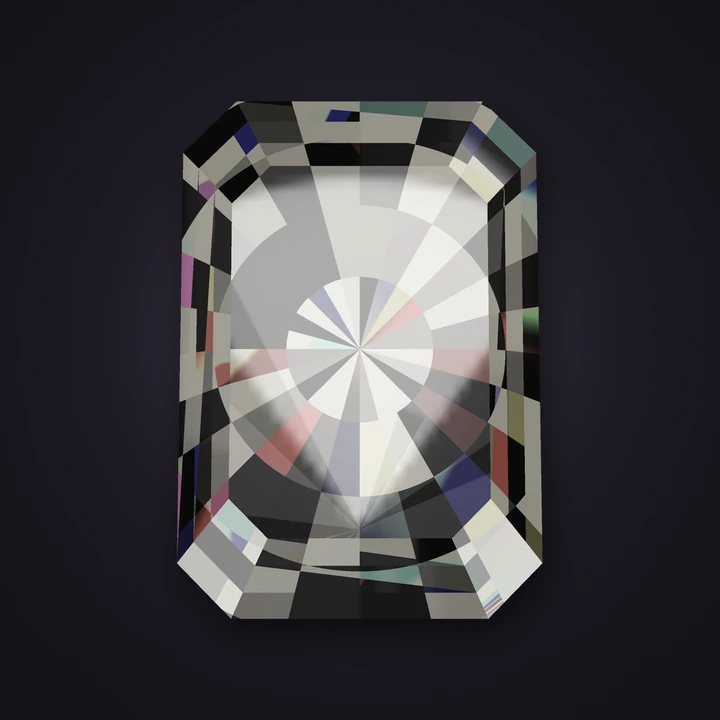 Stone shapesEmerald Cut Engagement Rings: Clarity, Sizes and StyleEmerald cut engagement ring guide: why clarity matters in step cuts, the best ratios, carat-to-mm sizes, settings, bands…
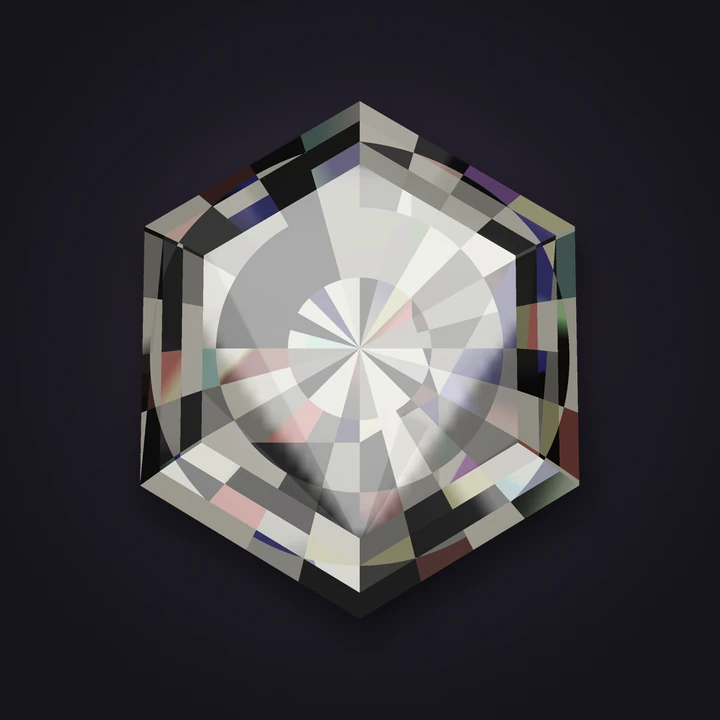 Stone shapesHexagon Engagement RingsHexagon engagement ring guide: regular vs elongated hexagons, step vs brilliant cuts, approximate sizes, sourcing, six-p…ComparisonsEmerald Cut vs Asscher CutEmerald cut vs Asscher: both step cuts with a hall-of-mirrors look. The emerald is a long rectangle that looks bigger; t…Settings & stylesArt Deco Engagement RingsArt Deco engagement ring guide: 1920s-30s design traits, asscher, emerald, octagon and hexagon cuts, calibré colour, mil…Settings & stylesBezel Set Engagement RingsBezel set engagement ring guide: full vs half bezels, how a metal rim affects sparkle and size, best shapes, durability,…