 Ring Studio
Hexagon Engagement Rings
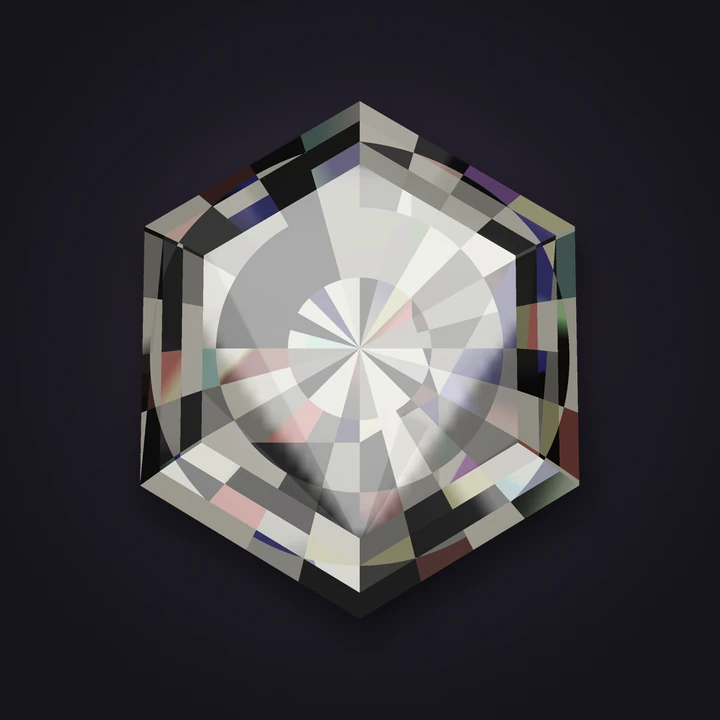
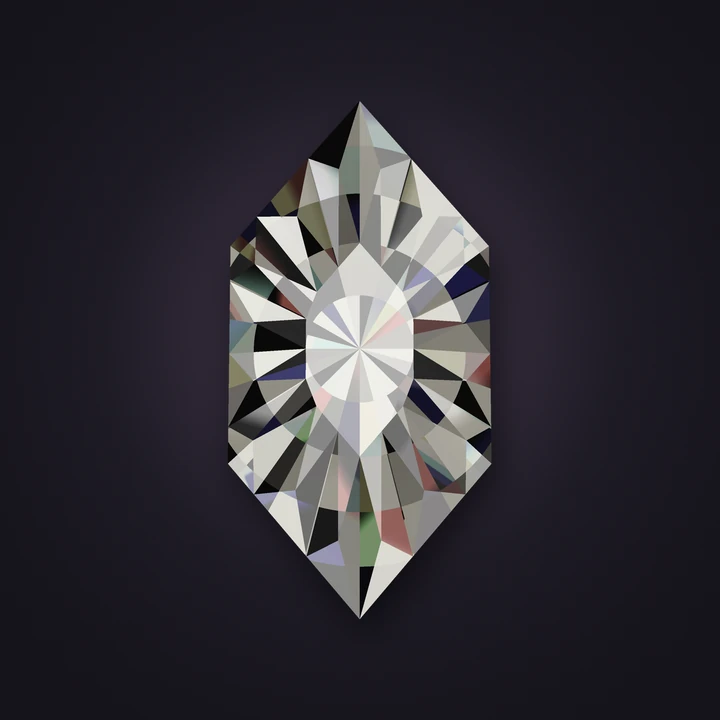
A hexagon engagement ring sets a six-sided diamond or gemstone, usually step cut, in a crisp geometric outline. It has Art Deco roots, feels modern and architectural, and is almost always sourced as a custom-cut, antique or lab-grown stone.
On this page
- Where hexagon cuts come from
- Regular vs elongated hexagons
- Hexagon sizes: approximate carat to mm
- What to look for in a hexagon stone
- Sourcing realities
- Best settings and prong placement
- Wedding band pairing
- Hexagon pros and cons
- How much does a hexagon ring cost?
- Caring for a hexagon ring
- Design a hexagon engagement ring in Ring Studio
- Related angular shapes
- Facets
- Varies; most are step cut, some brilliant
- Length-to-width
- Regular about 1.15 (point to point vs flat to flat); elongated about 1.25 to 1.50
- Look
- Geometric, architectural, honeycomb-modern or Deco
- Best settings
- 6 prong (one per corner), bezel, east-west, minimal bands
- Price vs round
- Natural hexagons priced individually; lab-grown and sapphire hexagons are accessible
Where hexagon cuts come from
Hexagonal stones appear in Victorian and especially Art Deco jewellery, where step-cut geometric shapes were cut to fit precise designs. As a main engagement stone, though, the hexagon is a recent choice that grew with the interest in geometric, non-traditional rings. Coloured gemstones helped: sapphire crystals often grow in hexagonal forms, so hexagon-cut sapphires have long been available. Lab-grown diamonds then made custom hexagon diamonds practical and affordable.
Regular vs elongated hexagons
A regular hexagon has six equal sides. Measured from point to point it is about 1.15 times its width from flat side to flat side, so it looks almost round from a distance, with a honeycomb feel. An elongated hexagon stretches two parallel sides to give a longer stone, often around 1.30 to 1.50, which flatters the finger like an emerald cut but with pointed ends. Elongated hexagons are the more common choice for engagement rings.
Hexagon sizes: approximate carat to mm
These are very rough figures for a step-cut elongated hexagon around a 1.30 ratio. Because the shape isn't standardised, read the real measurements on any stone.
| Carat | Approx. L x W (elongated) | Regular hexagon (approx. point to point) |
|---|---|---|
| 0.50 ct | 5.7 x 4.4 mm | 5.3 mm |
| 0.75 ct | 6.5 x 5.0 mm | 6.1 mm |
| 1.00 ct | 7.2 x 5.5 mm | 6.7 mm |
| 1.50 ct | 8.2 x 6.3 mm | 7.6 mm |
| 2.00 ct | 9.1 x 7.0 mm | 8.4 mm |
| 3.00 ct | 10.4 x 8.0 mm | 9.6 mm |
What to look for in a hexagon stone
- Equal angles: in a regular hexagon all six corners should look identical. Uneven corners are very obvious in a six prong setting.
- Clean steps: in step cuts, the rows of facets should run parallel and evenly spaced.
- Clarity: step-cut hexagons show inclusions like emerald cuts do. Aim for eye-clean, often VS2 or better for diamond.
- Colour: step cuts reveal body colour; choose a higher colour in white metal or embrace warmth in yellow gold.
- Depth: shallow stones can look glassy in the middle; deep ones look small.
- Corner girdles: six points means six places to check for thin edges or chips.
Sourcing realities
As of late 2026, most hexagon diamonds offered as centre stones are lab-grown, because cutters can produce the shape to order from lab-grown material at a reasonable cost. Natural hexagons exist but are usually cut on request or found in antique jewellery, which means longer lead times and individual pricing. Sapphires, spinels and other coloured gems in hexagon cuts are easier to find and add colour. Whichever you choose, get the exact measurements before the setting is made.
Ask for the stone's measurements from point to point and from flat side to flat side. Both matter when a jeweller builds a six-prong head or bezel.
Best settings and prong placement
Six prongs
One prong on each of the six corners mirrors the shape and protects every point. Ring Studio's 6 prong head is ideal for previewing this; see six prong engagement rings for more on the style.
Bezel
A slim, crisp bezel turns a hexagon into a bold graphic shape and suits everyday wear.
East-west and side stones
An elongated hexagon set east-west looks contemporary and sits low. Small baguettes or trillions either side keep the geometric theme, a nod to Art Deco.
Wedding band pairing
Straight bands usually suit hexagons because the flat sides sit neatly beside them. Knife edge bands echo the crisp lines; a plain flat band keeps it minimal. Geometric or chevron bands can follow the pointed ends of an elongated stone.
Hexagon pros and cons
| Pros | Cons |
|---|---|
| Distinctive geometric look | Natural diamond hexagons are rare |
| Flat sides pair easily with straight bands | Step cuts show inclusions and colour |
| Works beautifully in coloured gems | No standard proportions |
| Affordable in lab-grown | Six corners to protect and maintain |
How much does a hexagon ring cost?
Natural hexagon diamonds are quoted individually because few are cut. Lab-grown hexagons are priced in line with other lab-grown fancy shapes and are far more affordable, and hexagon sapphires vary hugely with colour and origin. A six-prong head or bezel built for a specific stone may cost a little more than an off-the-shelf mount. Prices vary by retailer and market; see custom ring costs.
Caring for a hexagon ring
Step-cut tables show grease quickly, so clean the stone regularly with warm soapy water and a soft brush. Check the six prongs or the bezel edge once or twice a year, especially if the ring is worn daily. Coloured hexagons in softer stones need gentler handling than diamond or sapphire.
Design a hexagon engagement ring in Ring Studio
Hexagon is one of Ring Studio's Pro shapes.
- Choose Hexagon in the stone tray and set the carat.
- Select the 6 prong setting, then compare it with a bezel.
- Toggle east-west for a modern horizontal look.
- Try the stone as a diamond, then as a blue sapphire, in yellow gold and platinum.
- Choose a knife edge or plain band, and add baguette side stones if you want more sparkle.
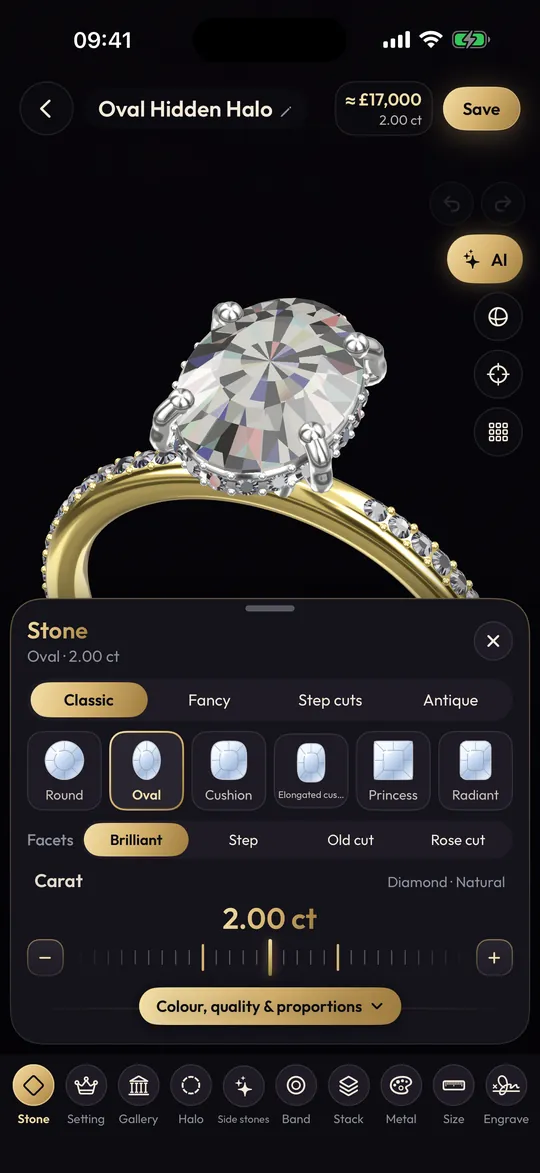
You can also describe your idea to the AI ring designer, such as "an east-west hexagon blue sapphire in a gold bezel".
Related angular shapes
For eight sides, see the octagon; for a pointed, elongated angular shape, the Dutch marquise. More non-traditional ideas are in unique engagement rings.
Frequently asked questions
What is a hexagon cut diamond?
It is a diamond with a six-sided outline. Most are step cut with parallel facets like an emerald cut, though brilliant-faceted hexagons are also made. They can be regular, with equal sides, or elongated.
Are hexagon diamonds rare?
As centre stones, fairly. They are not a standard production shape, so natural hexagons are usually custom cut or found in antique pieces. Lab-grown hexagons are much easier to source.
How many prongs does a hexagon ring need?
Six prongs, one on each corner, follow the shape naturally and protect the points. A bezel is the other popular choice and emphasises the geometric outline.
Do hexagon cut diamonds sparkle?
Step-cut hexagons show broad flashes rather than sparkle, like an emerald cut. Brilliant-cut hexagons sparkle more. Which you choose changes the look considerably.
Are hexagon sapphires common?
Relatively, yes. Sapphire crystals often grow in hexagonal forms, and hexagon-cut sapphires in blue, teal and other colours are a popular alternative to diamond.
Keep reading
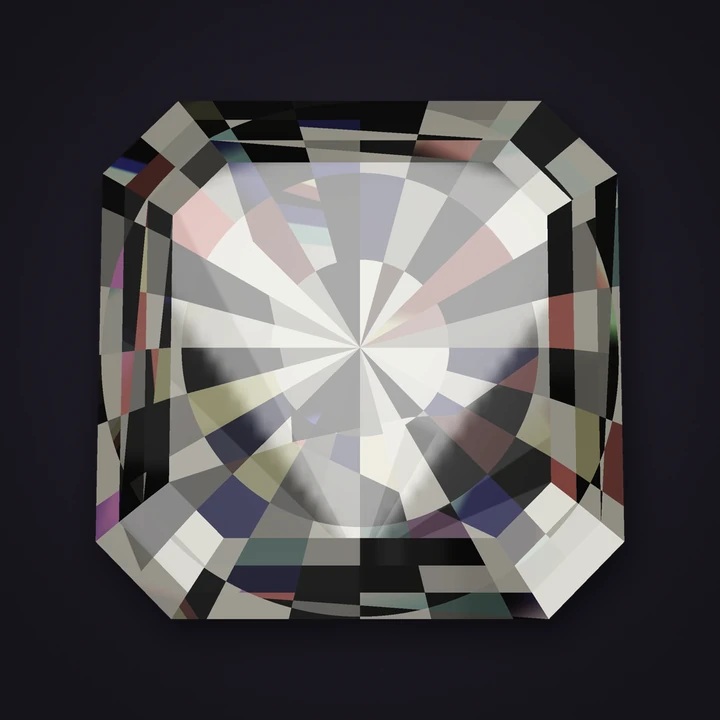 Octagon Engagement RingsOctagon engagement ring guide: how octagons differ from Asscher and emerald cuts, approximate sizes, clarity tips, eight…
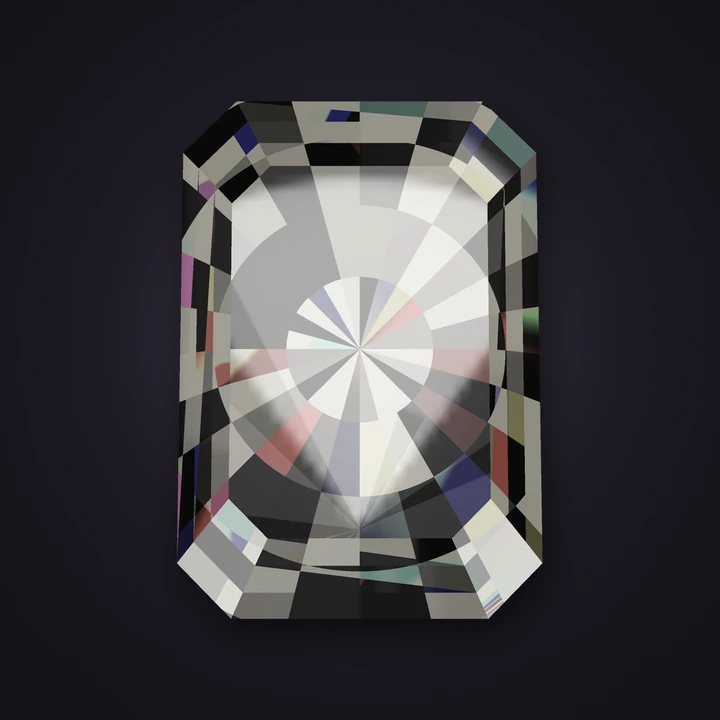 Emerald Cut Engagement Rings: Clarity, Sizes and StyleEmerald cut engagement ring guide: why clarity matters in step cuts, the best ratios, carat-to-mm sizes, settings, bands…
 Dutch Marquise Engagement RingsDutch marquise engagement ring guide: how it differs from a marquise, approximate sizes, sourcing, settings that protect…Six Prong Engagement RingsSix prong engagement rings explained: how much more secure they are, how much metal shows, snagging, re-tipping and whic…Art Deco Engagement RingsArt Deco engagement ring guide: 1920s-30s design traits, asscher, emerald, octagon and hexagon cuts, calibré colour, mil…Sapphire Engagement RingsSapphire engagement rings explained: the colours sapphire comes in, how to judge quality, heat treatment, lab-created st…