 Ring Studio
Unique Engagement Rings
A unique engagement ring is one that is clearly yours: an unusual cut, an unexpected colour, an offbeat layout or a hidden personal detail. Here are practical ideas, how each wears day to day, and how to try them before committing.
On this page
- What it is
- A ring that departs from the classic solitaire in a personal way
- Easiest levers
- Cut, colour, orientation, band shape, hidden details
- Durability rule
- Choose hard stones and protect points
- Band pairing
- Plan early; unusual shapes often need custom bands
- Cost impact
- Varies; unusual cuts can cost less per carat
- Try first
- Design it in 3D before you commit
How to approach a unique ring
The most successful unique engagement rings usually change one or two big things and keep the rest calm. Pick your "unique" lever: the stone's cut, its colour, its orientation, the band, or a hidden detail. Then build a simple, well-made ring around it. Changing everything at once tends to produce a ring that looks busy rather than distinctive.
Unusual stone cuts
Changing the cut is the single biggest change you can make. Some less common shapes:
| Cut | Character | Durability note |
|---|---|---|
| Kite | Angular, asymmetric diamond outline | Protect the points; see kite rings |
| Shield | Heraldic, geometric | Protect corners; see shield rings |
| Hexagon | Six-sided, architectural | Corners benefit from prongs or a bezel |
| Half moon, lozenge, epaulette | Rare, graphic outlines | Often used in pairs or as side stones |
| Moval, Dutch marquise | Modern hybrids of classic shapes | Generally robust |
| Rose cut | Flat base, domed facets, soft glow | Shallow; a bezel helps |
| Old mine, old European | Antique character, chunky flashes | Check girdles |
Because demand for these shapes is lower, some unusual cuts can cost less per carat than a round, though very rare shapes may be harder to source.
Colour as the unique element
A coloured centre stone is an instant way to stand out. Blue and pink sapphires and rubies are hard (Mohs 9) and ideal for everyday wear. Yellow diamonds are a bright alternative, and black diamonds give a dramatic, graphic look. Emeralds and morganite are softer (7.5 to 8) and need more care. Inclusions are part of the appeal in salt and pepper diamonds, which show grey and black speckles.
Unusual layouts and settings
- East-west: an elongated stone turned sideways. See east-west rings.
- Toi et moi: two stones side by side. See toi et moi rings.
- Compass or lotus settings: prongs rotated to north, east, south and west, or a petal-shaped basket.
- Bypass or asymmetric bands: movement in the band itself.
- Unusual side stones: kites, half moons or leaf-shaped marquises in a V.
- Scattered stones: small stones placed asymmetrically along the band.
- Mixed metals: two-tone bands with different colours on the head and shank.
Hidden details only you know about
Not every unique feature needs to be visible. A hidden halo shows only from the side. Initials or a symbol can be placed under the stone in the gallery. An engraving inside the band can carry a date, coordinates or a private phrase. These details make a classic-looking ring deeply personal; see hidden initials rings.
Durability and wearability
Unusual does not have to mean fragile, but it often involves points, corners or softer stones. Protect points with V-prongs or bezels, prefer diamonds, sapphires and rubies for daily wear, and keep unusual shapes in low or protected settings if you are active. Scattered stones on the band add the same maintenance as pavé.
Wedding band compatibility
Unique shapes and layouts rarely sit flush with a standard straight band. Decide early whether you want a matching band, a curved or chevron band designed to fit, or a gap. A custom band is often the cleanest solution and can be designed alongside the engagement ring.
Does a unique ring cost more?
Not necessarily. Unusual cuts can be cheaper per carat, and coloured stones such as sapphires can cost less than diamonds of similar size, depending on quality. Custom work, CAD fees and complex settings add cost. See our custom vs off-the-shelf comparison. Prices vary by retailer, quality and market.
Designing a unique ring in Ring Studio
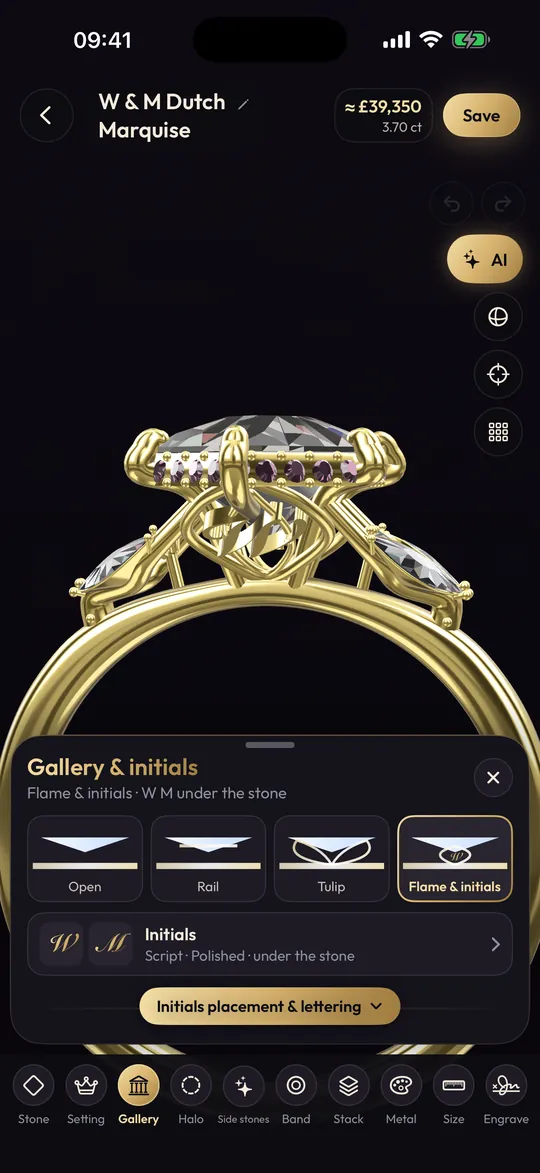
- Not sure where to start? Use the style quiz or Surprise me for a random starting point.
- With Pro, choose from all 28 shapes, including kite, shield, hexagon, half moon, lozenge, epaulette and rose cut.
- Try a coloured stone: blue or pink sapphire, ruby, emerald, morganite, or a yellow or black diamond.
- Turn the stone east-west, try lotus or compass settings, or a bypass or asymmetric band.
- Place your own stones anywhere on the ring, add hidden initials under the stone, or try two-tone metal.
- Describe a wild idea to the AI and refine it by chatting.
Share the ring code with your partner or jeweller when you have a design you love. The core designer is free; Pro unlocks the AI, try-on and advanced options.
Finding your own version of unique
If you are not sure which lever to pull, the ring style quiz is a quick way to narrow it down. Then pick one standout element and let the rest of the ring support it.
Frequently asked questions
How do I make my engagement ring unique?
Change one or two big decisions rather than everything: an unusual cut such as a kite or hexagon, a coloured stone, an east-west orientation, or a hidden detail like initials under the stone. Keeping the rest simple stops the ring looking busy.
What is the most unusual engagement ring shape?
Less common shapes include kite, shield, trillion, hexagon, half moon, lozenge, epaulette and old mine. Rose cuts and salt and pepper diamonds also look very different from a standard round.
Are coloured stones good for engagement rings?
Sapphires and rubies (Mohs 9) are excellent for daily wear. Emeralds and morganite (7.5 to 8) are softer and benefit from a protective setting and more care.
Will a unique ring go out of fashion?
Any design can date, but rings built on a meaningful personal choice tend to age better than ones built on a single trend. A classic metal and setting under an unusual stone is a good balance.
Is a custom engagement ring more expensive?
Not necessarily. Many independent jewellers make custom rings at prices comparable to good retail rings, though complex designs, CAD fees and unusual stones can add cost.
Keep reading
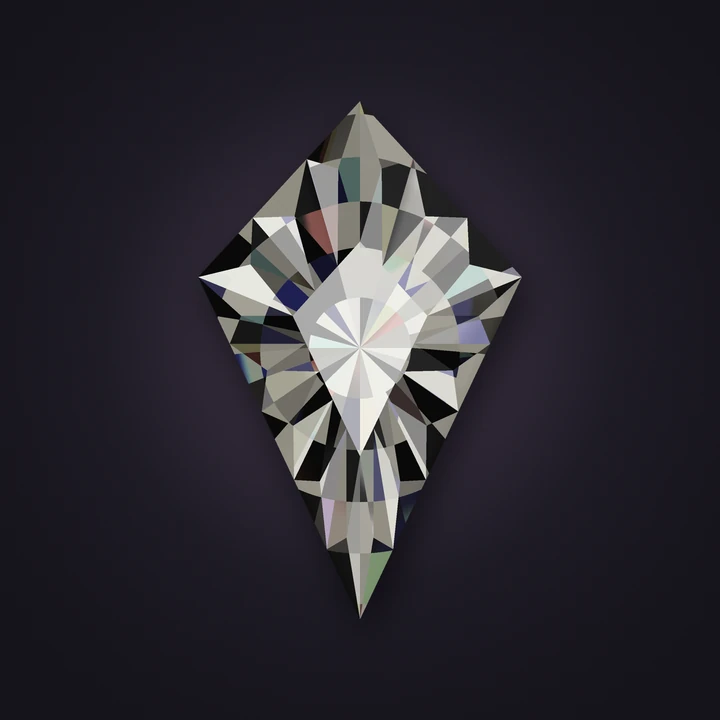 Kite Engagement RingsKite engagement ring guide: what a kite cut is, its Art Deco roots, approximate sizes, sourcing a custom or lab-grown ki…
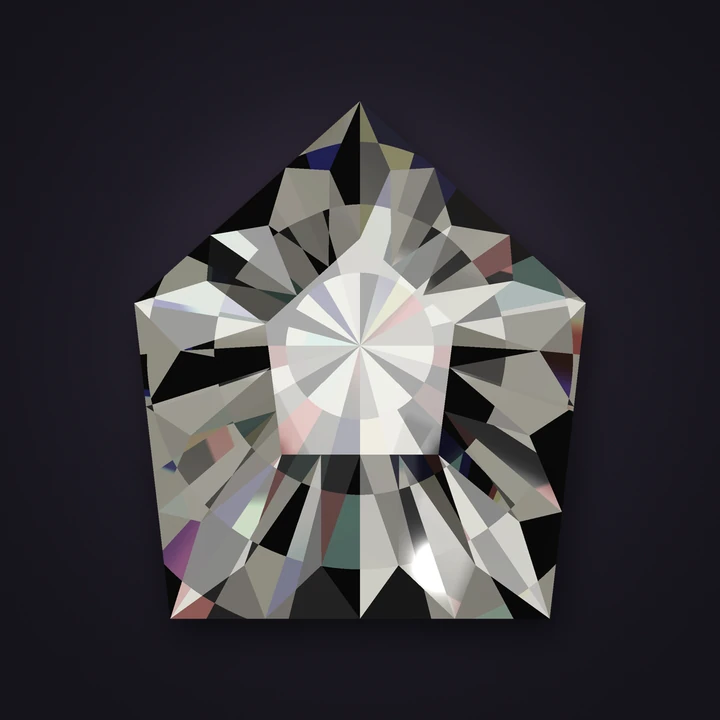 Shield Engagement RingsShield engagement ring guide: what a shield cut is, its Art Deco origins, approximate sizes, custom and lab-grown sourci…Salt and Pepper DiamondsSalt and pepper diamonds are natural diamonds full of visible inclusions. Learn how they look, durability caveats, how t…Hidden Initials Engagement Ring DesignerDesign a hidden initials engagement ring: draw or type initials under the stone or on the band, pick a finish, add an in…