 Ring Studio
Shield Engagement Rings
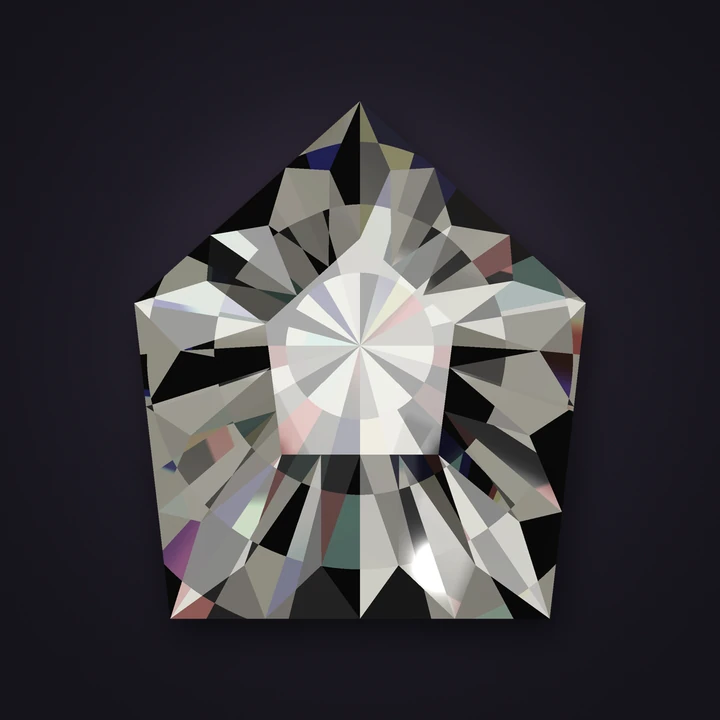
A shield engagement ring features a shield cut diamond: a flat or gently angled top edge with sides that taper to a point, like a heraldic shield. It is one of the rarest centre shapes, rooted in Art Deco design and usually cut to order or lab-grown today.
On this page
- The story of the shield cut
- Shield sizes: very approximate carat to mm
- What to look for in a shield stone
- Sourcing a shield centre stone
- Best settings and prong placement
- Wedding band pairing
- Shield pros and cons
- How much does a shield ring cost?
- Living with a shield ring
- How to design a shield engagement ring in Ring Studio
- Other Deco-inspired shapes
- Facets
- Varies by cutter; step-cut and brilliant versions
- Length-to-width
- Roughly 0.90 to 1.20, depending on the design
- Look
- Heraldic, bold, geometric; strongly Art Deco
- Best settings
- 5 prong (one per corner), bezel; shield side stones
- Price vs round
- Natural shields priced individually; lab-grown shields are affordable
The story of the shield cut
Shield-shaped stones belong to the family of fancy geometric cuts that Art Deco jewellers used to build precise patterns: kites, trapezoids, half moons, bullets and shields fitted together around a centre stone or in long bracelets. They were mostly small accents, often step cut. In the last few years, interest in heraldic and geometric shapes, plus the flexibility of lab-grown cutting, has brought the shield forward as a centre stone for people who want something truly unlike anyone else's ring.
There is no single standard shield. Some have a straight top edge and five sides; others have a gently peaked or curved top and six or more facets around the outline. That variety is part of the appeal, but it means you need to look carefully at each stone.
Shield sizes: very approximate carat to mm
With no standard proportions, these are rough figures for a brilliant-style shield with roughly equal length and width. Step-cut shields of the same weight may measure smaller.
| Carat | Approx. L x W | Comment |
|---|---|---|
| 0.50 ct | 5.2 x 5.2 mm | Subtle, reads as a small crest |
| 0.75 ct | 6.0 x 6.0 mm | Clearly defined outline |
| 1.00 ct | 6.6 x 6.6 mm | Similar span to a 1 ct round |
| 1.50 ct | 7.6 x 7.6 mm | Strong statement |
| 2.00 ct | 8.3 x 8.3 mm | Wide across the finger |
| 3.00 ct | 9.5 x 9.5 mm | Very bold; check comfort |
What to look for in a shield stone
- Clear, symmetrical outline: the two sides tapering to the point must mirror each other.
- Proportions you like: wider shields look like crests; longer ones look more like arrowheads. Decide which before you shop.
- Tip strength: the bottom point should not be razor thin at the girdle.
- Clarity in step cuts: step-cut shields reveal inclusions; aim for eye-clean.
- Brightness in brilliants: some custom shields are cut shallow for spread and can look glassy in the centre. Ask for a video.
- Accurate report: shields may be described under a generic modified shape name. Make sure measurements and weight are recorded.
If you commission a custom shield, give the cutter a drawing or 3D render with target length, width and angles. "Shield" alone could mean several quite different outlines.
Sourcing a shield centre stone
Natural shield diamonds large enough for a centre stone are uncommon. Your options are a specialist dealer or cutter who can find or cut one, an antique stone from an Art Deco piece (usually small), or a lab-grown diamond cut to your proportions, which is the most practical route as of late 2026. Shield-cut coloured gems such as sapphires are another option. Allow time for cutting and agree measurements in writing; our guide to working with a jeweller explains the process.
Best settings and prong placement
A classic five-sided shield has five corners, so a five prong setting with one prong per corner suits it perfectly. The tip prong ideally has a V-shape; Ring Studio doesn't have a dedicated V-prong, so mention it to your jeweller. A full or partial bezel protects the tip and corners and turns the shield into a bold graphic shape. Shields can also be side stones, pointing inward towards a round, oval or emerald centre, a pattern borrowed directly from Art Deco rings.
Most people set the point towards the fingertip, which gives a strong directional look, but pointing it towards the wrist can feel softer and more like a crest.
Wedding band pairing
The point of a shield often stops a straight band sitting flush. A chevron or contoured band that follows the point is the most common pairing. If the shield's flat top faces the band, a straight band can sit neatly against it.
Shield pros and cons
| Pros | Cons |
|---|---|
| Extremely distinctive | Hard to source in natural diamond |
| Strong Art Deco heritage | No standard shape or proportions |
| Affordable in lab-grown | Pointed tip needs protection |
| Bold presence at modest carats | Bands often need a custom contour |
How much does a shield ring cost?
Natural shield diamonds are priced individually, usually by specialist cutters or dealers, and the cost reflects cutting time as much as the stone. Lab-grown shields are far cheaper and are the most common choice as of late 2026, as lab-grown prices have fallen sharply. A custom five-prong head or bezel may add a little to the setting cost. All figures vary by retailer and market; see custom engagement ring costs.
Living with a shield ring
Shields are wide at the top, so check the ring doesn't press on neighbouring fingers when you make a fist. Have the tip prong or bezel checked once or twice a year, and remove the ring for heavy manual work to protect the point.
How to design a shield engagement ring in Ring Studio
Shield is one of Ring Studio's Pro shapes.
- Choose Shield in the stone tray and set the carat.
- Select the 5 prong setting so a prong sits on each corner, then compare a bezel.
- Toggle north-south and east-west.
- Choose platinum or yellow gold and a knife edge or engraved vintage band.
- Stack a chevron wedding band to check how it meets the point.
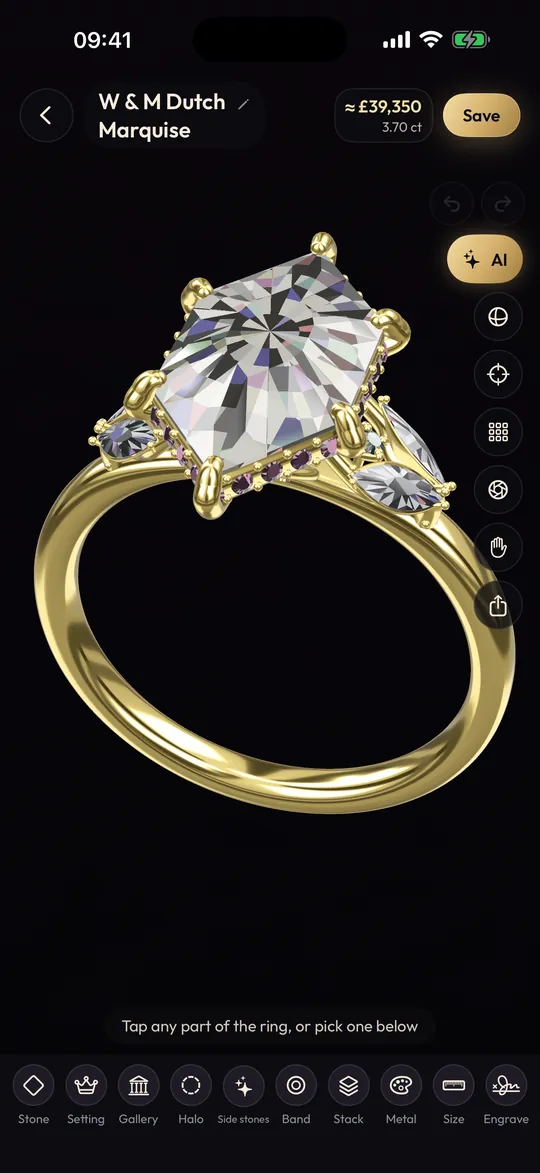
A 3D model is especially useful for rare cuts: share the ring code with your cutter and jeweller so everyone works from the same outline.
Other Deco-inspired shapes
If the shield appeals, compare the kite, the trillion and the hexagon. For more unusual ideas, browse unique engagement rings.
Frequently asked questions
What is a shield cut diamond?
A shield cut has a broad top edge and sides that taper to a point, usually with five or more sides in total. It can be step cut for bold flashes or brilliant cut for sparkle, and outlines vary between cutters.
Are shield cut diamonds rare?
Yes. They are not a standard production shape, so natural shields are usually cut specially or found in antique pieces. Lab-grown shield cuts are far easier to source.
Where did the shield cut come from?
Shield and other geometric shapes were popular as accent stones in Art Deco jewellery of the 1920s and 1930s. Using a shield as the main engagement stone is a more recent trend.
What setting is best for a shield diamond?
A prong on each corner, often five in total, or a bezel. The pointed tip is the most vulnerable part, so it should always sit under metal.
How is a shield different from a trillion?
A trillion is a three-sided triangle. A shield has a wider top edge with extra corners, so it looks fuller and more like a crest than a triangle.
Keep reading
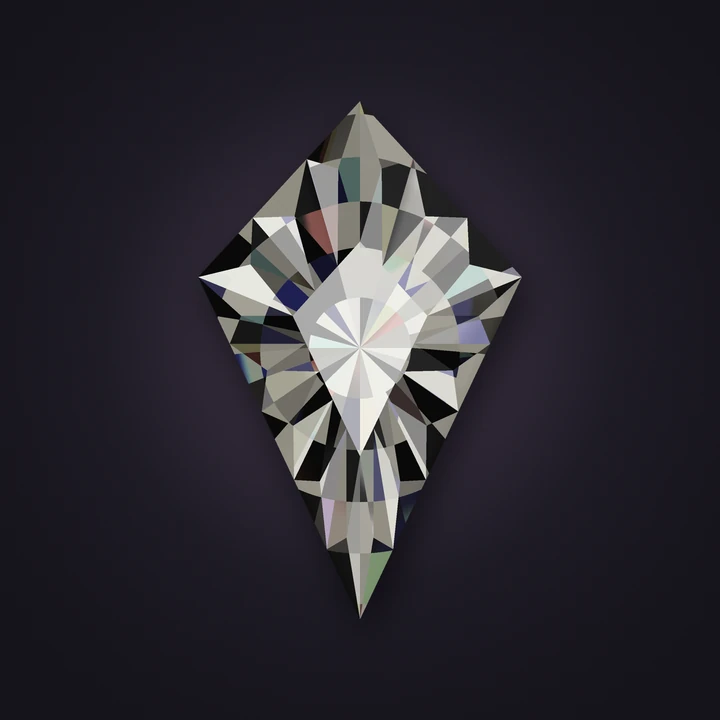 Kite Engagement RingsKite engagement ring guide: what a kite cut is, its Art Deco roots, approximate sizes, sourcing a custom or lab-grown ki…
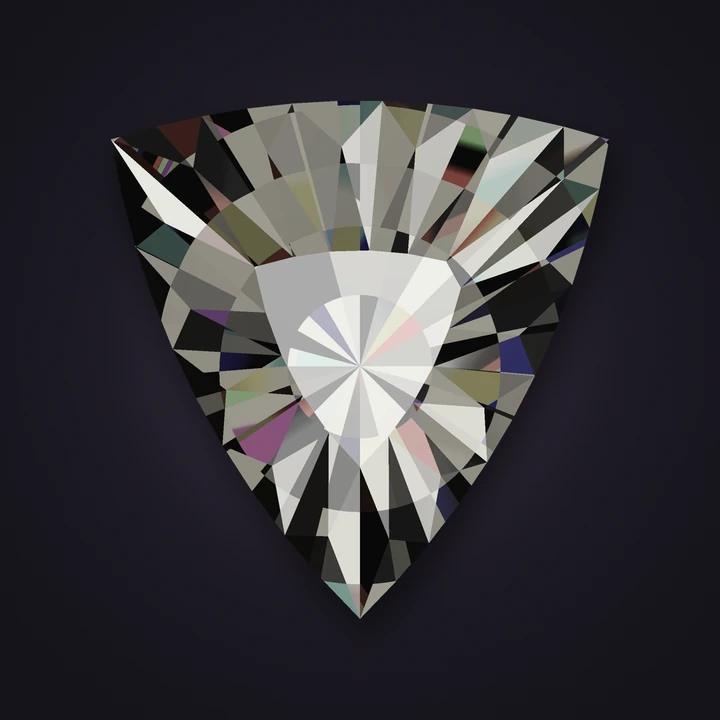 Trillion Engagement RingsTrillion engagement ring guide: curved vs straight triangle cuts, history, sizes in mm, protecting the corners, sourcing…
 Hexagon Engagement RingsHexagon engagement ring guide: regular vs elongated hexagons, step vs brilliant cuts, approximate sizes, sourcing, six-p…Art Deco Engagement RingsArt Deco engagement ring guide: 1920s-30s design traits, asscher, emerald, octagon and hexagon cuts, calibré colour, mil…Unique Engagement RingsUnique engagement ring ideas: unusual cuts, coloured stones, east-west and toi et moi layouts, hidden details and custom…Lab-Grown DiamondsLab-grown diamonds explained: how HPHT and CVD diamonds are made, why they are real diamonds, how they are graded, resal…