 Ring Studio
Kite Engagement Rings
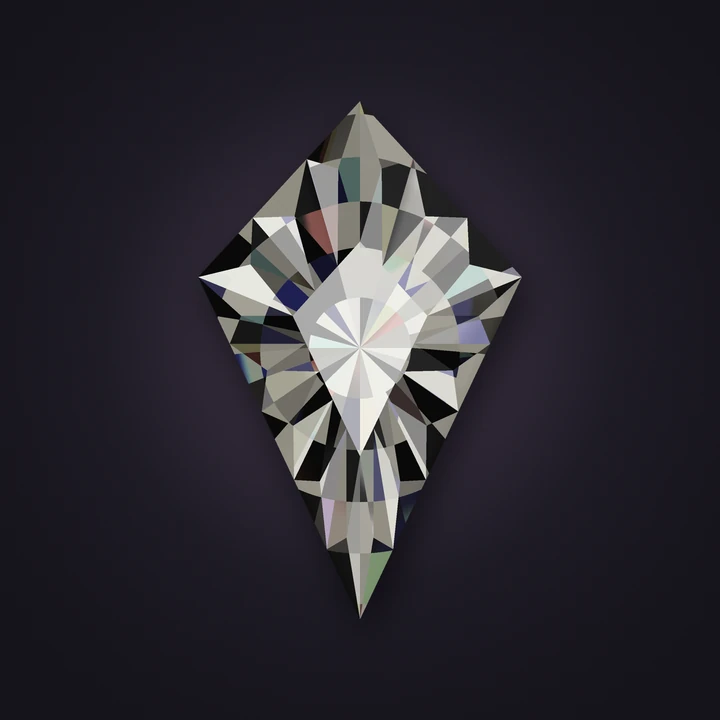
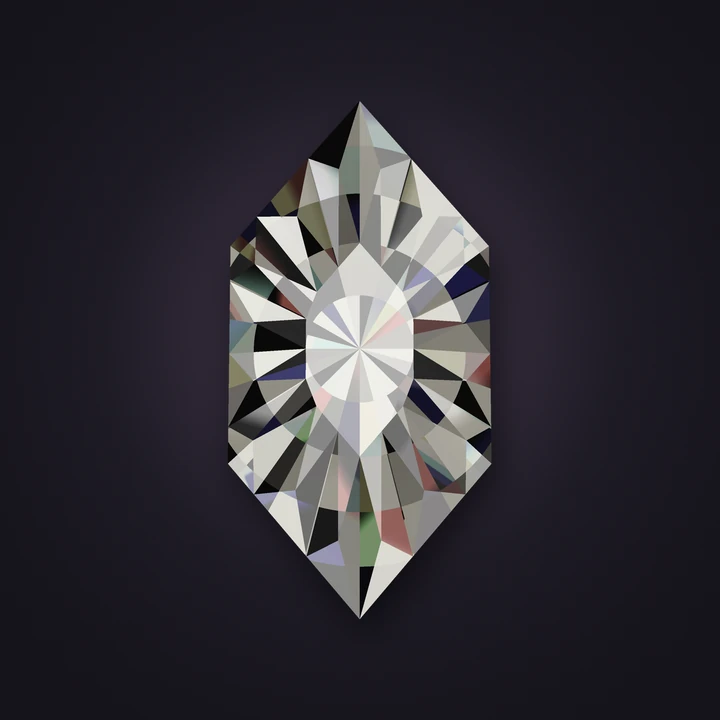
A kite engagement ring sets a four-sided diamond shaped like a child's kite: two short sides meeting at a wide point and two long sides tapering to a long point. It is graphic, directional and still rare, so most centre kites are cut to order or lab-grown.
On this page
- Origins of the kite cut
- Step-cut kite vs brilliant kite
- Kite diamond sizes (very approximate)
- What to look for in a kite
- Sourcing a kite centre stone
- Best settings and prong placement
- Wedding band pairing
- Kite pros and cons
- How much does a kite ring cost?
- Designing a kite ring in Ring Studio
- Other geometric shapes to compare
- Facets
- Varies by cutter; step-cut and brilliant versions both exist
- Length-to-width
- Very variable; commonly about 1.30 to 1.60
- Look
- Angular and directional, like an arrowhead pointing up the finger
- Best settings
- 4 prong at the corners (compass style), bezel; kite side stones
- Price vs round
- Natural centre kites are priced individually; lab-grown kites are affordable
Origins of the kite cut
Kite-shaped stones are an old idea. Small kite and other geometric step cuts were used to fill the precise patterns of Art Deco jewellery in the 1920s and 1930s, often fitted together like a mosaic around a centre stone. They were also common as calibré-cut coloured gems. What is new is using a kite as the main stone. That trend grew in the 2020s alongside interest in geometric and "alternative" engagement rings, helped by lab-grown diamonds, which make one-off shapes affordable to cut.
Step-cut kite vs brilliant kite
A step-cut kite has long parallel facets and shows broad, clean flashes, closest in feel to an emerald cut. It shows inclusions and colour more readily. A brilliant kite has triangular and kite-shaped facets and sparkles more, hiding small inclusions better. The choice is about mood: calm and architectural, or bright and lively.
Kite diamond sizes (very approximate)
Kites have no standard proportions, so these figures are only a rough guide for a brilliant-style stone with a ratio around 1.45. A kite's area is about half its length times width, so it needs larger dimensions than you might expect.
| Carat | Approx. L x W | Comment |
|---|---|---|
| 0.50 ct | 7.5 x 5.2 mm | Long and slim |
| 0.75 ct | 8.6 x 5.9 mm | Noticeable length |
| 1.00 ct | 9.5 x 6.5 mm | Strong graphic outline |
| 1.50 ct | 10.9 x 7.4 mm | Covers much of the finger length |
| 2.00 ct | 12.0 x 8.2 mm | Bold; consider sturdy prongs |
| 3.00 ct | 13.7 x 9.4 mm | Very long; check comfort when bending the finger |
A step-cut kite of the same weight will usually measure a little smaller because step cuts tend to be deeper.
What to look for in a kite
- Straight, crisp edges: the outline is the whole point; slightly bowed sides look accidental.
- Symmetry along the long axis: the two halves either side of the centre line should mirror each other.
- Point thickness: the long tip and the two side corners should not have a knife-thin girdle.
- Windowing: shallow kites can look see-through in the middle; check a video.
- Clarity for step cuts: aim for eye-clean, often VS2 or better.
- Clear documentation: kites may be described on reports under a generic modified shape name. Confirm measurements match the stone.
Sourcing a kite centre stone
You are unlikely to find a choice of natural 1 carat kites in a shop window. Options are: a specialist dealer who can source or commission one; a lab-grown kite cut to your chosen ratio, which is the most common route as of late 2026; or a coloured gemstone such as a sapphire. Allow extra time for custom cutting and agree tolerances in millimetres. Our guide to working with a jeweller covers how to brief this.
Design the setting after you have the stone's real measurements. With non-standard shapes, a head made for "a 1 carat kite" may not fit the kite you actually buy.
Best settings and prong placement
A kite has four corners, so four prongs, one on each, is natural. Because the corners sit at north, south, east and west when the kite points up the finger, the look matches a compass setting. The long tip and the short tip benefit from V-shaped prongs; Ring Studio doesn't have a V-prong option, so ask your jeweller to add them. A slim bezel protects every edge and suits a minimal style.
Kites also make excellent side stones, angled outward from an oval, round or emerald centre to form a fan or arrow shape. In an Art Deco design they can surround a centre in geometric patterns.
Wedding band pairing
When the long point faces the fingertip, a chevron or V-shaped band echoes it perfectly. Straight bands work well if the kite is set east-west or sits high enough to clear the band. Plain bands keep the outline clean.
Kite pros and cons
| Pros | Cons |
|---|---|
| Very distinctive and modern | Hard to source as a natural centre stone |
| Lengthens the finger | Sharp points need protection |
| Affordable in lab-grown | No standard proportions or sizing |
| Strong Art Deco heritage | Bands often need a custom contour |
How much does a kite ring cost?
Natural centre kites are usually quoted individually, reflecting cutting time and limited supply, and can cost more per carat than common fancy shapes. Lab-grown kites are priced much like other lab-grown fancy cuts, which have become far cheaper in recent years. Custom heads for unusual shapes may add a little to the setting cost. Treat any figure as an estimate that varies by retailer and market; see custom engagement ring costs.
Designing a kite ring in Ring Studio
Kite is one of Ring Studio's Pro shapes, and kites are also available as side stones.
- Choose Kite in the stone tray and set the carat.
- Try the compass setting so a prong sits on each corner, then compare it with a bezel.
- Toggle north-south and east-west.
- Add a knife edge band, or with another centre shape, add kites as side stones.
- Stack a chevron wedding band to see how it follows the point.
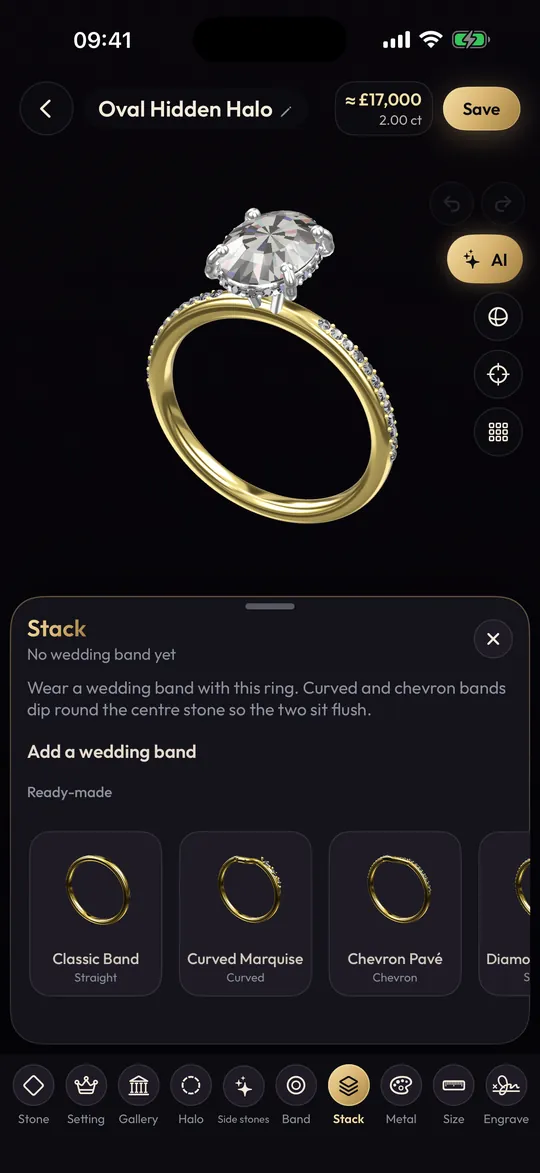
A precise 3D model shared by ring code helps a cutter and jeweller understand exactly the outline you want.
Other geometric shapes to compare
If you like the kite, compare the shield (a wider, flat-topped relative), the trillion and the Dutch marquise. Browse more in unique engagement rings.
Frequently asked questions
What is a kite cut diamond?
A kite cut has four sides arranged like a kite, with one short end and one long, tapering end. It can be step cut for clean flashes or brilliant cut for more sparkle.
Which way should a kite diamond point?
Most people set the long point towards the fingertip, which lengthens the finger. Setting it sideways or pointing to the wrist is equally possible and gives a less expected look.
Are kite cut diamonds rare?
As centre stones, yes. Small kites are common as accents in Art Deco style pieces, but larger natural kites are usually cut specially. Lab-grown kites are much easier to find.
What setting suits a kite diamond?
Four prongs, one at each corner, is the natural choice, ideally with V-shaped prongs on the two sharp points. A bezel gives full protection and a sleek modern look.
Is a kite the same as a lozenge cut?
They are related but not the same. A lozenge is symmetrical end to end, like a stretched diamond on a playing card, while a kite has one end longer than the other.
Keep reading
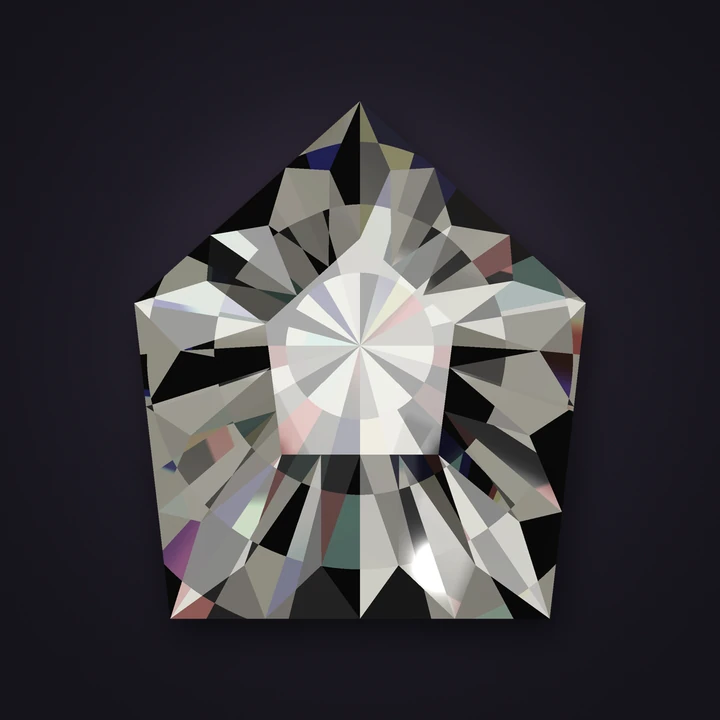 Shield Engagement RingsShield engagement ring guide: what a shield cut is, its Art Deco origins, approximate sizes, custom and lab-grown sourci…
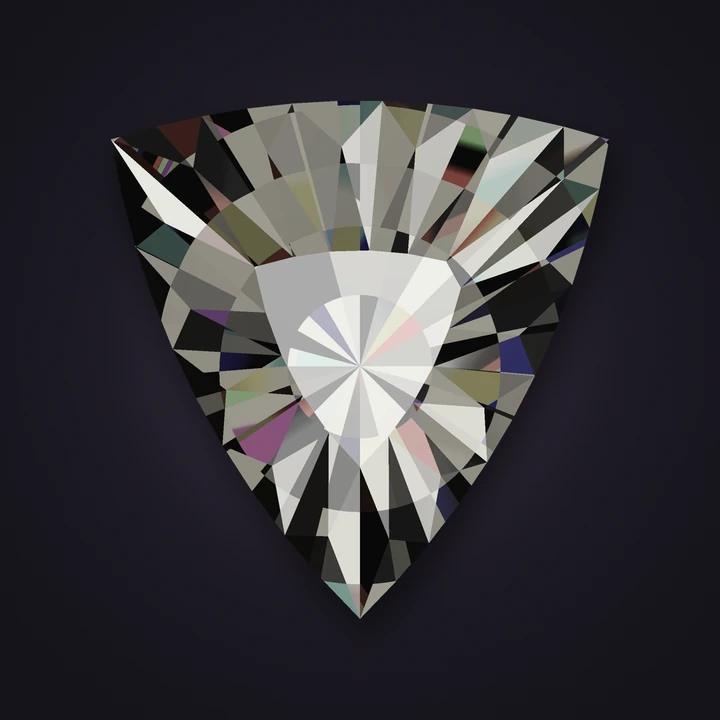 Trillion Engagement RingsTrillion engagement ring guide: curved vs straight triangle cuts, history, sizes in mm, protecting the corners, sourcing…
 Dutch Marquise Engagement RingsDutch marquise engagement ring guide: how it differs from a marquise, approximate sizes, sourcing, settings that protect…Art Deco Engagement RingsArt Deco engagement ring guide: 1920s-30s design traits, asscher, emerald, octagon and hexagon cuts, calibré colour, mil…Compass Set Engagement RingsCompass set engagement rings place four prongs at north, south, east and west. See how it changes the look, which shapes…Unique Engagement RingsUnique engagement ring ideas: unusual cuts, coloured stones, east-west and toi et moi layouts, hidden details and custom…