 Ring Studio
Best Engagement Ring for Your Hand Shape
The best engagement ring for your hand shape balances the stone and band against your finger: elongated stones and slim bands lengthen short fingers, wider shapes and bands suit long slender fingers, and larger or bolder stones sit in proportion on broader hands. These are guidelines, not rules; the ring you love is always the right one.
On this page
- How a ring changes the look of your hand
- Best engagement ring for short fingers
- Best engagement ring for long, slender fingers
- Best engagement ring for wide or fuller fingers
- Best engagement ring for small hands and petite fingers
- Large knuckles and rings that spin
- Quick reference table
- Stone size versus finger width
- Matching the band to the stone
- Skin tone and metal
- Try rings on your own hand with Ring Studio
- When to ignore the rules
- Short fingers
- Oval, pear, marquise north-south; thin band
- Long slender fingers
- Round, cushion, asscher, east-west; any band
- Wide fingers
- Larger elongated stones; 2.5-3 mm band
- Small hands
- Moderate carat, slim band, low profile
How a ring changes the look of your hand
Three things decide how a ring sits visually: the length of the stone along the finger, the width of the stone and band across the finger, and the height of the setting. Lines that run along the finger draw the eye lengthways and make it look longer. Shapes and bands that run across the finger add width. That's the whole principle; the rest is applying it.
Your hand isn't one "type" either. You might have long fingers but wide palms, or short fingers with slim knuckles. Treat the advice below as starting points and test them on your own hand.
Best engagement ring for short fingers
Aim to add length:
- Shapes: oval, pear, marquise, elongated cushion, or an emerald cut set north-south.
- Band: thin to medium (1.8-2.2 mm), ideally tapered towards the stone. A V-shaped or chevron band also leads the eye forward.
- Avoid: very wide bands, wide east-west stones and heavy halos that spread across the finger.
Best engagement ring for long, slender fingers
Long fingers can carry almost anything, so you can play with width:
- Shapes: round, cushion, asscher, princess, or an east-west oval or emerald.
- Settings: halos, three stone designs and wider bands look balanced rather than heavy.
- Watch: a very long marquise can make an already long finger look longer still, which some people love and others don't.
Best engagement ring for wide or fuller fingers
- Shapes: elongated stones with some presence, such as an oval, pear or elongated cushion. They slim the finger while holding their own.
- Size: a stone that looks small on a slender finger can look lost here, so a little more carat or spread (or a halo) helps proportion.
- Band: medium to wider, around 2.5-3 mm, so the ring doesn't look like it's disappearing. Very thin bands can also dig in.
Best engagement ring for small hands and petite fingers
- Size: keep the stone in proportion. Many people find 0.5-1 ct looks generous on a size UK H-J finger; check how wide the stone looks against your finger.
- Setting: low profiles and slim bands (1.6-2 mm) avoid a top-heavy look.
- Shapes: ovals and pears add length; a delicate solitaire or a hidden halo adds sparkle without bulk.
The carat size chart shows how many millimetres each carat weight measures, which is more useful than the weight itself when you're judging proportion.
Large knuckles and rings that spin
If your knuckles are wider than the base of your finger, the ring has to be sized to pass the knuckle and will then be loose below it. Heavier stones swing to the side. Fixes include sizing beads, a slightly squared inner shank, a sizing bar, or a lower, lighter setting. A jeweller can advise; see ring too big or small.
Quick reference table
| Hand or finger | Shapes to try | Band width | Settings that suit |
|---|---|---|---|
| Short fingers | Oval, pear, marquise, emerald (N-S) | 1.8-2.2 mm, tapered | Solitaire, hidden halo |
| Long, slender | Round, cushion, asscher, east-west | Any, 2-3 mm looks balanced | Halo, three stone, bezel |
| Wide or fuller | Oval, pear, elongated cushion | 2.5-3 mm | Halo, pavé shoulders |
| Small, petite | Oval, pear, round in modest size | 1.6-2 mm | Low solitaire, petite prongs |
| Large knuckles | Any, lower profile helps | Medium, slightly squared | Bezel, low head |
For more on bands, read our ring width guide.
Stone size versus finger width
A useful way to judge proportion is to compare the stone's width with the width of the finger at the base. A round 1 ct diamond is about 6.4-6.5 mm across; on a slim finger around 15 mm wide it covers a bit under half the width, while on a wider finger it covers less and looks smaller. Elongated stones change the picture: a 1 ct oval is roughly 7.7 x 5.7 mm, so it looks longer and covers more of the finger lengthways while staying narrow. If you want a stone to look generous without going up in carats, choose a shape with more spread from the top, or add a halo.
Use the carat size visualiser to see sizes at real scale, and remember that the same stone on two hands can look very different.
Matching the band to the stone
The band frames the stone. A slim, tapered band makes the centre stone look bigger by contrast, which is why it's popular for modest carat weights. A wider band suits a bigger stone and a broader hand, and looks deliberate with a bezel or an east-west setting. If you plan to wear a wedding band too, add the two widths together: two 2.5 mm bands make a 5 mm stack, which can feel wide on short fingers. Our ring stacking ideas show how combined width changes the look.
Skin tone and metal
Hand shape isn't the only factor. Many people find warmer skin tones glow next to yellow or rose gold and cooler tones suit platinum or white gold, but personal taste and the jewellery you already wear matter far more than any rule.
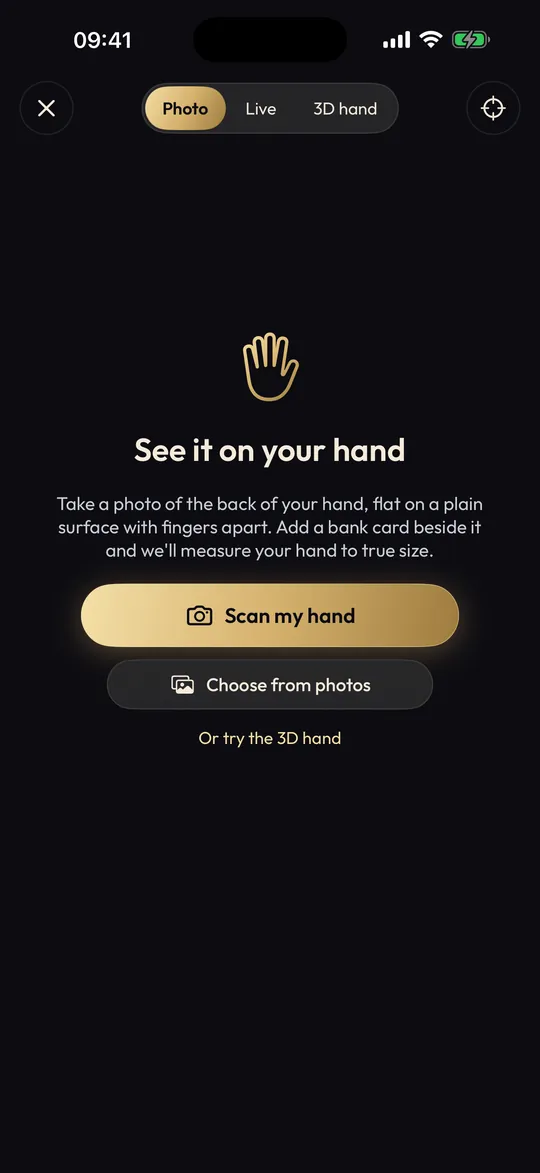
Try rings on your own hand with Ring Studio
General advice only goes so far; the reliable test is seeing the ring on your hand. Ring Studio, a 3D ring design app for iPhone, iPad and Android, lets you do that before you visit a jeweller:
- Design the ring: shape, carat, orientation, setting, halo, band style, width and taper, and metal.
- With Pro, scan your hand with a bank card beside it to estimate your ring size.
- Try the ring on your own hand live with the camera, or on a 3D hand, and compare versions: oval vs round, 1 ct vs 1.5 ct, 2 mm vs 3 mm band.
- Save the one that looks right and share it with your jeweller.
More on this on our virtual ring try-on page. You can also compare stone sizes with the carat size visualiser.
When to ignore the rules
Plenty of people with short fingers wear a round halo and love it; plenty with long fingers choose a slender marquise. Flattering proportions are a helpful guide when you're undecided, not a reason to give up a ring that makes you happy. Our guide to choosing an engagement ring covers the other decisions that matter just as much.
Frequently asked questions
What engagement ring looks best on short fingers?
Elongated shapes like oval, pear, marquise and emerald cut set north-south, on a thin or tapered band, visually lengthen short fingers. Avoid very wide bands and wide east-west stones.
What ring suits long slender fingers?
Long fingers carry almost anything. Round, cushion, asscher and east-west stones add welcome width, and wider bands, halos and three stone designs look balanced.
What engagement ring is best for chubby or wide fingers?
A medium to wider band (around 2.5-3 mm) and a stone with some presence, such as an oval, cushion or pear, look proportionate. Very thin bands and tiny stones can look lost.
What ring looks good on small hands?
Keep proportions in check: a modest-sized elongated stone, slim band and low setting. A stone that covers the width of the finger can overwhelm a small hand.
Do large knuckles affect the ring choice?
Yes. The ring must fit over the knuckle, so it may spin on the narrower base. Sizing beads, a slightly squared inner profile or a heavier top help keep the stone upright.
Keep reading
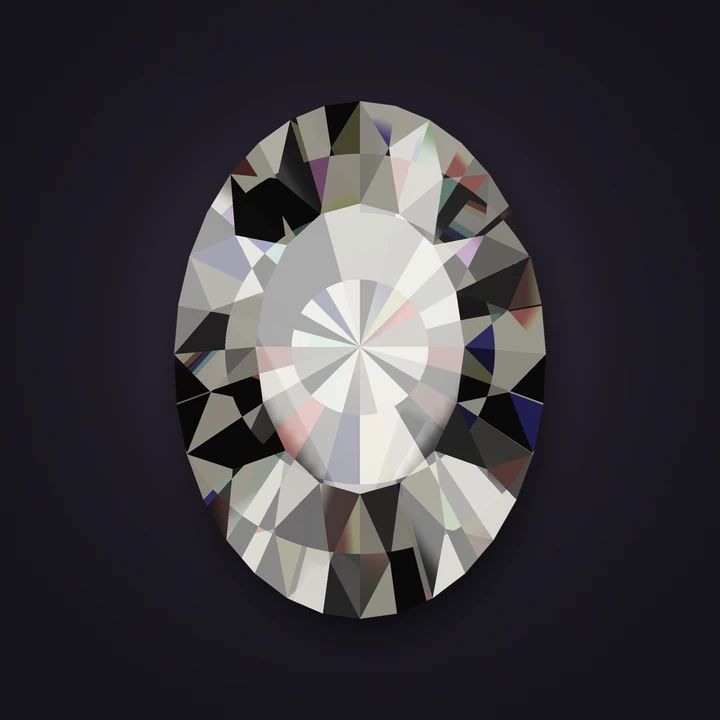 Oval Engagement Rings: How to Choose a Beautiful OneOval engagement ring guide: the best length-to-width ratio, judging the bow-tie, carat-to-mm sizes, flattering settings …
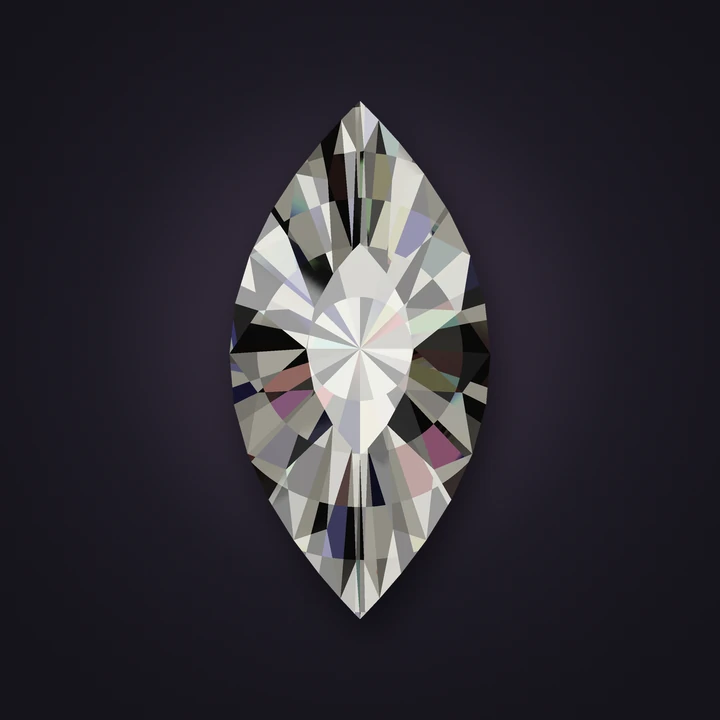 Marquise Engagement Rings: The Shape That Looks BiggestMarquise engagement ring guide: the ideal 1.85 to 2.10 ratio, bow-tie and symmetry checks, carat-to-mm sizes, tip protec…Diamond Carat Size Chart (mm)Diamond carat size chart in mm: approximate sizes for round diamonds from 0.25 to 5 carats, plus oval, cushion, princess…East-West Engagement RingsEast-west engagement ring guide: which elongated shapes work turned sideways, how it changes finger coverage and size, s…Virtual Ring Try-OnVirtual ring try-on with your phone camera: see your own ring design live on your hand or on a 3D hand, and scan your ha…