 Ring Studio
Diamond Carat Size Chart (mm)
This diamond carat size chart converts carat weight into approximate millimetres. A well-cut 1 carat round diamond measures about 6.4 to 6.5 mm across, but depth, cut and shape all change how big a stone looks.
On this page
- 1 carat
- 0.2 grams
- 1 ct round
- About 6.4 to 6.5 mm
- 2 ct round
- About 8.1 to 8.2 mm
- Looks biggest per carat
- Marquise, oval, pear
- All sizes here
- Approximate, for well-cut stones
Round diamond carat size chart
Round brilliants are cut to fairly consistent proportions, so their size per carat is predictable. The figures below are approximate diameters for well-cut stones; any individual diamond can be a little larger or smaller depending on its depth and girdle. Always check the measurements on the stone's grading report.
| Carat | Approx. diameter (mm) | Approx. face-up area vs 1 ct |
|---|---|---|
| 0.25 ct | 4.1 | About 40% |
| 0.33 ct | 4.4 | About 46% |
| 0.50 ct | 5.1 to 5.2 | About 63% |
| 0.75 ct | 5.8 | About 81% |
| 0.90 ct | 6.2 | About 92% |
| 1.00 ct | 6.4 to 6.5 | 100% |
| 1.25 ct | 6.9 | About 115% |
| 1.50 ct | 7.3 to 7.4 | About 130% |
| 1.75 ct | 7.8 | About 147% |
| 2.00 ct | 8.1 to 8.2 | About 160% |
| 2.50 ct | 8.7 to 8.8 | About 185% |
| 3.00 ct | 9.3 | About 210% |
| 3.50 ct | 9.8 | About 235% |
| 4.00 ct | 10.2 to 10.3 | About 255% |
| 5.00 ct | 11.0 to 11.1 | About 295% |
Notice the 0.90 ct row: it is only about 0.2 to 0.3 mm narrower than a 1 ct stone, a difference that is very hard to see on the hand, yet it often costs noticeably less. More on that in diamond price per carat.
Fancy shape carat size chart
Fancy shapes vary more because cutters choose different length-to-width ratios. These are typical approximate measurements (length by width, in mm) for common ratios. Treat them as a guide, not a specification.
| Shape | 0.5 ct | 1 ct | 1.5 ct | 2 ct | 3 ct |
|---|---|---|---|---|---|
| Oval (about 1.4:1) | 6 x 4.2 | 7.7 x 5.6 | 8.8 x 6.3 | 9.7 x 6.9 | 11 x 7.9 |
| Cushion (square) | 4.8 x 4.8 | 5.8 x 5.8 | 6.7 x 6.7 | 7.3 x 7.3 | 8.3 x 8.3 |
| Princess | 4.4 x 4.4 | 5.5 x 5.5 | 6.3 x 6.3 | 7 x 7 | 8 x 8 |
| Emerald (about 1.4:1) | 5.8 x 4.1 | 7 x 5 | 8 x 5.7 | 8.6 x 6.2 | 9.8 x 7 |
| Asscher | 4.5 x 4.5 | 5.5 x 5.5 | 6.3 x 6.3 | 6.9 x 6.9 | 8 x 8 |
| Radiant (about 1.25:1) | 5.3 x 4.3 | 6.5 x 5.2 | 7.4 x 5.9 | 8 x 6.5 | 9.2 x 7.4 |
| Pear (about 1.55:1) | 7 x 4.5 | 8.5 x 5.5 | 9.6 x 6.2 | 10.5 x 6.8 | 12 x 7.8 |
| Marquise (about 2:1) | 8 x 4 | 10 x 5 | 11.5 x 5.8 | 12.5 x 6.3 | 14.5 x 7.3 |
| Heart | 5.5 x 5.5 | 6.5 x 6.5 | 7.4 x 7.4 | 8.1 x 8.1 | 9.2 x 9.2 |
All measurements are approximate and vary from stone to stone. Elongated cushions, for example, can be anywhere from slightly rectangular to very long; see elongated cushion engagement rings.
Why carat weight does not equal size
Carat is weight. A diamond's face-up size depends on how that weight is distributed:
- Depth. A stone cut deep carries more weight in its pavilion, so it measures smaller across the top. A stone cut too shallow looks wide but leaks light.
- Girdle thickness. A thick girdle adds hidden weight around the edge.
- Shape. Long, flat-ish shapes such as marquise and oval look bigger per carat than deep, compact ones such as cushion and asscher.
- Setting. A halo can make a stone look about a size bigger; a bezel adds a metal rim that frames it.
When comparing stones, look at the millimetre measurements on the report, not just the carat. Two 1.00 ct ovals can differ by half a millimetre or more in length.
How big does each carat look on a hand?
Finger size changes everything. The same 1 ct stone looks bold on a UK size J (US 5) and modest on a UK size Q (US 8). As a rough feel, on an average finger:
- 0.5 ct: delicate and understated.
- 1 ct: a classic, clearly visible centre stone.
- 1.5 to 2 ct: a statement; covers much of the finger width in a round.
- 3 ct and above: very large; elongated shapes may extend past the finger edges.
Our average ring size page gives typical finger sizes, and the carat size visualiser shows relative sizes on screen.
Trying carat sizes on your own hand in Ring Studio
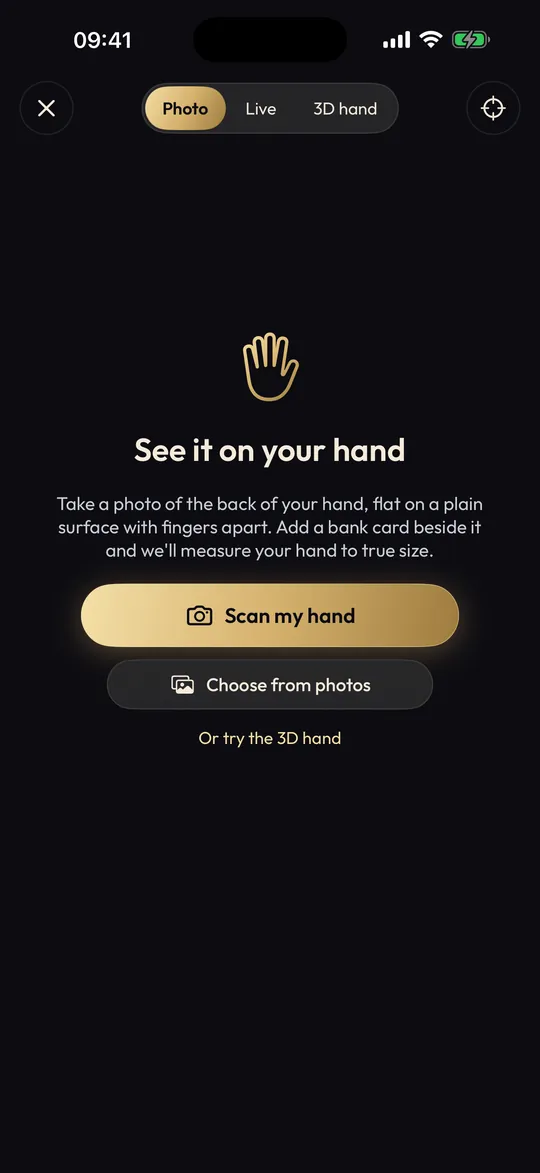
A chart can only go so far. Ring Studio lets you adjust the carat size of any of its 28 stone shapes and see the change on the 3D ring straight away, including the setting and band proportions.
- Choose a shape and drag the carat size from small to large.
- Compare shapes at the same carat, for example a 1.5 ct oval against a 1.5 ct cushion, to see which looks bigger.
- Scan your hand with a bank card for scale to estimate your ring size (Pro).
- Try the ring on your own hand live with the camera, or on a 3D hand, to judge the carat in context.
- Check the live price estimate as you change carat; it is an estimate for comparison, not a quote.
The virtual ring try-on page explains how the hand scan and camera try-on work.
Using the chart when you shop
- Decide on a face-up size you like using the app or a printout, then use the chart to find the carat range.
- Look for stones just under magic weights, such as 0.9 or 1.4 ct, with good spread.
- Check the report's measurements and depth percentage, and avoid very deep stones.
- Balance size against the other Cs with the 4Cs guide, and see 1 carat ring prices for budgeting.
Frequently asked questions
How many mm is a 1 carat diamond?
A well-cut 1 carat round brilliant is about 6.4 to 6.5 mm in diameter. A 1 carat oval is roughly 7.5 to 8 by 5.5 to 6 mm, and a 1 carat princess is about 5.5 mm square.
Does a 2 carat diamond look twice as big as a 1 carat?
No. A 2 carat round is about 8.1 mm across against 6.4 to 6.5 mm for 1 carat, so its face-up area is roughly 1.6 times larger, not double. Weight spreads through depth as well as width.
Which diamond shape looks biggest for its carat weight?
Elongated shapes such as marquise, oval and pear spread their weight over a larger face-up area, so they tend to look bigger than a round of the same weight. Deep shapes like cushion and asscher can look smaller.
Why do two 1 carat diamonds measure differently?
Diamonds are cut to different depths. A deep stone hides weight below the girdle and measures smaller across the top, while a shallow stone looks wider but may lose sparkle. Cut quality matters as much as carat.
How big does a 1 carat diamond look on a finger?
On an average finger, a 1 carat round covers a noticeable part of the finger width without overhanging it. On slim fingers it looks larger; on wide fingers smaller. Trying it on with a ring sizer or app helps.
Keep reading
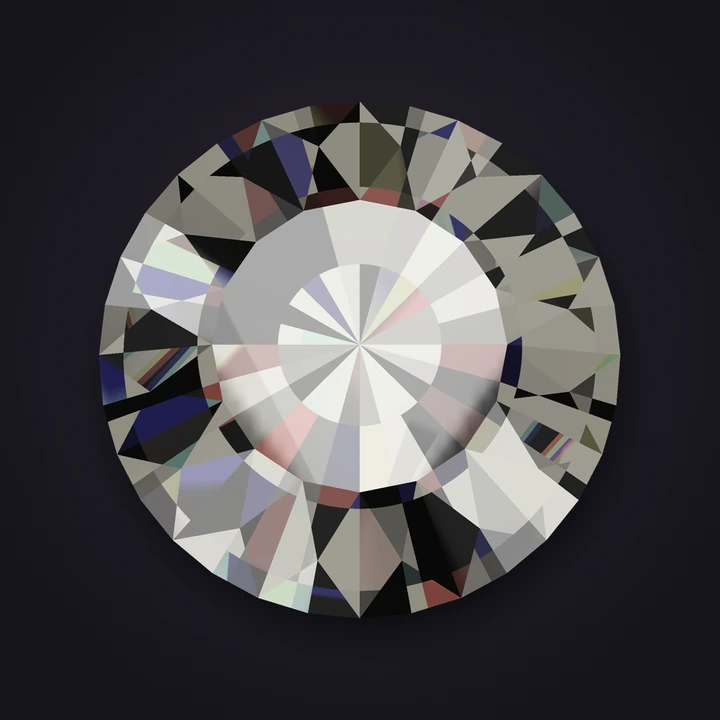 Round Engagement Rings: The Complete Buyer's GuideRound engagement ring guide: carat-to-mm sizes, cut grades that matter, best prong settings, band pairings and prices, p…
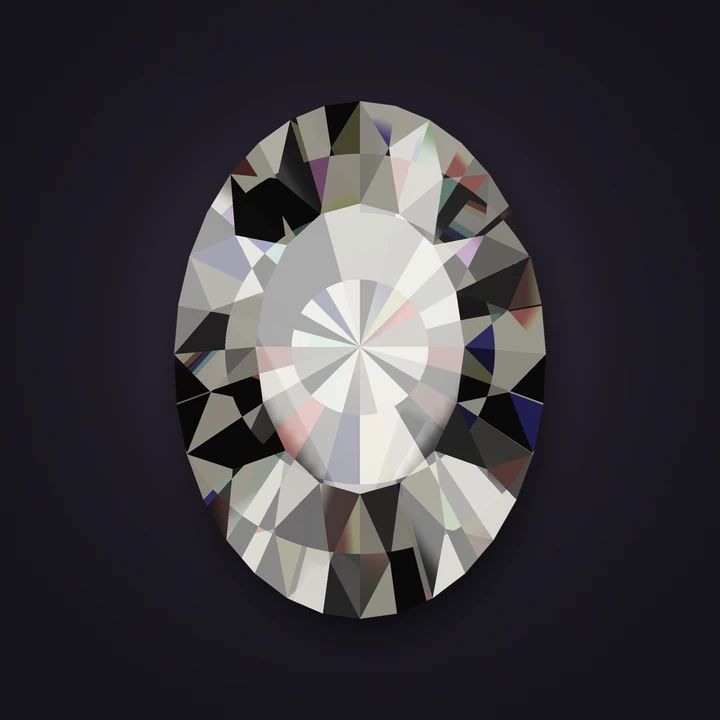 Oval Engagement Rings: How to Choose a Beautiful OneOval engagement ring guide: the best length-to-width ratio, judging the bow-tie, carat-to-mm sizes, flattering settings …