 Ring Studio
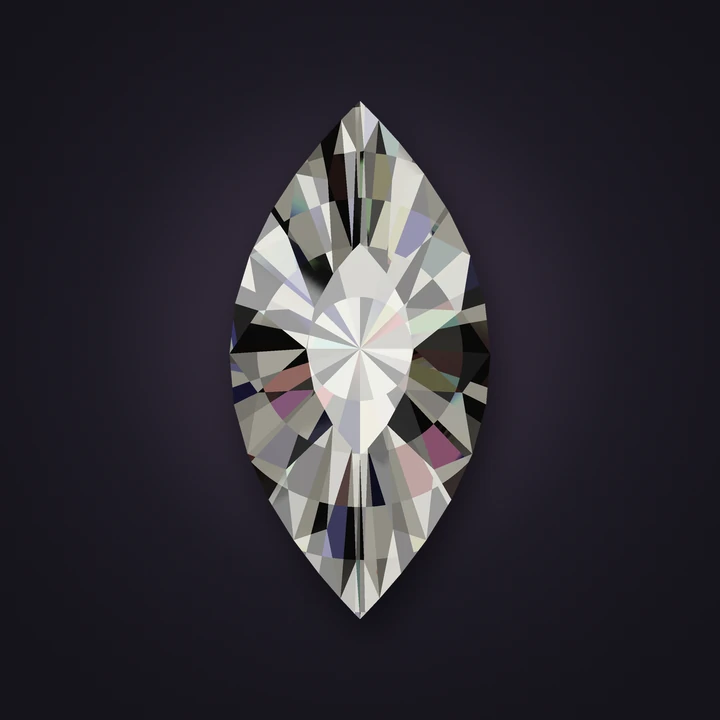
Marquise Engagement Rings: The Shape That Looks Biggest
A marquise engagement ring sets a long, boat-shaped brilliant with a point at each end. It has the largest face-up area of any common diamond shape for its weight, and its vintage drama has made it popular again.
On this page
- A shape with a story
- Marquise carat to mm size chart
- What to look for in a marquise diamond
- Best settings for a marquise
- Wedding bands for a marquise
- Marquise pros and cons
- Marquise ring prices
- Who suits a marquise engagement ring?
- Common marquise buying mistakes
- Design a marquise engagement ring in Ring Studio
- Marquise vs pear and Dutch marquise
- Facets
- Usually 56 to 58, modified brilliant
- Length-to-width
- 1.75 to 2.25; most popular 1.85 to 2.10
- Look
- Long, pointed, dramatic; the most finger-lengthening shape
- Best settings
- 6 prong with protected tips, bezel, east-west, vintage halos
- Price vs round
- Among the lowest per carat of the popular shapes
A shape with a story
The marquise, also called the navette (French for "little boat"), is one of the oldest fancy cuts. The favourite tale says Louis XV wanted a diamond shaped like the smile of the Marquise de Pompadour. It's a legend, but the shape was fashionable for centuries, enjoyed a big moment in the 1970s and 1980s, and has come back strongly as people look for vintage-feeling alternatives to ovals.
Marquise carat to mm size chart
Approximate dimensions for stones around a 2.0 ratio. Notice how much longer they are than rounds of equal weight.
| Carat | Approx. L x W | Round of similar length |
|---|---|---|
| 0.50 ct | 8.6 x 4.3 mm | Longer than a 2 ct round is wide |
| 0.75 ct | 9.7 x 4.9 mm | Very generous for the weight |
| 1.00 ct | 10.6 x 5.3 mm | Longer than a 3 ct round is wide |
| 1.50 ct | 12.1 x 6.1 mm | Spans much of the finger length |
| 2.00 ct | 13.3 x 6.7 mm | A true statement stone |
| 3.00 ct | 15.2 x 7.6 mm | Often better set east-west for comfort |
Figures are approximate; depth and ratio change them noticeably.
What to look for in a marquise diamond
Symmetry first
Fold the stone in half along its length and across its width in your mind: both halves should match. Uneven wings or tips that do not line up are the most common faults and are easy to see once set.
The bow-tie
Marquise diamonds often have the most pronounced bow-tie of any shape. Avoid stones where the dark band is wide and fixed. A well-cut marquise shows a soft bow-tie that breaks up as the stone moves.
Proportions
Depths of roughly 58 to 62% and tables of roughly 53 to 63% generally perform well. Very shallow stones look washed out in the middle.
Colour and clarity
Colour pools at the tips, so in white metal G or H gives a clean look. Clarity near the points matters for durability; minor inclusions in the body are often hidden by the facets.
Turn a marquise side to side in a video. If the centre goes dark at every angle, the bow-tie will be obvious on the hand.
Best settings for a marquise
- Six prongs: one V-prong at each tip and two pairs along the sides is the classic secure setting. Ring Studio doesn't have a dedicated V-prong, so choose a 6 prong head and note V-tips for your jeweller.
- Bezel or half bezel: protects the points fully and gives a sleek modern look.
- East-west: a horizontal marquise sits low, avoids catching and looks distinctive. See east-west engagement rings.
- Vintage halos and side stones: marquise centres suit milgrain halos, round side stones and the leaf-like look of small marquise side stones, which suit a vintage style.
Wedding bands for a marquise
Marquise heads are long, so a straight band may meet the tips but leave a gap at the middle. Many people choose a chevron or contoured band that follows the outline. A V-shaped chevron band echoes the tips particularly well.
Marquise pros and cons
| Pros | Cons |
|---|---|
| Largest face-up spread for the weight | Two vulnerable tips |
| Lengthens the finger dramatically | Strong bow-tie is common |
| Usually low price per carat | Symmetry flaws are easy to see |
| Vintage character without being an antique | Can catch on clothes if set high north-south |
Marquise ring prices
As of late 2026, marquise diamonds are generally priced below rounds and often below ovals of similar quality, though well-cut stones with faint bow-ties are harder to find and priced accordingly. Lab-grown marquise stones are widely available and much cheaper than natural. Treat any figure as an estimate; use the ring price estimator to compare options.
Who suits a marquise engagement ring?
The marquise is the most finger-lengthening shape there is, which makes it a good choice for shorter or wider fingers. On very slim fingers, a 2 carat marquise can overhang the edges, so many people choose an east-west setting or a slightly lower ratio. It suits anyone drawn to vintage jewellery from the 1970s or the Georgian era, and it pairs beautifully with yellow gold. Its length also means it looks substantial at modest carat weights, so it is a smart way to stretch a budget.
Common marquise buying mistakes
Buying from a single still photo, which hides the bow-tie; ignoring tip prongs, which leaves the points exposed; and choosing a very high ratio that overhangs a slim finger. A few minutes with a video and the stone's measurements avoids all three.
Design a marquise engagement ring in Ring Studio
Marquise is one of the free shapes in Ring Studio.
- Choose Marquise in the stone tray and set the carat.
- Start with a 6 prong head and claw tips; compare with a bezel.
- Toggle north-south and east-west.
- Try round side stones or a three stone layout, or (with Pro) marquise and leaf V side stones for a vintage look.
- Choose a band, and with Pro stack a chevron-contour wedding band to check the fit.
Curious about the faceted modern version? The Dutch marquise is also in the app as a Pro shape, so you can swap between them on the same ring.
Marquise vs pear and Dutch marquise
If you love the length but want one rounded end, the pear is the natural alternative; see pear vs marquise. For a more geometric, contemporary outline, compare marquise vs Dutch marquise.
Frequently asked questions
Why is it called a marquise cut?
The popular story links the shape to the court of Louis XV of France and the Marquise de Pompadour. It is a charming legend rather than documented fact, but the name has stuck for centuries.
Does a marquise diamond look bigger than a round?
Yes. A 1 carat marquise is typically around 10 to 11 mm long, while a 1 carat round is about 6.5 mm across, so the marquise looks considerably larger for the same weight.
What is the best ratio for a marquise diamond?
Most people prefer 1.85 to 2.10. Lower ratios look short and wide; higher ratios look very slender and dramatic.
Are marquise diamonds fragile?
The two tips are thin and can chip if exposed, so they should be covered by V-shaped prongs or a bezel. With the tips protected, a marquise wears as well as other shapes.
Is a marquise cheaper than a round diamond?
Usually considerably. Marquise diamonds are among the lower-priced shapes per carat, partly due to lower demand and partly because they use rough efficiently.
Keep reading
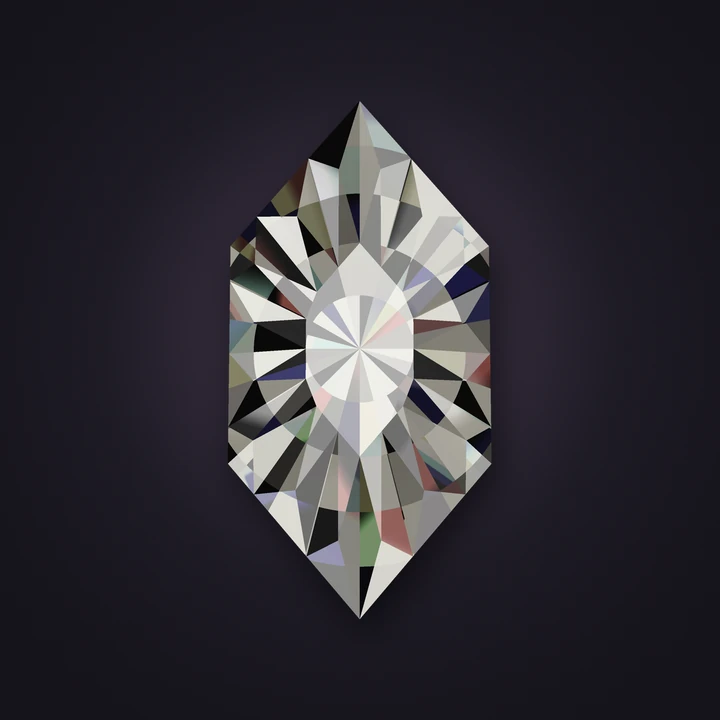 Dutch Marquise Engagement RingsDutch marquise engagement ring guide: how it differs from a marquise, approximate sizes, sourcing, settings that protect…
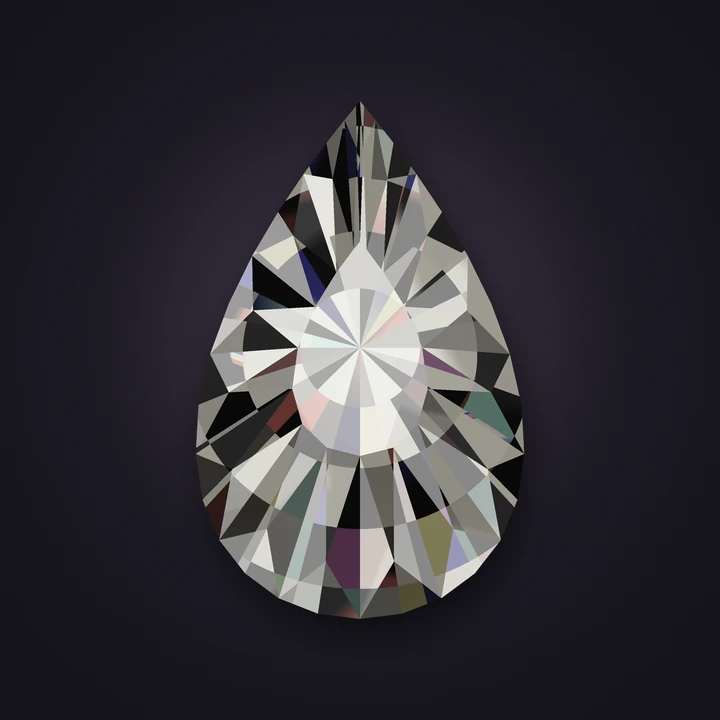 Pear Engagement Rings: Choosing a Teardrop DiamondPear engagement ring guide: the best ratios, judging the bow-tie and shoulders, carat-to-mm sizes, protecting the tip, b…Vintage Engagement RingsVintage engagement ring guide: Georgian to retro eras, old mine and old European cuts, milgrain and engraving, buying an…East-West Engagement RingsEast-west engagement ring guide: which elongated shapes work turned sideways, how it changes finger coverage and size, s…