 Ring Studio
Vintage Engagement Rings
A vintage engagement ring is either a genuinely old ring or a new ring designed in the style of a past era, with antique cuts, engraving and fine metal detail. Knowing the eras and their hallmark details helps you choose and describe the look you want.
On this page
- Vintage, antique or vintage-inspired?
- Vintage engagement ring eras at a glance
- Antique diamond cuts
- Details that make a ring look vintage
- Apparent size with old cuts
- Durability and care for antique rings
- Wedding bands with vintage rings
- Vintage ring cost
- Designing a vintage-style ring in Ring Studio
- Finding your vintage look
- Two meanings
- Genuinely old, or new in an old style
- Classic cuts
- Old mine, old European, rose cut, step cuts
- Signature details
- Milgrain, hand engraving, filigree, clusters
- Durability
- New: good. Antique: check and restore
- Band pairing
- Often needs a shaped or matching band
- In Ring Studio
- Engraved band, old cuts, tulip and flame galleries
Vintage, antique or vintage-inspired?
In the jewellery trade, antique generally means a ring around a century old or more; vintage usually means an older ring that is not yet antique; and vintage-inspired or vintage-style means a new ring made to look old. A genuinely old ring carries history and often old cut diamonds that are no longer made in quantity. A new vintage-style ring gives you the look with modern strength, your exact size and a new stone if you prefer.
Vintage engagement ring eras at a glance
| Era | Roughly | Typical features |
|---|---|---|
| Georgian | 1714-1837 | Closed-back settings, rose cuts and old mine cuts, foiled stones, clusters |
| Victorian | 1837-1901 | Yellow gold, sentimental motifs, coloured stones, clusters, carved bands |
| Edwardian | c.1901-1915 | Platinum, lacy filigree, milgrain, old European cuts |
| Art Deco | c.1920-1935 | Geometric shapes, step cuts, calibré coloured stones; see Art Deco rings |
| Retro | c.1935-1950 | Bold rose and yellow gold, chunky sculptural designs |
The dates are approximate and styles overlap. For a fuller picture, see the history of the engagement ring.
Antique diamond cuts
- Old mine cut: a cushion-shaped brilliant with a high crown, small table, and a large open culet visible through the top. Soft, chunky flashes in candlelight. See old mine cut rings.
- Old European cut: the round forerunner of the modern brilliant, with a small table and an open culet. See old European cut rings.
- Rose cut: a flat base with a domed top of triangular facets. Less fire, more glow; looks larger for its weight because it is shallow.
- Step cuts: emerald, asscher, baguette and carré, central to Art Deco design.
Old cuts were shaped by hand and by eye, so each one looks individual. Modern "antique-inspired" cuts recreate the look with more consistent proportions.
Details that make a ring look vintage
- Milgrain: tiny beaded edges along the band or setting.
- Hand engraving: scrolls, leaves or patterns cut into the band sides.
- Filigree: openwork metal lace, especially in Edwardian galleries.
- Decorative galleries: tulip or flame shapes under the stone visible from the side.
- Clusters and halos: small stones grouped around a centre; see cluster rings.
- Coloured stones: sapphires, rubies and emeralds, often with diamonds.
Apparent size with old cuts
Old mine and old European cuts are often deeper and have smaller tables than modern brilliants, so they can look smaller face-up for the same carat weight. Rose cuts do the opposite: shallow and broad, they look larger than their weight. Halos and clusters were used in many eras partly to add presence to modest stones.
Durability and care for antique rings
A ring that has been worn for a hundred years has earned some wear. Prongs may be thin, the shank may be worn at the back, and engraving or milgrain may be softened. Before daily wear, have a jeweller check and, if needed, re-tip prongs or rebuild the shank. Rose cuts and old cuts with thin girdles can chip, so a protective setting helps. Our guide to redesigning an old or inherited ring covers restoration and resetting. If you are buying antique, a jeweller can also help interpret old hallmarks.
Wedding bands with vintage rings
Antique rings were rarely designed with a matching wedding band in mind, and clusters or wide heads may not sit flush with a straight band. A custom curved band or a slim engraved band in the same metal colour usually solves this.
Vintage ring cost
Prices vary widely. Old cut diamonds can be good value compared with modern cuts of the same weight, but signed, rare or period-perfect pieces can be expensive. Restoration adds cost. New vintage-inspired rings are priced like other custom rings, with engraving and milgrain adding some labour. Treat any figure as an estimate; prices vary by seller, quality and market.
Designing a vintage-style ring in Ring Studio
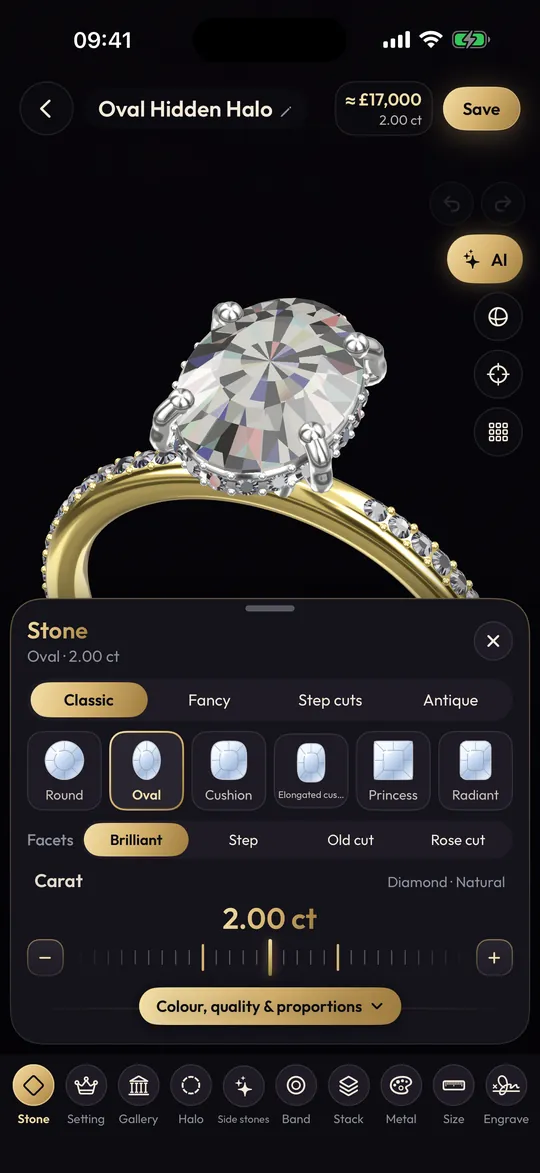
- Choose an antique cut: old mine, old European or rose cut (these are among Pro's 28 shapes), or a cushion or emerald from the free set.
- Pick a setting: claw or double prong tips feel period-appropriate; a bezel suits rose cuts.
- Choose the engraved (vintage) band to add surface decoration.
- Pick a tulip or flame gallery for a decorative side view, and add a classic halo for a cluster-like look.
- Choose yellow or rose gold for Victorian warmth or platinum for Edwardian lightness.
Ring Studio does not have a milgrain or filigree option, so ask your jeweller to add these finishing details when they make the ring. If you have a photo of an antique ring you love, the AI can recreate the design in 3D so you can edit it.
Finding your vintage look
If geometric lines and step cuts appeal most, go straight to Art Deco engagement rings. If you love the soft glow of old cuts, read about old mine and old European diamonds before you shop.
Frequently asked questions
What is the difference between vintage and antique rings?
In the jewellery trade, antique usually means around 100 years old or more, while vintage often means at least about 20 to 30 years old. Vintage-style or vintage-inspired means a new ring made to look old.
What diamond cuts are used in vintage rings?
Old mine cuts (cushion-shaped, eighteenth and nineteenth centuries), old European cuts (round, late nineteenth to early twentieth century) and rose cuts (flat-bottomed and domed) are the classic antique cuts. Step cuts such as emerald and asscher feature heavily in Art Deco rings.
Are antique engagement rings durable?
Many are, but prongs and settings may be worn after decades of wear. Have any antique ring checked by a jeweller before daily wear, and expect some restoration.
What is milgrain on a ring?
Milgrain is a row of tiny metal beads along the edges of a band or setting, made with a special wheel tool. It gives a soft, textured edge and is a hallmark of Edwardian and Art Deco rings.
Are vintage engagement rings cheaper?
Sometimes. Old cut diamonds can be priced lower than modern cuts of similar weight, but rare signed or period pieces can command premiums. New vintage-inspired rings are priced like other custom rings.
Keep reading
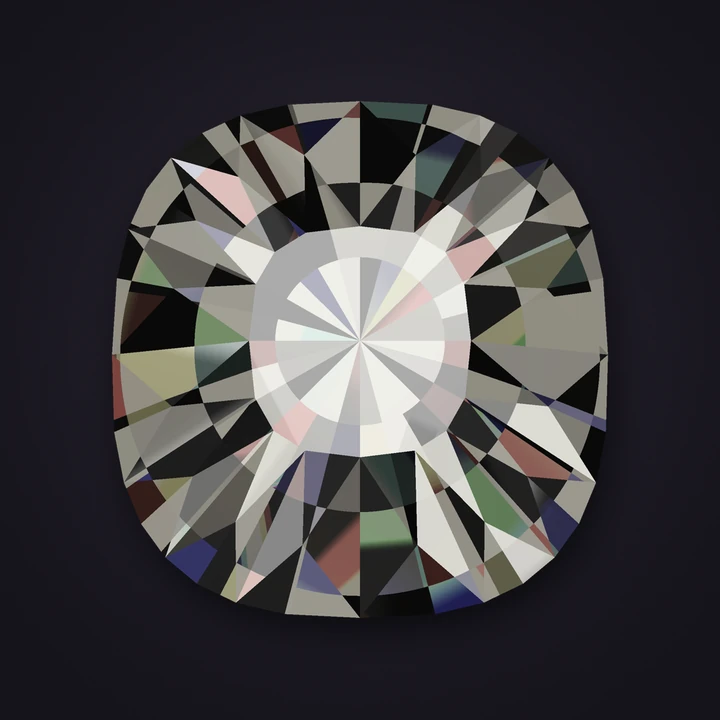 Old Mine Cut Engagement RingsOld mine cut engagement ring guide: history, spotting a true antique, sizes, colour and clarity expectations, antique vs…
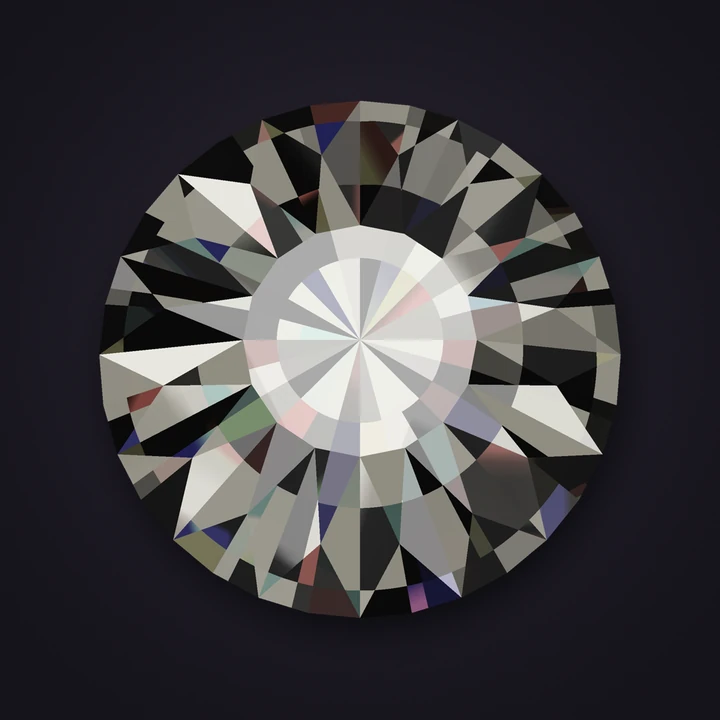 Old European Cut Engagement RingsOld European cut engagement ring guide: history, how it differs from a modern round, sizes, colour and clarity, antique …The History of the Engagement RingThe history of the engagement ring, from Roman betrothal rings and the 1477 diamond ring for Mary of Burgundy to posy ri…Redesigning an Old or Inherited RingRedesigning an old or inherited ring: reset the stone, remodel or reuse the gold, what jewellers check first, what drive…Cluster Engagement RingsCluster engagement ring guide: floral, illusion and scattered clusters, how small stones create a big look, care, band f…