 Ring Studio
The History of the Engagement Ring
The history of the engagement ring runs from Roman betrothal rings of iron and gold, through medieval fede and posy rings and the 1477 diamond ring Archduke Maximilian gave Mary of Burgundy, to the diamond solitaire made standard by 19th-century mining and 20th-century advertising. Today lab-grown stones and personal designs are writing the next chapter.
On this page
- Ancient origins: rings as promises
- Roman betrothal rings
- Medieval and Renaissance rings
- 1477: Maximilian and Mary of Burgundy
- Georgian and Victorian sentiment
- 1867: the diamond supply changes
- Edwardian and Art Deco: platinum and precision
- 1947: "A Diamond Is Forever"
- Late 20th century: new cuts and famous rings
- Lab-grown diamonds
- A quick timeline
- Recreate a piece of ring history in Ring Studio
- What the history tells us
- Roman era
- Iron and gold betrothal rings; fede (clasped hands) motif
- 1477
- Maximilian of Austria's diamond ring for Mary of Burgundy
- 1867 onwards
- South African diamond finds increase supply
- 1947
- "A Diamond Is Forever" slogan written for De Beers
Ancient origins: rings as promises
A ring is an obvious symbol for a promise: a circle has no beginning or end. Ancient Egyptians exchanged rings of braided reed and other materials, and the belief that a vein ran from the fourth finger straight to the heart was recorded by Roman authors, who attributed it to Egyptian anatomists. That belief, later named the vena amoris, is why many countries wear engagement and wedding rings on that finger today. It isn't anatomically true, and plenty of cultures use the right hand; see which hand an engagement ring goes on.
Roman betrothal rings
The Romans made the betrothal ring a formal custom. A man gave a ring to his intended as a pledge, often of iron, symbolising strength and permanence, and later of gold, which a wife might wear in public. Some Roman rings carried a small key, possibly signifying a share in the household. The Romans also popularised the fede ring (from the Italian mani in fede, "hands in faith"), showing two clasped right hands. Fede rings stayed popular for well over a thousand years and are the ancestor of the Irish Claddagh ring.
Medieval and Renaissance rings
In medieval Europe, rings became part of Christian marriage ceremonies, and betrothal and wedding rings were sometimes the same ring. Stones were cut simply, if at all; sapphires and rubies were prized for their colour and supposed protective powers. Two forms stand out:
- Gimmel rings: two or three interlocking hoops that fitted together into one ring, sometimes separated during the engagement and reunited at the wedding. The German reformer Martin Luther's wedding ring is a well-known gimmel ring.
- Posy rings: plain bands engraved with a short verse, popular in England and France from roughly the 15th to the 17th century. Inscriptions such as "Let love abide till death divide" were usually inside the band, close to the skin. The modern habit of engraving inside a ring descends directly from them.
1477: Maximilian and Mary of Burgundy
The diamond engagement ring is usually traced to 1477, when Archduke Maximilian of Austria (later Holy Roman Emperor) gave a ring set with diamonds to Mary of Burgundy on their betrothal. It's often described as having diamonds arranged in the form of an M. Diamonds had been worn before, but this is the earliest well-recorded betrothal gift of a diamond ring, and it set a fashion among European nobility.
Diamond cutting was primitive by modern standards. Early stones were point cuts (following the natural octahedral crystal) and later table cuts and rose cuts, with flat backs and faceted domed tops. They glowed softly in candlelight rather than sparkling.
Georgian and Victorian sentiment
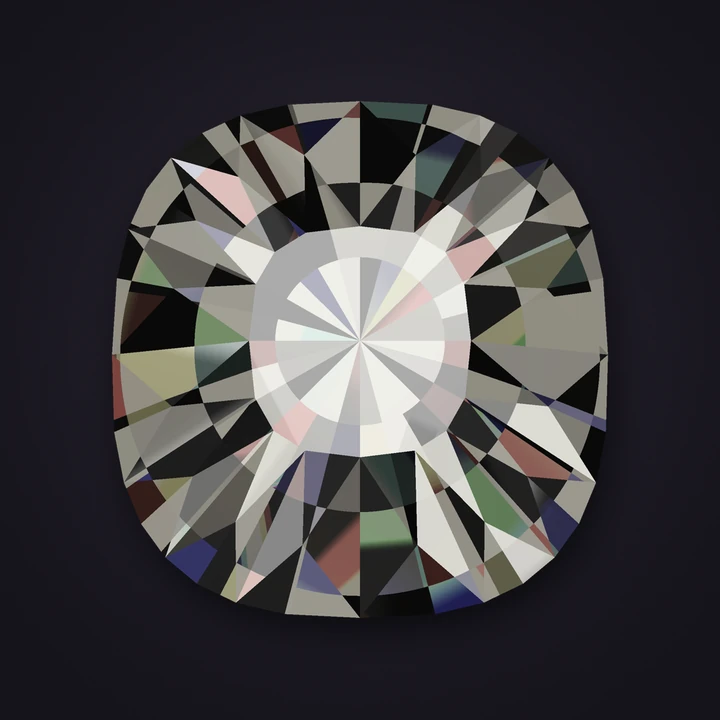
From the 18th century, cutting improved and the cushion-shaped old mine cut appeared, often set in silver-topped gold so the stone looked whiter. Rings were deeply sentimental:
- Toi et moi rings paired two stones; Napoleon Bonaparte gave Joséphine a pear-shaped sapphire and diamond toi et moi in 1796. The style has come back strongly; see toi et moi engagement rings.
- Acrostic or "regard" rings spelled messages with the first letters of gemstones, such as ruby, emerald, garnet, amethyst, ruby and diamond for REGARD.
- Serpent rings symbolised eternal love. Queen Victoria's engagement ring from Prince Albert in 1839 was a gold snake set with an emerald, her birthstone.
Victorian rings favoured clusters, half-hoop bands of matched stones, coloured gems and seed pearls. Many have survived and are loved today; see vintage engagement rings.
1867: the diamond supply changes
Until the 19th century diamonds came mainly from India and then Brazil, and were rare. In 1867 a diamond was found near the Orange River in South Africa, and the discoveries that followed around Kimberley transformed supply. De Beers Consolidated Mines was formed in 1888 under Cecil Rhodes and came to control a large share of world production. Diamonds were no longer the preserve of royalty.
In 1886 Tiffany & Co. introduced a six-prong solitaire setting that raised the diamond above the band to let in more light. That basic form, the solitaire on prongs, is still the template for the classic engagement ring.
Edwardian and Art Deco: platinum and precision
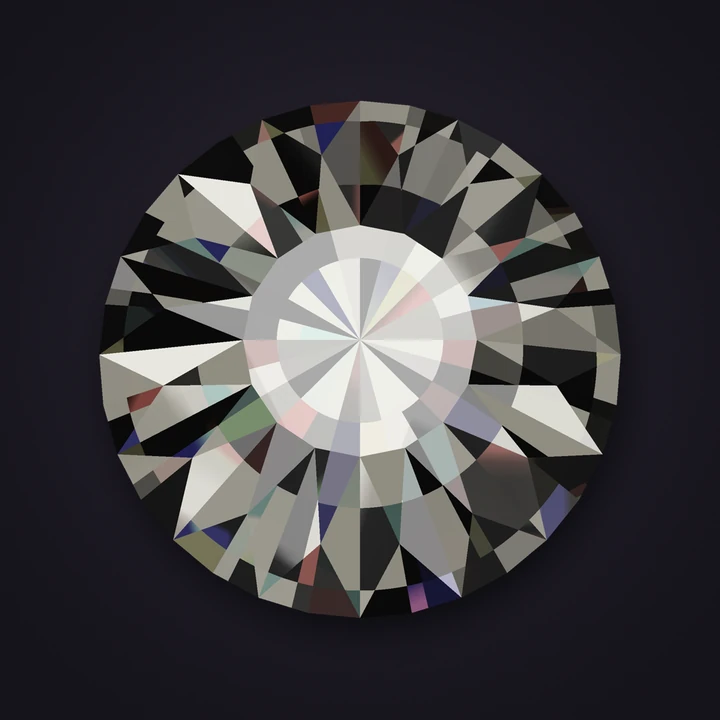
Around 1900, jewellers learned to work platinum at high temperatures. Its strength allowed delicate lace-like filigree and milgrain edges, and white settings that flattered white diamonds. The old European cut, a round ancestor of the modern brilliant, was typical.
In 1919, Marcel Tolkowsky published proportions for a round brilliant designed to maximise brilliance and fire, the basis of today's round brilliant. The 1920s and 1930s brought Art Deco: geometric shapes, step cuts such as emerald and asscher, calibré-cut coloured stones and bold contrast.
1947: "A Diamond Is Forever"
The Depression hit diamond sales hard. In the late 1930s De Beers engaged the American advertising agency N. W. Ayer to promote diamond engagement rings in the United States. The campaign placed diamonds in films and magazines, linked their size to the depth of a man's love, and suggested spending a month's salary (later revised upward in advertising to two, then three months; see the three months' salary rule). In 1947 copywriter Frances Gerety wrote the line "A Diamond Is Forever", one of the best-known slogans of the century. It also discouraged resale, helping keep prices stable.
The campaign worked: in the decades after the Second World War the diamond solitaire became the expected engagement ring across the US and much of Europe, and from the late 1960s diamond engagement rings were also promoted successfully in Japan.
Late 20th century: new cuts and famous rings
- New fancy shapes arrived, including the radiant cut in the late 1970s and the princess cut around 1980.
- In 1981 Lady Diana Spencer's engagement ring, an oval blue sapphire surrounded by diamonds, made coloured stones fashionable again. The same ring was later given to Catherine Middleton in 2010.
- Concerns about diamonds funding conflict led to the Kimberley Process certification scheme, launched in 2003. Read more in ethical and conflict-free diamonds.
Lab-grown diamonds
General Electric produced synthetic diamonds reproducibly in the mid-1950s, though these were industrial grit; gem-quality crystals followed around 1970. Advances in high-pressure (HPHT) and chemical vapour deposition (CVD) growth in the 2000s and 2010s made colourless gem-quality stones commercially viable. Lab-grown diamonds are chemically and physically diamond, and their prices have fallen sharply in recent years. As of late 2026 they're a mainstream engagement ring choice; see lab-grown diamonds.
A quick timeline
| Date | Moment |
|---|---|
| Ancient Egypt and Rome | Rings as pledges; vena amoris belief; Roman iron and gold betrothal rings |
| Roman to medieval | Fede rings with clasped hands |
| 1477 | Maximilian of Austria's diamond ring for Mary of Burgundy |
| 15th-17th c. | Posy rings with engraved verses; gimmel rings |
| 1796 | Napoleon's toi et moi for Joséphine |
| 1839 | Queen Victoria's emerald serpent ring |
| 1867 | South African diamond discoveries begin |
| 1886 | Six-prong solitaire setting introduced by Tiffany & Co. |
| 1919 | Tolkowsky's round brilliant proportions |
| 1947 | "A Diamond Is Forever" |
| 1981 | Diana's sapphire ring |
| 2003 | Kimberley Process launched |
| 2010s-2020s | Lab-grown diamonds go mainstream |
Recreate a piece of ring history in Ring Studio
If a period speaks to you, you can explore its look in Ring Studio, a 3D ring design app for iPhone, iPad and Android. Old mine, old European and rose cut stones are among the 28 shapes in Pro; pair one with a six- or eight-prong setting or a bezel, choose the engraved (vintage) band in yellow gold or platinum, and add an inside engraving in the spirit of a posy ring. A blue sapphire with a classic halo gives a nod to 1981. You can also ask the AI designer for "an Art Deco style emerald cut ring" and refine it from there, then share the design with a jeweller who specialises in period styles.
What the history tells us
The "traditional" diamond solitaire is younger than most people assume, and much of it was shaped by supply and advertising. For most of history, engagement rings were whatever the couple valued: iron, gold, a verse, a coloured stone, two stones side by side. That's a good reason to choose the ring that means something to you rather than the one you think you're supposed to buy. Our guide to how to choose an engagement ring starts there.
Frequently asked questions
Who gave the first diamond engagement ring?
The earliest well-documented example is usually traced to 1477, when Archduke Maximilian of Austria gave a diamond ring to Mary of Burgundy on their betrothal. Diamond rings existed before, but this is the one most often cited.
Why is the engagement ring worn on the fourth finger of the left hand?
The custom is linked to an ancient belief, recorded by Roman writers, that a vein ran directly from that finger to the heart, later called the vena amoris. Anatomically it isn't true, and many countries wear it on the right hand.
When did diamond engagement rings become common?
They became widespread in the 20th century. Large South African diamond finds from 1867 increased supply, and the De Beers advertising campaign that began in the late 1930s, with the 1947 slogan 'A Diamond Is Forever', made them the norm in many countries.
Where does the three months' salary rule come from?
It came from diamond advertising, not tradition. Earlier campaigns suggested one month's salary, and later De Beers advertising promoted two and then three months.
What was a posy ring?
A posy ring was a band with a short verse or motto engraved on it, popular in England and France from roughly the 15th to the 17th century, given as a love or betrothal token. The word comes from 'poesy', meaning poetry.
Keep reading
 Old Mine Cut Engagement RingsOld mine cut engagement ring guide: history, spotting a true antique, sizes, colour and clarity expectations, antique vs…
 Old European Cut Engagement RingsOld European cut engagement ring guide: history, how it differs from a modern round, sizes, colour and clarity, antique …The Three Months' Salary RuleThe three months' salary rule came from De Beers diamond advertising, not financial advice. Its real history, why it fai…Which Hand Does an Engagement Ring Go On?Which hand does an engagement ring go on? Left in the UK and US, often right in Germany, Russia, Norway and parts of Ind…