 Ring Studio
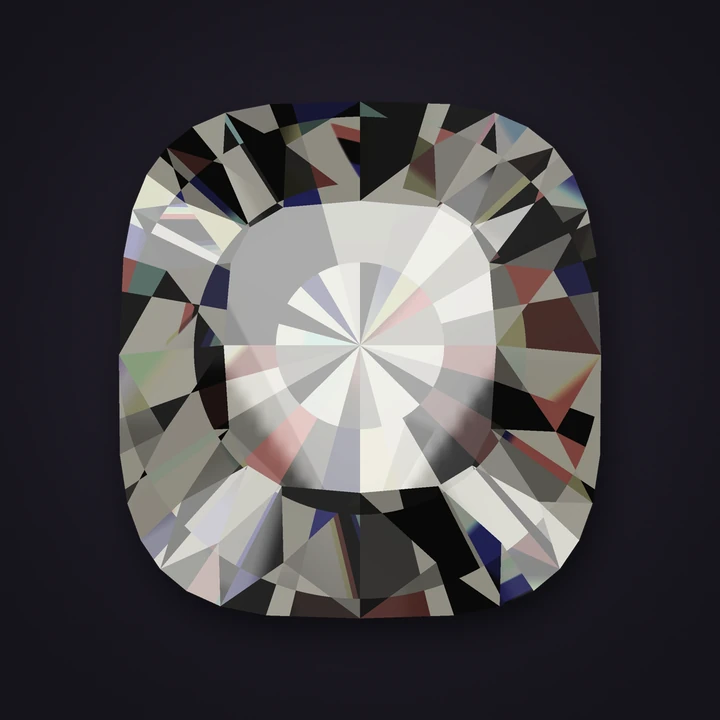
Cushion Engagement Rings: Choosing the Right Cushion Cut
A cushion engagement ring centres on a square-ish diamond with rounded corners and curved sides, like a pillow. It blends vintage romance with big, chunky sparkle, but cushions vary more than any other cut, so knowing what to look for is essential.
On this page
- What makes a cushion cut different
- Crushed ice vs antique cushion: which do you prefer?
- Cushion cut carat to mm chart
- Proportions and quality: colour retention matters most
- Best settings for a cushion engagement ring
- Wedding bands for cushion rings
- Pros and cons of cushion engagement rings
- Cushion engagement ring prices
- Designing a cushion ring in Ring Studio
- Cushion vs similar shapes
- Facets
- Typically 58 to 64, varies by cutter
- Length-to-width
- 1.00 to 1.10 for square; 1.15 and above counts as elongated
- Look
- Soft pillow outline, chunky or crushed-ice sparkle
- Best settings
- 4 double prong, halo, three stone, vintage bands
- Price vs round
- Generally lower per carat than a comparable round
What makes a cushion cut different
The cushion is a descendant of the old mine cut, the dominant diamond shape of the eighteenth and nineteenth centuries. Modern versions keep the gently curved sides and rounded corners but add more facets and better symmetry. The result is a ring that looks romantic and slightly vintage without being an antique.
Unlike rounds, cushions are not one cut but a family. Two stones both labelled "cushion modified brilliant" can look completely different, so you have to choose with your eyes rather than the certificate.
Crushed ice vs antique cushion: which do you prefer?
Most modern cushions are modified brilliants with an extra row of pavilion facets. This creates a busy, glittering pattern often called crushed ice. It hides inclusions well and looks very bright, though some people find it less defined.
Antique-style or chunky cushions have fewer, larger facets and often a visible culet. They throw bold flashes of light and contrast, and they look more like a family heirloom. Neither is better; they simply suit different tastes. Ask for videos and compare both in the same light before deciding.
Cushion cut carat to mm chart
Cushions are commonly cut with extra depth to keep weight, so they face up a little smaller than rounds. These approximate figures are for square cushions around 1.00 to 1.05.
| Carat | Approx. face-up size | Round of similar spread |
|---|---|---|
| 0.50 ct | 4.9 x 4.8 mm | About 0.45 ct round |
| 0.75 ct | 5.5 x 5.4 mm | About 0.65 ct round |
| 1.00 ct | 6.0 x 5.8 mm | About 0.85 ct round |
| 1.50 ct | 6.9 x 6.7 mm | About 1.3 ct round |
| 2.00 ct | 7.5 x 7.3 mm | About 1.7 ct round |
| 3.00 ct | 8.6 x 8.4 mm | About 2.6 ct round |
Measurements are approximate and depend strongly on depth. Always read the mm figures on the report, not just the carat.
Proportions and quality: colour retention matters most
Cushions hold on to body colour more than rounds. The broad pavilion and rounded corners concentrate tint, so a stone that would look white as a round can look faintly warm as a cushion.
- Colour: G or better for a crisp white in platinum or white gold; H to J can be lovely in yellow gold, which disguises warmth.
- Depth: roughly 61 to 68% is common; above about 70% the stone looks small for its weight.
- Table: roughly 55 to 66%.
- Outline: check that the corners are evenly rounded and the sides are not bulging or pinched.
- Clarity: crushed ice cushions hide inclusions well, so VS2 to SI1 is often eye-clean; chunky cushions show more, so look closer.
Our diamond colour chart explains how the grades translate to what you see.
Best settings for a cushion engagement ring
The corners are the most exposed part of a cushion, so prong placement should protect them.
- Four prongs at the corners: the classic choice. Double prongs add security and a vintage touch; our double prong guide shows how.
- Compass setting: prongs at north, south, east and west turn the stone visually into a diamond shape, a strong look if you like geometry.
- Halo: the cushion halo is one of the most recognisable ring styles. A cushion-shaped halo enlarges the outline; a round halo around a cushion softens it. See halo engagement rings.
- Three stone: cushions pair well with trapezoid, tapered baguette or round side stones.
Wedding bands for cushion rings
Haloed cushions usually need a curved or notched band to sit close. A solitaire cushion on a low basket can take a straight band. Milgrain or engraved bands lean into the vintage character, while a knife edge band gives a modern counterpoint.
Pros and cons of cushion engagement rings
| Pros | Cons |
|---|---|
| Romantic, slightly vintage character | Huge variation between stones |
| Good value per carat compared with rounds | Shows body colour more readily |
| Rounded corners resist chipping better than princess cuts | Deep stones can face up small |
| Works with halos, vintage and modern settings | Certificate tells you little about the look |
Cushion engagement ring prices
As a rough guide, cushions usually cost less per carat than rounds of the same colour and clarity, and the gap tends to widen at larger sizes. The saving can shrink once you allow for a higher colour grade to offset the shape's colour retention, or a slightly heavier stone to match the face-up size of a round. Antique-style cushions with large facets, and well-proportioned stones with crisp outlines, sit at the top of the range within the shape. Lab-grown cushions cost a small fraction of natural, as lab-grown prices have fallen sharply over recent years, which is why many couples now choose 2 carats or more. Every figure varies by retailer, certificate and market, so compare like for like using the measurements, not the carat alone. For wider budgeting, see how much an engagement ring costs and the ring budget calculator.
Designing a cushion ring in Ring Studio
Cushion is one of Ring Studio's free stone shapes.
- Pick Cushion from the stone tray and set the carat.
- Choose a 4 prong setting, then switch prong tips to double to see the vintage look.
- Add a classic halo and compare it with the solitaire version from above and from the side.
- Try an engraved vintage band or a pavé band, and preview the head in yellow gold against platinum.
- Want the compass look? Compass settings are part of Pro.
You can also ask the AI ring designer for "a vintage-style cushion halo on a milgrain-look yellow gold band" and refine from there. The design is for visualising; your jeweller makes the real ring from your screenshots or ring code.
Cushion vs similar shapes
If you want more length, look at the elongated cushion. For sharp corners and a more modern look, the princess vs cushion comparison is useful, and cushion vs round covers sparkle and value side by side.
Frequently asked questions
What is the difference between a crushed ice and antique cushion?
A crushed ice cushion has many small facets that give a sparkly, glittery look, a bit like broken ice. An antique or chunky cushion has larger, more defined facets that make broad flashes of light, closer to old mine cuts.
Does a cushion diamond look smaller than a round?
Often slightly, yes. Cushions are frequently cut deep, so a 1 carat cushion may face up around 5.8 to 6.2 mm across compared with about 6.5 mm for a round.
What colour grade is best for a cushion cut?
Cushions tend to show body colour more than rounds, particularly in the corners. For a white look in white metal, many buyers aim for G or better, while H to J can work well in yellow or rose gold.
Are cushion cut diamonds cheaper than round?
Usually yes. Cushions generally cost less per carat than rounds of similar colour and clarity, partly because they retain more weight from the rough crystal.
What setting is best for a cushion cut?
Four double prongs at the corners or a classic halo are the most popular. Four prongs placed at the corners protect the most vulnerable points and keep the square outline crisp.
Keep reading
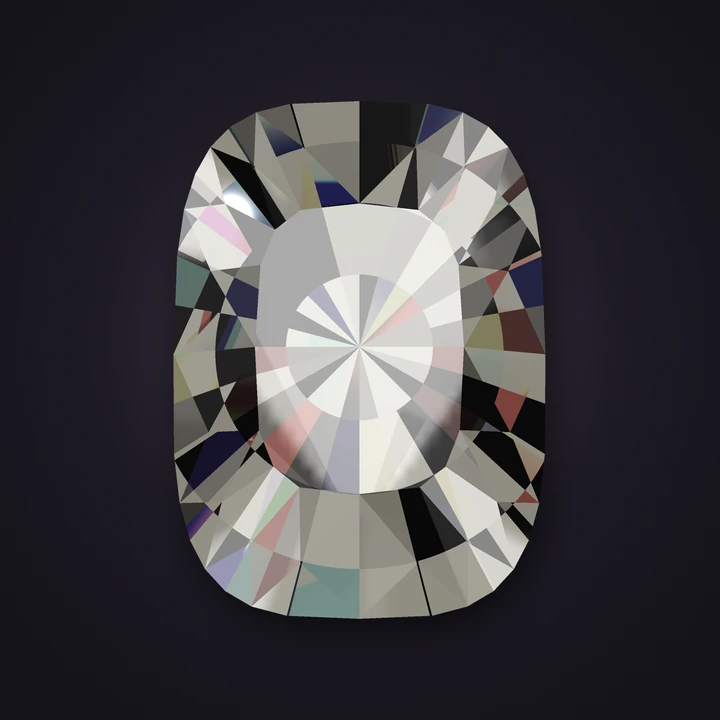 Elongated Cushion Engagement RingsElongated cushion engagement ring guide: the ideal 1.15 to 1.35 ratio, carat-to-mm sizes, colour tips, settings and band…Halo Engagement RingsHalo engagement ring guide: how a halo adds face-up size, which shapes suit one, upkeep of small pavé stones, band pairi…Vintage Engagement RingsVintage engagement ring guide: Georgian to retro eras, old mine and old European cuts, milgrain and engraving, buying an…Diamond Color Chart: D to Z ExplainedDiamond color chart from D to Z: what each colour grade looks like, which grade suits platinum, white, yellow or rose go…