 Ring Studio
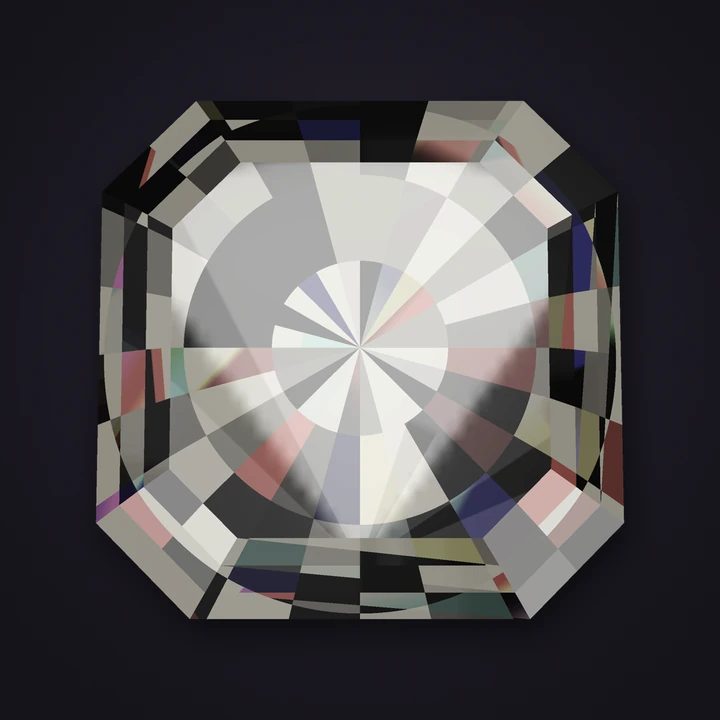
Asscher Cut Engagement Rings
An Asscher engagement ring sets a square step-cut diamond with deeply cropped corners, whose facets form a hypnotic windmill or concentric-square pattern. It is the signature shape of Art Deco jewellery and looks quietly glamorous today.
On this page
- The Art Deco diamond
- Asscher cut carat to mm chart
- What to look for: clarity, colour and the windmill
- Best settings and prong placement
- Wedding bands for an Asscher
- Asscher pros and cons
- Asscher ring prices
- Who suits an Asscher ring?
- Asscher cuts in coloured gemstones
- Design an Asscher engagement ring in Ring Studio
- Asscher vs emerald and octagon
- Facets
- Usually 58 step facets; some branded versions have more
- Length-to-width
- 1.00 to 1.05, square
- Look
- Concentric squares and windmill flashes; vintage glamour
- Best settings
- 4 prong at the corners, bezel, halo, three stone with baguettes
- Price vs round
- Generally lower per carat than a comparable round
The Art Deco diamond
Joseph Asscher created this cut in Amsterdam in 1902, and it became a favourite of the 1920s and 1930s, when geometry ruled jewellery design. Original Asschers have a small table, a tall crown and a deep pavilion, which create the famous "X" of reflections running corner to corner. After falling out of fashion, the shape returned in the early 2000s, helped by modern versions with extra facets. Today it suits anyone who loves vintage glamour but wants a crisp, modern outline.
Asscher cut carat to mm chart
Because so much weight sits below the girdle, Asschers face up small. These sizes are approximate for well-proportioned stones.
| Carat | Approx. size | Round of similar face-up size |
|---|---|---|
| 0.50 ct | 4.6 x 4.6 mm | About 0.40 ct |
| 0.75 ct | 5.2 x 5.2 mm | About 0.55 ct |
| 1.00 ct | 5.7 x 5.7 mm | About 0.75 ct |
| 1.50 ct | 6.5 x 6.5 mm | About 1.0 ct |
| 2.00 ct | 7.1 x 7.1 mm | About 1.3 ct |
| 3.00 ct | 8.2 x 8.2 mm | About 2.0 ct |
The comparison column is a rough guide using width only; the Asscher's square outline covers more area than its width suggests, so the visual difference is smaller.
What to look for: clarity, colour and the windmill
Like the emerald cut, the Asscher is a step cut, so its big, open facets show what is inside.
- Clarity: VS2 or better is a sensible starting point; confirm eye-cleanliness from a magnified image. A small crystal hidden near a corner is fine; a feather in the centre is not. See the clarity chart.
- Colour: step cuts show body colour, and the deep Asscher concentrates it. F to H suits platinum or white gold.
- Squareness: 1.00 to 1.05. Higher ratios look slightly rectangular.
- Depth and table: roughly 60 to 68% depth and 60 to 68% table are common. Very shallow stones lose the windmill effect.
- The windmill: you want clear, evenly spaced concentric squares and an "X" of reflections. Uneven steps blur it.
Asschers love good lighting but also show grease quickly on their large table. Regular cleaning makes a big difference; our ring care guide explains how.
Best settings and prong placement
- Four prongs at the corners: the classic way to show off the square. The cropped corners are fairly strong, but prongs over them add protection.
- Compass set: turning prongs to north, south, east and west makes the stone read as a diamond shape, a bold Deco look.
- Bezel: a slim bezel suits the shape's architectural lines and protects the corners.
- Halo: a square or octagonal halo, sometimes with milgrain, is a direct nod to the 1920s.
- Three stone with baguettes: step-cut side stones keep the look coherent; see Art Deco engagement rings.
White metals suit Asschers especially well; the platinum vs white gold guide covers the differences.
Wedding bands for an Asscher
A straight band sits neatly against a square solitaire. Baguette or channel-set bands keep the step-cut theme; a plain platinum band lets the windmill do the talking. With a halo, check whether a gentle curve is needed.
Asscher pros and cons
| Pros | Cons |
|---|---|
| Hypnotic windmill pattern | Faces up small for its weight |
| Strong Art Deco identity | Shows inclusions and colour |
| Cropped corners are fairly robust | Less sparkle than brilliant cuts |
| Usually cheaper per carat than rounds | Fewer stones to choose from |
Asscher ring prices
Asschers generally cost less per carat than rounds of the same grade. But because they face up smaller and usually need higher clarity and colour, the cost of a given look may be closer to a round than you expect. Lab-grown Asschers are a practical way to get a larger face-up size, with lab-grown prices having fallen sharply. Prices vary by retailer and market.
Who suits an Asscher ring?
An Asscher appeals to people who love vintage glamour, geometry and the Art Deco era, and who prefer flashes of light to constant glitter. Because it is square, it sits neatly on most fingers. On long, slim fingers, a 1.5 carat Asscher looks balanced; on shorter fingers, a smaller stone with a halo keeps the proportions comfortable. If your partner wants more sparkle, consider a square radiant; if they like the step-cut look but want length, consider the emerald cut. Asscher-cut coloured gems, particularly sapphires, are another striking way to get the same pattern.
Asscher cuts in coloured gemstones
The Asscher pattern also suits coloured stones. A step-cut blue sapphire shows deep, even colour through its concentric squares, and emeralds are often step cut to protect the crystal. Coloured Asschers make striking alternatives if you love the Deco geometry but want something other than a white diamond.
Design an Asscher engagement ring in Ring Studio
Asscher is one of Ring Studio's free shapes.
- Choose Asscher from the stone tray and set the carat.
- Use a 4 prong head; compare claw tips with double tips.
- Add baguette side stones for an Art Deco three stone.
- Try an engraved vintage band in platinum, then compare it with a knife edge band.
- Add a classic halo, and with Pro try the compass setting for a full Deco look.
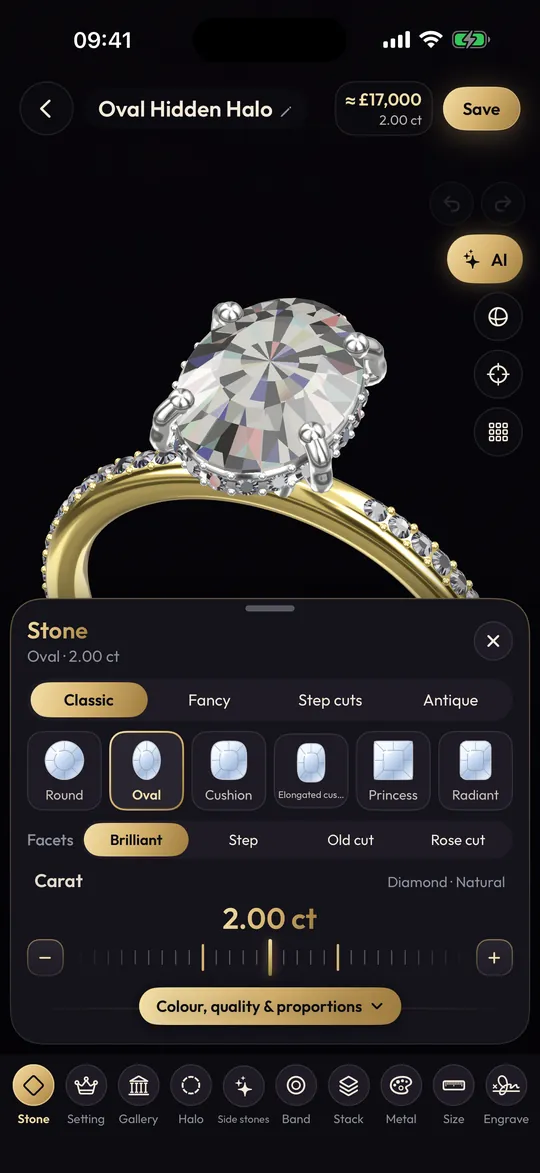
The free Octagon shape is worth comparing on the same setting: it is a close relative with a slightly different corner profile.
Asscher vs emerald and octagon
If you like step cuts but want length, see emerald cut vs Asscher. For a near relative with even sides, read about octagon engagement rings.
Frequently asked questions
What is an Asscher cut diamond?
It is a square step cut with large cut corners, a high crown and a deep pavilion. Looking down into it, the reflections form concentric squares often described as a windmill or hall of mirrors.
Who invented the Asscher cut?
Joseph Asscher of the Asscher diamond company in Amsterdam developed it in 1902. The Asscher family is also known for cutting the Cullinan diamond.
Does an Asscher cut look small?
It can. Its deep pavilion holds a lot of weight, so a 1 carat Asscher faces up around 5.5 to 5.8 mm, smaller than a 6.5 mm round of the same weight.
What clarity should I buy for an Asscher?
Step cuts reveal inclusions more easily, so many buyers look for VS2 or better and confirm the stone is eye-clean. Inclusions near the corners, under a prong, matter less.
What is the difference between Asscher and emerald cut?
Both are step cuts with clipped corners. The Asscher is square with larger corners and more depth; the emerald cut is rectangular with a flatter, wider-looking table.
Keep reading
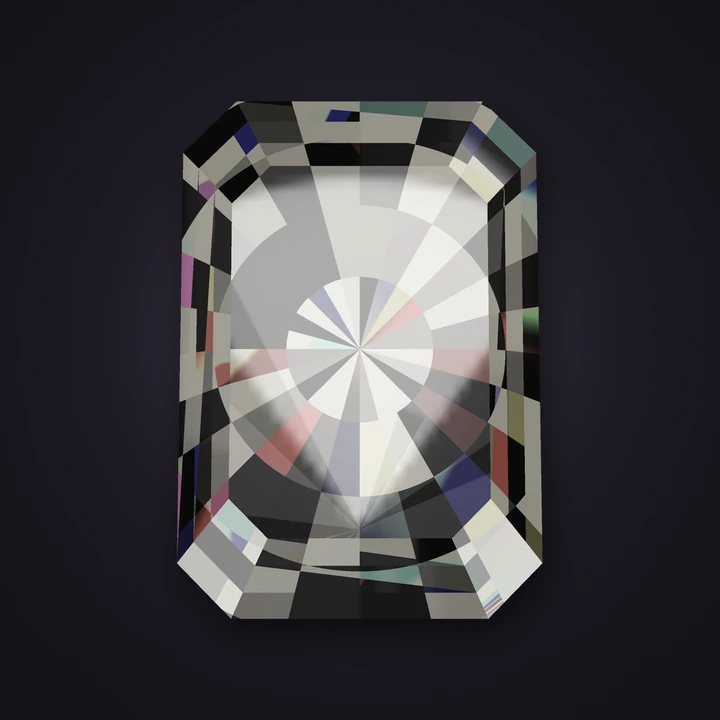 Emerald Cut Engagement Rings: Clarity, Sizes and StyleEmerald cut engagement ring guide: why clarity matters in step cuts, the best ratios, carat-to-mm sizes, settings, bands…
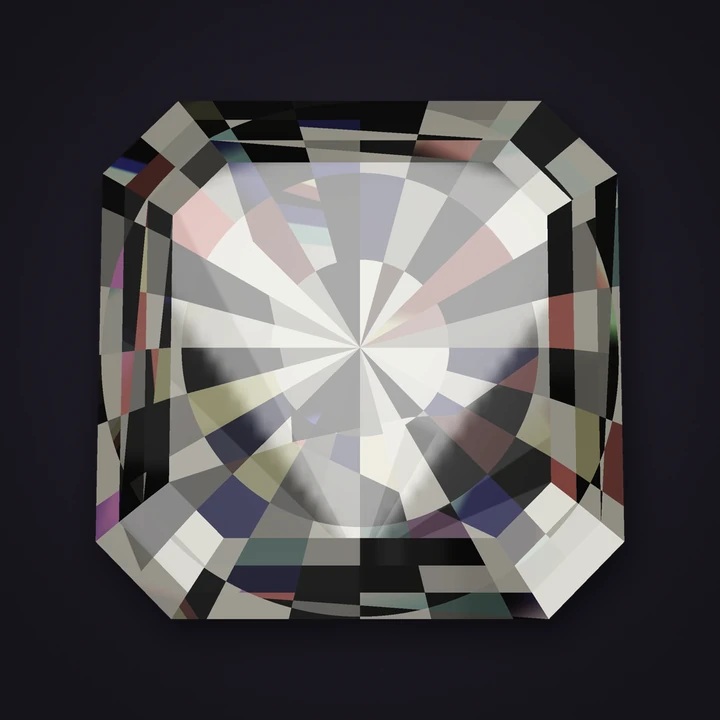 Octagon Engagement RingsOctagon engagement ring guide: how octagons differ from Asscher and emerald cuts, approximate sizes, clarity tips, eight…Art Deco Engagement RingsArt Deco engagement ring guide: 1920s-30s design traits, asscher, emerald, octagon and hexagon cuts, calibré colour, mil…Diamond Clarity Chart: FL to I3 ExplainedDiamond clarity chart from FL to I3: what each grade means, which inclusions matter, the eye-clean sweet spot by shape a…Platinum vs White GoldPlatinum vs white gold: both look bright white, but platinum is denser, naturally white and costs more, while white gold…