 Ring Studio
Marquise vs Dutch Marquise
Marquise vs Dutch marquise comes down to the sides: a classic marquise has smooth, curved sides meeting in two points, while a Dutch marquise has straight sides that make an elongated hexagon, giving a more geometric, architectural look. Both are long and look large per carat; the Dutch marquise is rarer and often custom cut.
On this page
Marquise vs Dutch marquise side by side
| Marquise | Dutch marquise | |
|---|---|---|
| Outline | Long ellipse with curved sides and two points | Long hexagon with straight sides and two points |
| Look | Soft, flowing, vintage glamour | Geometric, architectural, modern-vintage |
| Faceting | Standard brilliant | Usually brilliant; some step-cut or hybrid versions |
| Apparent size per carat | Very large: about 10 x 5 mm at 1 ct | Similarly long; fuller sides can make it slightly shorter at the same weight |
| Durability | Two sharp points to protect | Two points, often a little less acute; still protect them |
| Maintenance | Check tip prongs regularly | Check tip prongs regularly |
| Price and availability | Widely available; often low price per carat | Rarer; often custom cut, so may cost more |
| Best for | Maximum length and a classic statement | A distinctive shape few people will have |
Dutch marquise proportions are much less standardised than marquise ones, so always check a stone's actual millimetre dimensions rather than relying on carat weight.
What makes a marquise "Dutch"?
Take a classic marquise and straighten each curved side into two flat edges, and you have the Dutch marquise: an elongated hexagon with a point at each end and two long parallel or near-parallel sides. The name is a market term rather than a strict standard, and cutters vary the angles, so one Dutch marquise can look quite different from another. It sits between the marquise and the hexagon cut and has become popular with buyers looking for an unusual engagement ring.
Look and sparkle
A classic marquise flows; its curves make the finger look long and graceful, and its brilliant faceting gives strong sparkle, often with a noticeable bow-tie. A Dutch marquise has crisper edges that catch the eye like an emerald or radiant's outline. Most are brilliant-cut and very lively; some use step-cut or hybrid facet patterns for a cleaner, glassier look. If you love the drama of a marquise but want something more structured, the Dutch version delivers exactly that.
Size per carat
Both shapes put a lot of weight into length, so both look large for their carat. A well-proportioned 1 ct marquise is about 10 x 5 mm. Dutch marquises are often cut with fuller shoulders where the straight sides meet, which can make them slightly shorter and wider at the same weight, but proportions vary from cutter to cutter. Compare actual dimensions using our carat size chart as a reference point.
Durability
Both have two points, and points are where diamonds chip. The Dutch marquise's tips are often slightly blunter because of the angled straight sides, but that is not a reason to skip protection. Use a prong over each tip, typically a V-prong, or a bezel or half-bezel. A lower profile also helps both shapes avoid knocks and snags.
Price and availability
Classic marquise diamonds are easy to find and often among the lowest-priced shapes per carat. Dutch marquises are a niche cut. Many are lab-grown or cut to order, and you may need to work with a specialist jeweller to find one. Expect less choice and, often, a higher price per carat than a comparable marquise, though lab-grown options keep the absolute cost manageable. Lab-grown prices have fallen sharply over recent years.
Settings and styles for each
The classic marquise is at its best in settings that celebrate its curves: a slim solitaire, a vintage-style ring with an engraved band, or a three-stone design. It also makes a beautiful side stone. The Dutch marquise suits crisper, more architectural settings, such as a fine bezel that traces its straight edges, compass-set prongs, or a minimalist band that lets the outline speak.
Both suit yellow gold, which has become a favourite for elongated vintage shapes, and both benefit from a curved or chevron wedding band that follows the points. A hidden halo adds sparkle from the side without softening either outline.
Choose marquise if... choose Dutch marquise if...
- Choose marquise if you want a classic, widely available shape with flowing curves, maximum length and good value.
- Choose Dutch marquise if you want an elongated shape that feels geometric and rare, you are happy to search or commission a stone, and you love the crisp outline.
Compare them side by side in Ring Studio
Ring Studio includes both: marquise is a free shape and Dutch marquise is one of the extra shapes in Pro. Switching between them on the same ring makes the curved-versus-straight difference obvious.
- Build a marquise ring, for example set east-west on a slim band.
- Swap the centre stone to Dutch marquise and rotate the ring to compare the sides and tips.
- Try a bezel or claw prong tips on each to see how the points are protected.
- Compare the live price estimates and try both on your hand with the camera (Pro).
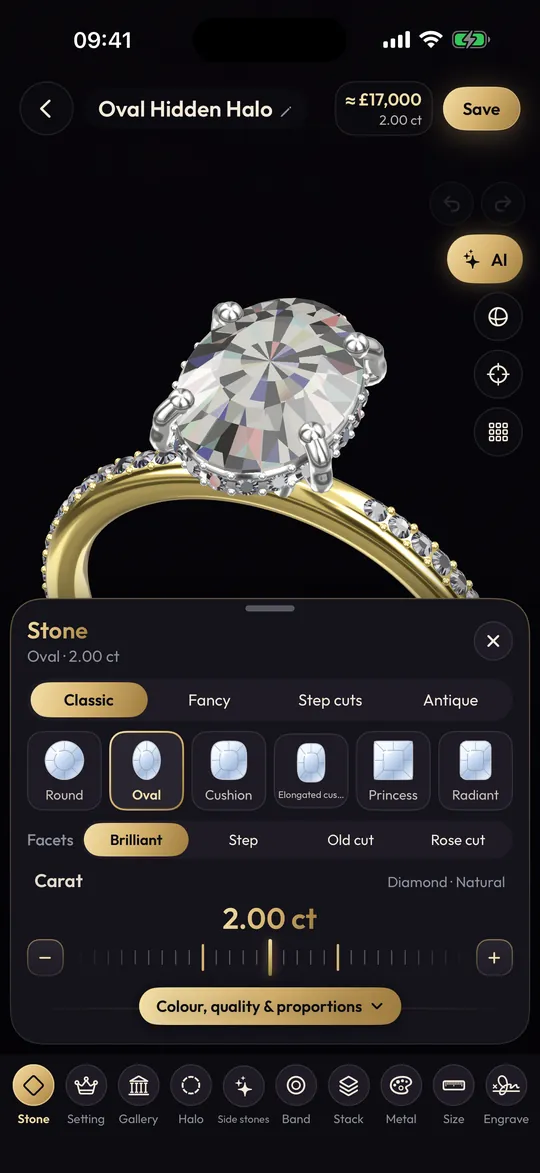
Because a Dutch marquise is often cut to order, sharing the exact design as a ring code helps your jeweller source the right proportions. Our guide to how custom rings are made explains the next steps.
Verdict
The classic marquise is the better choice for availability, value and a soft, flowing look. The Dutch marquise wins on originality, with a sharp, geometric outline that few rings share, at the cost of a harder search and often a higher price per carat. Both need their points protected.
Frequently asked questions
What is a Dutch marquise diamond?
A Dutch marquise is an elongated hexagonal shape: think of a marquise with its curved sides replaced by straight edges. It is usually brilliant-cut, sometimes with step-cut elements, and is far less common than the classic marquise.
Is a Dutch marquise more durable than a marquise?
It still has two pointed ends that need protecting, though the tips are often a little less acute. Protect both tips with prongs or a bezel either way.
Is a Dutch marquise more expensive?
Often per carat, because it is less common and may need to be custom cut, with more limited choice. Classic marquise diamonds are among the lower-priced shapes.
Do Dutch marquise diamonds have a bow-tie?
They can, like most elongated shapes, but the straight sides and different faceting can change the pattern. Judge each stone by video or in person.
Is Dutch marquise the same as a hexagon cut?
It is closely related. A hexagon cut is often broader, sometimes nearly regular, while a Dutch marquise is a long, narrow hexagon with pointed ends.
Keep reading
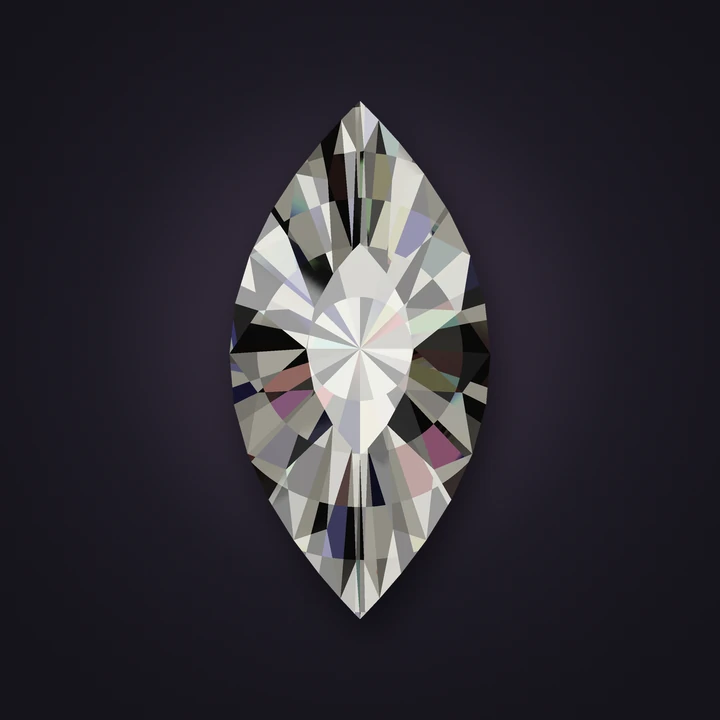 Marquise Engagement Rings: The Shape That Looks BiggestMarquise engagement ring guide: the ideal 1.85 to 2.10 ratio, bow-tie and symmetry checks, carat-to-mm sizes, tip protec…
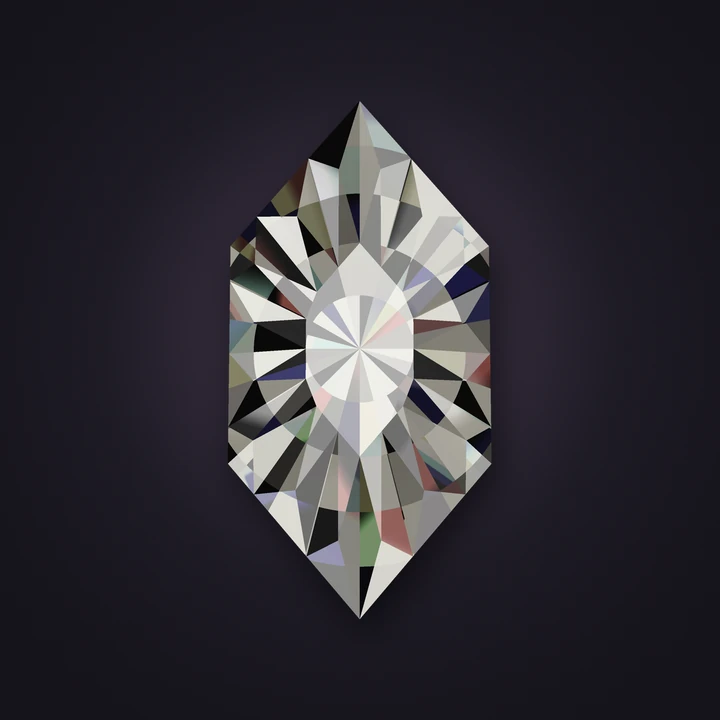 Dutch Marquise Engagement RingsDutch marquise engagement ring guide: how it differs from a marquise, approximate sizes, sourcing, settings that protect…
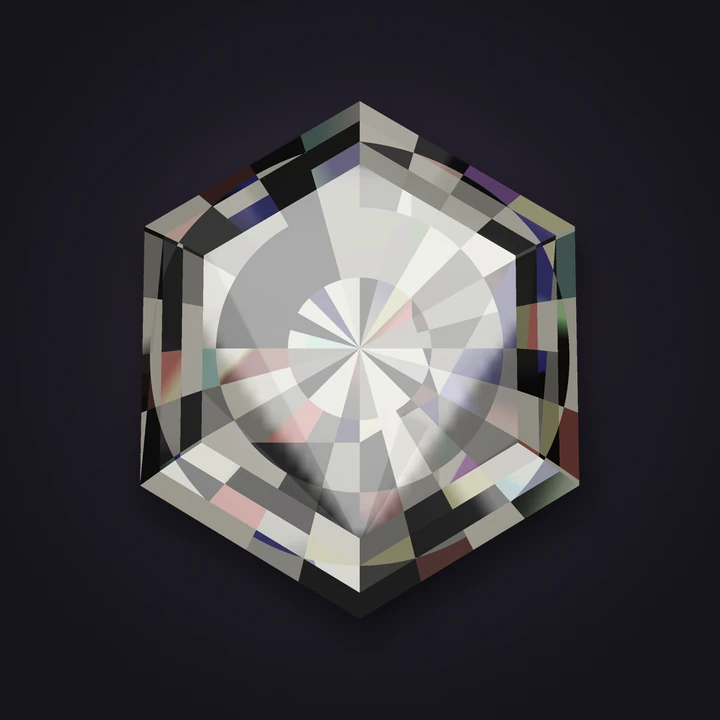 Hexagon Engagement RingsHexagon engagement ring guide: regular vs elongated hexagons, step vs brilliant cuts, approximate sizes, sourcing, six-p…Pear vs Marquise DiamondPear vs marquise diamond: the marquise looks biggest per carat but has two fragile points; the pear has one point and a …Unique Engagement RingsUnique engagement ring ideas: unusual cuts, coloured stones, east-west and toi et moi layouts, hidden details and custom…East-West Engagement RingsEast-west engagement ring guide: which elongated shapes work turned sideways, how it changes finger coverage and size, s…