 Ring Studio
Pear vs Marquise Diamond
In pear vs marquise, the marquise looks the largest of any diamond shape for its weight and has a bold, vintage drama, but it has two points to protect. The pear has a rounded end and a single point, making it softer and a little easier to wear. A 1 ct marquise is about 10 x 5 mm; a 1 ct pear about 8.0 x 5.5 mm.
On this page
- Points
- Pear: one. Marquise: two
- 1 ct size
- Pear about 8.0 x 5.5 mm; marquise about 10 x 5 mm
- Biggest look per carat
- Marquise
- Easier to wear
- Pear
Pear vs marquise comparison
| Pear | Marquise | |
|---|---|---|
| Look | Teardrop: one rounded end, one point | Boat or eye shape: pointed at both ends |
| 1 ct size | About 8.0 x 5.5 mm | About 10 x 5 mm |
| Typical ratio | 1.45 to 1.75 | 1.85 to 2.10 |
| Durability | One point to protect | Two points to protect |
| Maintenance | Check the tip prong | Check both tip prongs; points can snag |
| Bow-tie | Possible | Common and often stronger |
| Price per carat | Below round | Often among the lowest |
| Best for | Romantic, graceful, slightly softer drama | Maximum length, vintage glamour, east-west designs |
The shape difference
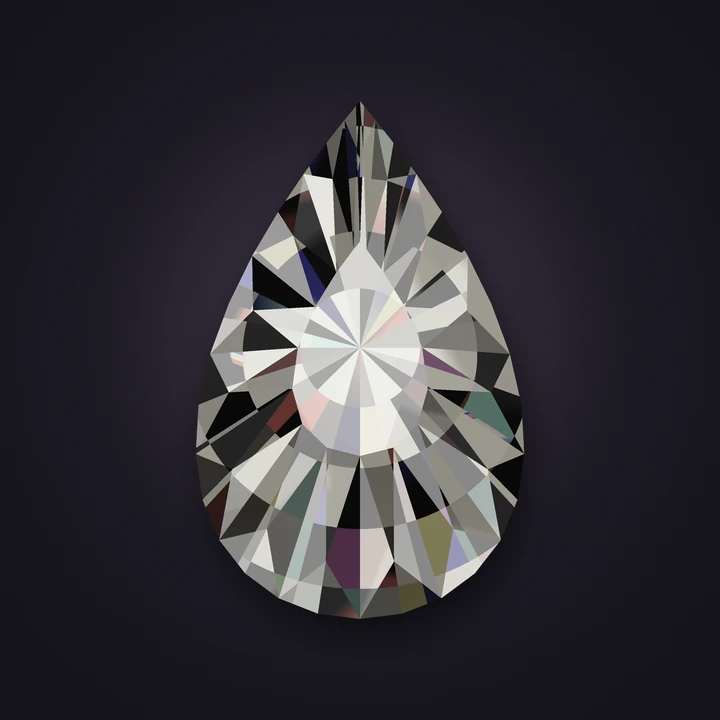
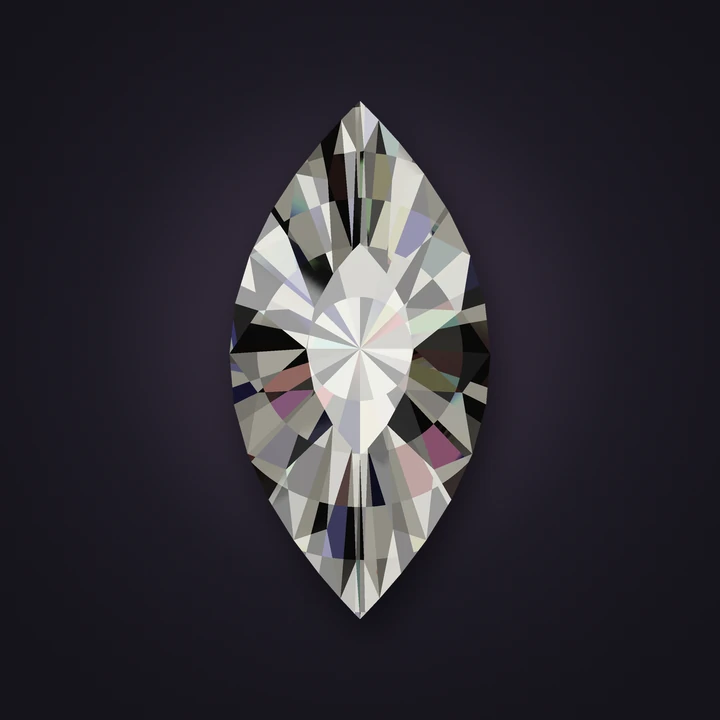
A marquise is a long ellipse pointed at both ends, said to be named after a French marquise in the eighteenth century. A pear is half oval, half marquise: rounded at the head, pointed at the tip. That one rounded end softens the pear's look and makes it easier to wear and to match with a band.
Size: the marquise is the champion
With so much of its weight spread into length, the marquise faces up larger per carat than almost any other shape. A 1 ct marquise is around 10 x 5 mm, compared with about 8.0 x 5.5 mm for a pear and 6.5 mm for a round. On the finger, the marquise draws a long line that makes hands look slender. The pear is still a strong performer, just less extreme. See the carat size chart.
Durability: counting the points
Points are thin and are the most chip-prone part of any diamond. A marquise has two, a pear one. Both need protection: jewellers usually cover each tip with a V-shaped prong, or set the stone in a full or partial bezel. In Ring Studio you can preview that protection with a bezel setting or claw prong tips, and ask your jeweller to add V-tips in their CAD. A marquise also catches on knitwear and gloves more easily, so it suits a lower setting.
Sparkle and the bow-tie
Both are brilliant cuts with lively sparkle. Elongated shapes often show a dark bow-tie across the middle; the marquise's narrow body tends to make it more prominent. Symmetry also matters: a marquise's two halves should mirror each other, and a pear's shoulders should be even with the point centred. Judge from video or in person.
Price
Marquise diamonds are frequently among the lowest-priced shapes per carat, partly because demand has been lower since their 1980s peak. Combine that with their size, and a marquise is arguably the most visual diamond for the money. Pears also cost less than rounds but are usually a little pricier than marquises of equal grades.
Settings and wedding bands
Both shapes leave gaps against a straight wedding band. A curved or chevron band fixes that. A marquise looks spectacular set east-west, and both shapes work in a three-stone layout or with pear and marquise side stones.
Colour and clarity tips for pointed shapes
Pointed ends tend to concentrate body colour, so pears and marquises can show a tint at the tips sooner than a round. In white metal, near-colourless grades keep the points looking crisp; in yellow gold a warmer grade looks natural and saves money. Check the diamond colour chart for guidance.
Inclusions near the points deserve extra attention: as well as showing, they can weaken the thinnest part of the stone. Brilliant faceting hides most other inclusions well, so SI clarity is often fine elsewhere. Our diamond clarity chart explains what each grade means. Both shapes look wonderful in vintage-inspired designs, which can also make a slightly warmer stone feel intentional.
Choose pear if... choose marquise if...
- Choose pear if you want a romantic elongated shape with only one point, a softer silhouette and a little more width.
- Choose marquise if you want the biggest look per carat, love vintage or bold designs, and are happy to protect two points.
Compare them side by side in Ring Studio
Pear and marquise are both free shapes in Ring Studio, and the difference in length is striking when you swap them on the same setting.
- Design a pear solitaire at your target carat, point towards the fingertip.
- Switch to marquise and rotate the ring to see how both points sit; try a bezel or claw tips.
- Turn each to east-west orientation to see a modern alternative.
- Stack a chevron or curved wedding band (Pro), check the price estimate, and try both on your hand (Pro).
For something between the two, look at the Dutch marquise or moval.
Verdict
Choose the marquise for the most dramatic size and value per carat, with two points to look after. Choose the pear for a softer, more forgiving elongated shape with only one point. Both need protective prongs and a fitted wedding band, so plan the whole set together.
Frequently asked questions
Does a marquise look bigger than a pear?
Yes, in length. A 1 ct marquise is roughly 10 x 5 mm, one of the largest face-up shapes per carat, while a 1 ct pear is about 8.0 x 5.5 mm.
Which is more durable, pear or marquise?
The pear, because it has one point instead of two. Both points of a marquise, and the tip of a pear, should be protected by a prong or bezel.
Do marquise diamonds have a bow-tie?
Most do, often more noticeably than ovals, because of their long, narrow shape. Pears can show one too. Look at the stone moving to judge how strong it is.
Is marquise cheaper than pear?
Marquise diamonds are often among the lowest-priced shapes per carat, and usually a little cheaper than pears of the same grades. Prices vary with symmetry and cut quality.
Is the marquise cut back in style?
Marquise was very popular in the 1970s and 1980s, and has seen renewed interest for vintage-inspired and east-west designs. Its rarity on the hand now makes it feel distinctive.
Keep reading
 Pear Engagement Rings: Choosing a Teardrop DiamondPear engagement ring guide: the best ratios, judging the bow-tie and shoulders, carat-to-mm sizes, protecting the tip, b…
 Marquise Engagement Rings: The Shape That Looks BiggestMarquise engagement ring guide: the ideal 1.85 to 2.10 ratio, bow-tie and symmetry checks, carat-to-mm sizes, tip protec…Marquise vs Dutch MarquiseMarquise vs Dutch marquise: curved sides versus straight, faceted sides. Compare outline, sparkle, durability, availabil…Oval vs Pear DiamondOval vs pear diamond: both look large per carat, but the pear has a fragile point and a bolder look, while the oval is s…East-West Engagement RingsEast-west engagement ring guide: which elongated shapes work turned sideways, how it changes finger coverage and size, s…Diamond Carat Size Chart (mm)Diamond carat size chart in mm: approximate sizes for round diamonds from 0.25 to 5 carats, plus oval, cushion, princess…