 Ring Studio
Compass Set Engagement Rings
A compass set engagement ring holds the stone with four prongs at the compass points, north, south, east and west, instead of at the corners. The shift is small on paper and striking on the hand: the stone looks turned, the prongs form a cross, and the ring takes on a crisp, graphic feel.
On this page
- Prongs
- Four, at north, south, east and west
- Look
- A cross of prongs; square stones appear turned on point
- Best shapes
- Princess, asscher, round, cushion
- Security
- Excellent for square cuts when corners are prong-covered
- Style
- Geometric, Art Deco, modern
- In Ring Studio
- Compass is one of the setting options (Pro)
What is a compass set engagement ring?
Picture a standard four prong solitaire from above. The prongs sit at roughly 2, 4, 8 and 10 o'clock, framing the stone like a square. Rotate that arrangement by 45 degrees and you have a compass setting: prongs at 12, 3, 6 and 9 o'clock, pointing along the finger and across it like the points of a compass rose.
On a round stone, nothing about the diamond changes, but the visual rhythm does. The prongs form a plus sign, and the eye reads the ring as more deliberate and architectural. On a square stone such as a princess or asscher, the stone itself is usually rotated so its corners face the compass points, giving a diamond-on-point silhouette. That second version is often called a kite set or on-point setting too.
Compass set vs standard four prong
| Standard 4 prong | Compass set | |
|---|---|---|
| Prong position (top view) | Diagonals: 2, 4, 8, 10 o'clock | Cardinals: 12, 3, 6, 9 o'clock |
| Square stones | Sit square to the band | Usually turned on point |
| Visual feel | Classic, familiar | Graphic, slightly unexpected |
| Round stone outline | Can look a touch square | Can look like a gem in a cross frame |
| Wedding band fit | Usually straightforward | The south prong can touch a straight band; a gap or contour band may help |
That last row is worth thinking about early. With the prong at six o'clock sitting directly over the band, a straight wedding band pushed up against the engagement ring meets the prong head on. Some people like the small gap that creates; others prefer a band with a gentle curve or notch. Our page on curved and contour wedding bands explains the options.
Which shapes work best compass set?
- Princess: the strongest case for compass setting. A princess cut's sharp corners are its most fragile points, and here every corner gets its own prong. Turned on point, the stone also looks wider across the finger. See the princess guide.
- Asscher: turned on point, the cropped corners and stepped facets create an Art Deco look that fits the setting perfectly. More in our asscher guide and Art Deco styles.
- Round: the subtlest version. Nothing turns, but the cross of prongs gives a fresh twist on the classic solitaire.
- Cushion: works well, particularly square cushions, though the softer corners mean the on-point effect is gentler.
- Oval, pear, marquise: technically possible, but elongated stones have obvious ends that need protection, and a compass layout puts prongs at the tips and middles rather than evenly around the outline. Most designers use standard placements or V-tips for these.
If you like the turned look but want a stone that is naturally diamond-shaped, consider a kite cut, which gives a similar silhouette without rotating a square stone.
Security and everyday wear
A compass setting has the same four points of contact as any four prong head, so the usual rules apply: four prongs is the minimum, and losing one puts the stone at real risk. On square stones, the compass layout is arguably more secure than a standard one, because the prongs protect the corners that would otherwise take knocks. On a round stone the difference in security is negligible.
The exposed north and south prongs do sit at the leading edges of the ring as your hand moves, so they take wear. Ask for slightly heavier prongs if you are hard on your hands, and have them checked every six to twelve months. When tips wear thin, a jeweller can re-tip them by building up fresh metal, which is a routine repair.
Compass set prong tip choices
The tip shape changes the character of a compass ring more than you might expect. Round tips look soft and classic. Claw tips, which taper to a point, emphasise the cross and suit the geometric feel. For a princess or asscher on point, V-shaped or wrapped tips over the corners are the safest choice. Double tips at each compass point give an eight-tip look that reads as more decorative and vintage.
Designing a compass set ring in Ring Studio
Ring Studio includes compass as a setting option (part of Pro), so you can compare it directly against a regular four prong head on the same stone.
- Choose your stone: princess, asscher, round or cushion are the natural starting points. Set the carat.
- In settings, select Compass, then switch back to 4 prong to see the difference from above.
- Try prong tips: round, claw, double or petite, and decide which suits the geometry.
- Pick a halo: none keeps the cross crisp; a hidden halo adds sparkle without hiding the prongs.
- Choose a band style and metal, then stack a wedding band below to see how it meets the south prong. Try straight, curved and chevron contours.
- Share the ring code with your jeweller so they can open the exact design.
Is a compass setting right for you?
Choose it if you want a solitaire that does not look like every other solitaire, if you are set on a princess or asscher and want the corners protected, or if you love Art Deco geometry. Skip it if you want a band to sit perfectly flush with zero fuss, or if you prefer the softer, familiar look of a standard four prong ring. For the bigger picture on prong counts, see 4 prong vs 6 prong.
Frequently asked questions
What does compass set mean on a ring?
Compass set means the four prongs sit at the cardinal points of the stone, at 12, 3, 6 and 9 o'clock when you look down at the ring, rather than at the diagonals. On square stones the stone is usually turned 45 degrees so its corners point along the finger and across it.
Is a compass setting the same as a kite setting?
They overlap. A princess or asscher cut turned on its point and held at the four corners is often called kite set or compass set. With round and oval stones, compass set simply describes prong placement, and no kite shape is involved.
Is a compass set princess cut secure?
It can be very secure because each vulnerable corner is covered by a prong. The key is using V-prongs or substantial tips that wrap the points, since princess corners chip easily if left exposed.
Does a compass setting make a stone look bigger?
A square stone turned 45 degrees spans its diagonal across the finger, which is wider than its side length, so it can look larger face-up. On a round stone the effect is about style rather than size.
Can you get a compass setting with a halo?
Yes, though a classic halo partly hides the cross of prongs that defines the look. A hidden halo below the stone keeps the compass pattern visible from above while adding sparkle in profile.
Keep reading
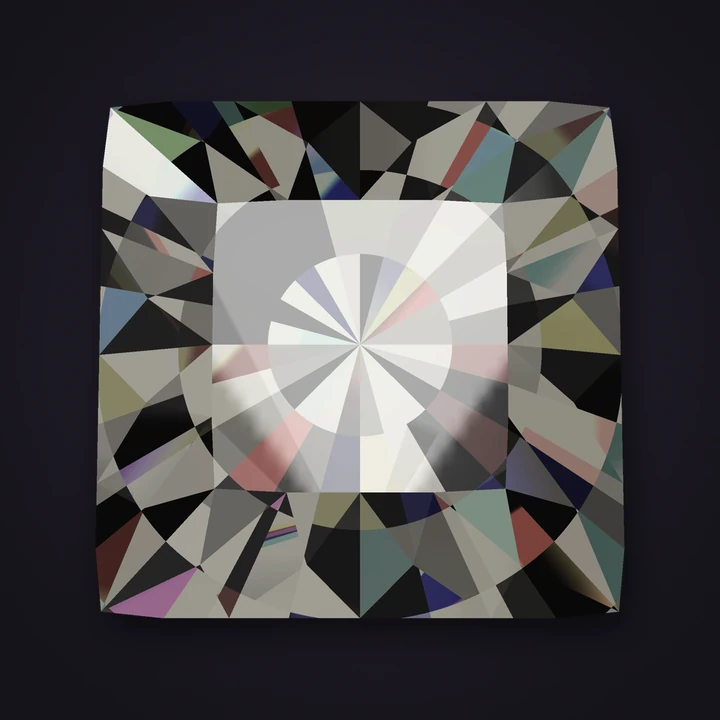 Princess Cut Engagement Rings: A Practical GuidePrincess engagement ring guide: square brilliant sizes in mm, protecting the corners, best prong settings, band pairings…
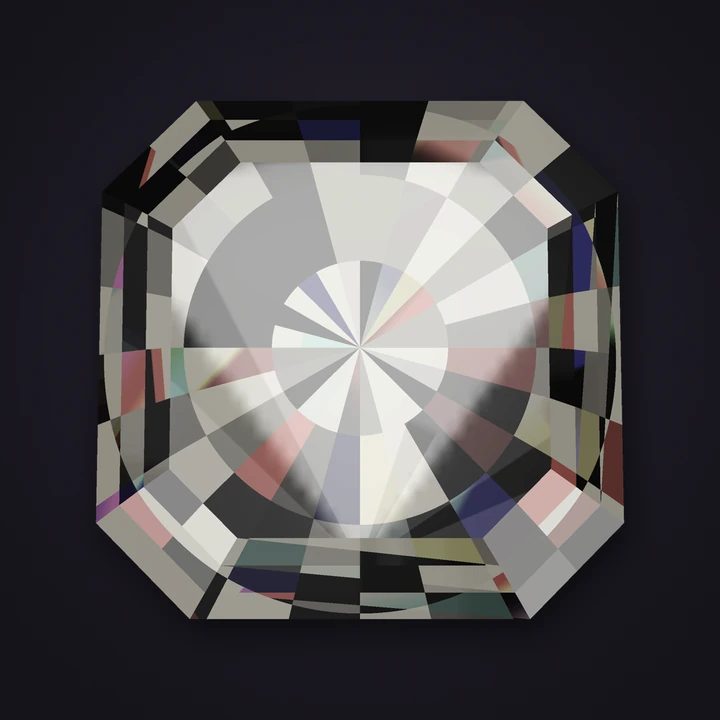 Asscher Cut Engagement RingsAsscher engagement ring guide: the windmill pattern, step-cut clarity and colour advice, carat-to-mm sizes, Art Deco set…
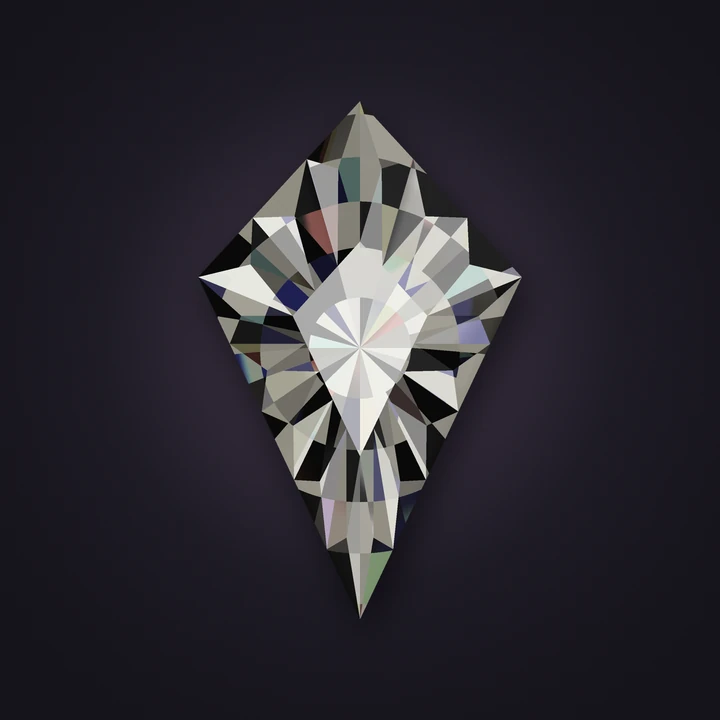 Kite Engagement RingsKite engagement ring guide: what a kite cut is, its Art Deco roots, approximate sizes, sourcing a custom or lab-grown ki…Art Deco Engagement RingsArt Deco engagement ring guide: 1920s-30s design traits, asscher, emerald, octagon and hexagon cuts, calibré colour, mil…4 Prong vs 6 Prong: Which Setting Should You Choose?4 prong vs 6 prong settings compared: security, how the stone looks, which shapes suit each, snagging and upkeep, plus a…