 Ring Studio
Salt and Pepper Diamonds
Salt and pepper diamonds are natural diamonds packed with visible black and white inclusions that give each stone a speckled, galaxy-like look. They cost less than clean diamonds and no two are alike, but those same inclusions mean you need to choose and set them with care.
On this page
- What they are
- Natural diamonds with abundant visible inclusions
- "Salt"
- White or clear clouds, feathers and pinpoints
- "Pepper"
- Black or dark grey crystals and graphite-like spots
- Hardness
- 10 on the Mohs scale
- Main caveat
- Large feathers or fractures can make a stone more prone to chipping
- Grading
- Below the I3 end of standard clarity scales; judged mainly by eye
What makes a salt and pepper diamond different?
Traditional diamond buying is about avoiding inclusions. On the usual diamond clarity chart, the grades run from Flawless down to Included (I1 to I3), and most engagement ring buyers aim for an eye-clean stone. Salt and pepper diamonds flip that logic. Their inclusions are the point: dark crystals scattered through white haze, sometimes concentrated in a swirl, sometimes spread evenly like a starry night.
That makes them one of the few diamonds you choose with your eyes rather than a grading report. Two stones with identical weights and shapes can look nothing alike, and the right one for you is the one whose pattern you love.
Light, medium and dark: the range of looks
| Tone | Look | Sparkle | Pairs well with |
|---|---|---|---|
| Light (mostly salt) | Soft grey-white with fine speckles; close to a misty white diamond | Moderate brightness | Platinum, white gold, delicate pavé bands |
| Medium | Clear mix of dark and light; the classic speckled look | Muted shimmer | Yellow gold, rose gold, bezel settings |
| Dark (mostly pepper) | Charcoal to near-black with flashes of light | Low, with surface lustre | Rose gold, oxidised or matte finishes, white diamond halos |
If you want something almost black, compare a dark salt and pepper stone with a black diamond. Black diamonds are usually treated to a uniform colour, while salt and pepper stones keep their natural, uneven character.
Are salt and pepper diamonds durable?
Every salt and pepper diamond is still diamond, so it is extremely scratch-resistant. The durability question is about toughness. Inclusions such as feathers (internal fractures) and large crystals can create weak points, and a hard knock in the wrong place can chip or crack the stone. That risk varies a lot from stone to stone.
When choosing one, check:
- Feathers that reach the surface, especially near the girdle or a point. These are the most worrying.
- Large inclusions near prong positions. A prong pressing on a weak spot can cause damage during setting.
- Cavities or pits on the surface, which collect dirt and can be weak.
Ask the jeweller to show you the stone under a loupe and to point out any risky inclusions. A good setter will also tell you if they are unwilling to set a particular stone in prongs. Many people choose a bezel setting, which protects the whole edge, or a six-prong setting to spread the pressure.
Some salt and pepper diamonds are fracture-filled or otherwise treated to improve appearance. That is uncommon but worth asking about, as fillings can be damaged by heat during repairs or by ultrasonic cleaners.
Best shapes for salt and pepper diamonds
Because these stones show their inside so clearly, shapes with broad, open facets work best.
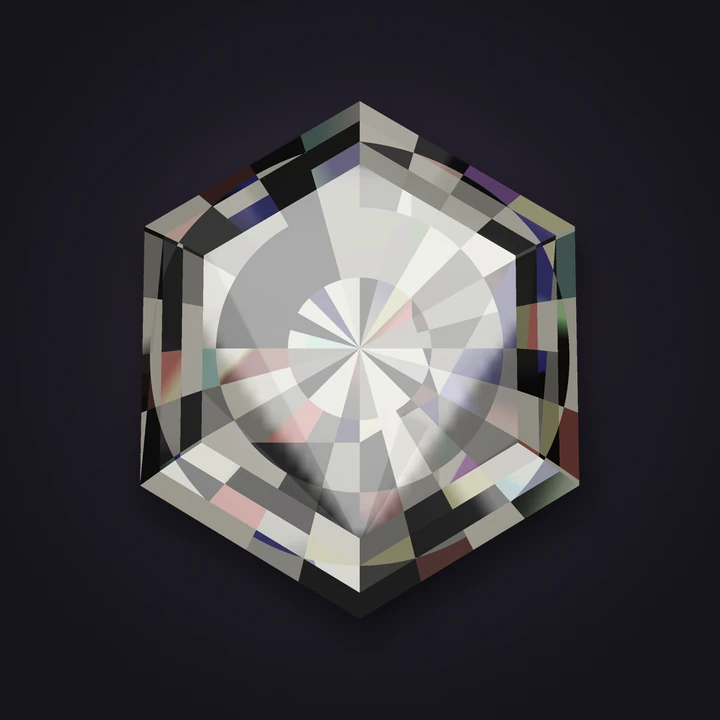
- Hexagon and kite: geometric, modern outlines that suit the organic pattern inside. See hexagon engagement rings.
- Rose cut: a flat base and domed top of triangular facets gives a glassy window into the stone. Ideal for showing a striking inclusion pattern.
- Oval and pear: larger face-up area for the money, though protect the pear's point.
- Old mine and old European cuts: chunky facets suit the vintage, earthy feel.
Many salt and pepper diamonds are cut to maximise weight rather than ideal proportions, so you may see shallow or slightly asymmetric stones. That is normal for the category; judge the overall look.
What does a salt and pepper diamond cost?
Salt and pepper diamonds usually cost considerably less per carat than eye-clean natural diamonds of a similar size, and their prices are not tracked by the standard white diamond price lists. Instead, price depends on how attractive the pattern is, the shape (unusual geometric cuts and rose cuts can carry a premium), the quality of cutting and how much demand there is for that look. A striking one carat stone in a fashionable shape may cost more than you expect, while a plainer stone can be very affordable. Treat any figure you see as an estimate that varies by retailer and market, and compare several stones side by side.
Because there is no clarity grade to compare, buy from a seller who offers clear photos and video in natural light, and a returns policy. Our guide to buying an engagement ring online safely covers what to ask.
Designing around a speckled stone in Ring Studio
Ring Studio does not have a dedicated salt and pepper diamond material, because every stone's pattern is unique. You can still design the setting, proportions and metal around one, which is where most of the decisions are.
- Choose your shape. Round, oval, pear, marquise and emerald are free; Pro unlocks all 28 shapes, including hexagon, kite, rose cut, old mine and old European.
- For a darker stone, use the black diamond option to preview a charcoal look; for a lighter stone, use a white diamond to plan size and setting.
- Pick a bezel or six-prong setting and try a plain band in yellow or rose gold for an earthy look, or a hidden halo for a flash of white sparkle under the stone.
- Adjust the carat size so the stone's face-up size matches the one you are considering, then share the ring code with your jeweller.
If you have a photo of a salt and pepper ring you like, the ring from photo feature (Pro) can recreate the setting in 3D so you can tweak it.
Who should choose a salt and pepper diamond?
They suit people who want a natural diamond with personality, care more about character than maximum sparkle, and like the idea that nobody else will have the same stone. They are less suited to someone who is very hard on their hands or who wants the crisp white flash of a classic solitaire. If that is you, a well-cut white diamond in a minimalist setting may be a better fit.
Verdict
Salt and pepper diamonds are a characterful, usually budget-friendly natural diamond. Choose with your eyes, inspect the inclusions for durability risks, favour protective settings, and buy from a seller who lets you see the actual stone.
Frequently asked questions
What is a salt and pepper diamond?
It is a natural diamond with many visible inclusions, usually dark specks of graphite or other minerals (the pepper) mixed with white clouds and feathers (the salt). They fall below the standard clarity scale used for clean diamonds.
Are salt and pepper diamonds durable?
They are as scratch-resistant as any diamond at 10 on the Mohs scale, but large feathers or fractures can weaken a stone. Avoid stones with big feathers near the edge or reaching the surface, and use a protective setting.
Are salt and pepper diamonds cheaper than regular diamonds?
Usually yes. Because they are heavily included they typically cost much less per carat than an eye-clean natural diamond of similar size, although striking, well-cut stones in popular shapes can still be priced at a premium.
Can salt and pepper diamonds be lab-grown?
The term traditionally describes natural diamonds, and the inclusions are what make them unique. Ask the seller to confirm in writing whether a stone is natural or lab-grown.
Do salt and pepper diamonds sparkle?
Less than a clean diamond. Inclusions block some light, so they give a softer, more muted shimmer, with more brightness in lighter stones and a moody, smoky look in darker ones.
Keep reading
 Hexagon Engagement RingsHexagon engagement ring guide: regular vs elongated hexagons, step vs brilliant cuts, approximate sizes, sourcing, six-p…Bezel Set Engagement RingsBezel set engagement ring guide: full vs half bezels, how a metal rim affects sparkle and size, best shapes, durability,…Unique Engagement RingsUnique engagement ring ideas: unusual cuts, coloured stones, east-west and toi et moi layouts, hidden details and custom…