 Ring Studio
Sapphire Engagement Rings
Sapphire engagement rings combine real colour with toughness: at 9 on the Mohs scale, sapphire is the hardest common gem after diamond. Blue is the classic, but sapphire also comes in pink, yellow, green, white and many shades between.
On this page
- Why choose a sapphire engagement ring?
- Sapphire colours at a glance
- How to judge sapphire quality
- Natural vs lab-created sapphire
- Sapphire vs diamond
- Best settings and metals for sapphire
- How much does a sapphire engagement ring cost?
- Designing a sapphire engagement ring in Ring Studio
- Caring for a sapphire ring
- Mineral
- Corundum (aluminium oxide)
- Hardness
- 9 Mohs
- Colours
- Every colour except red (which is ruby)
- Treatment
- Most are heat treated; disclosed on reports
- Birthstone
- September
Why choose a sapphire engagement ring?
Sapphire has a long history in betrothal jewellery, and a blue sapphire surrounded by diamonds is one of the most recognisable engagement ring designs in the world. Beyond history, there are three practical reasons to choose one:
- Durability. Sapphire is 9 on the Mohs scale, second only to diamond among common gems. It is also tough, with no easy cleavage, so it resists chipping.
- Colour. You can choose almost any hue, from deep royal blue to soft pink or sunny yellow.
- Value. Good commercial sapphires often cost less than a natural diamond of similar size, though fine stones can rival diamond prices.
Sapphire colours at a glance
| Colour | Look | Notes |
|---|---|---|
| Blue | From pale cornflower to deep royal and inky navy | The classic; see blue sapphire engagement rings |
| Pink | Pastel to hot pink | Popular modern alternative; see pink sapphire |
| Padparadscha | Pink-orange blend | Rare and valuable |
| Yellow | Lemon to golden | Often good value |
| Teal and green | Blue-green to green | Distinctive and increasingly fashionable |
| Purple | Lavender to violet | Can shift colour under different lights |
| White (colourless) | Clear | Less sparkle than diamond; can look glassy |
Red corundum is ruby. The line between pink sapphire and ruby depends on saturation, and labs and markets do not always agree on it.
How to judge sapphire quality
Coloured gems have no single grading scale like the diamond 4Cs, but the same ideas apply, with colour first.
Colour
The most valued sapphires have strong, even colour that is neither too dark nor too light. A blue that turns almost black indoors is less desirable than a vivid, medium-dark blue. Look for even colour without obvious zoning (stripes of lighter and darker colour).
Clarity
Most sapphires have some inclusions, often fine needles called silk. Eye-clean is the goal for an engagement ring. A little silk can soften the colour attractively; too much makes a stone look milky.
Cut
Sapphires are often cut to keep weight and colour rather than for maximum sparkle, so watch for windows (a see-through, washed-out patch in the centre) and very deep bellies that make a stone look small. Oval and cushion shapes are the most common.
Origin and treatment
Origin, such as Sri Lanka, Madagascar, Myanmar or Kashmir, can affect price, especially for fine stones. Treatment matters too: heat treatment is common and stable, while some treatments such as beryllium diffusion or glass filling make a stone worth far less. For a significant sapphire, ask for a report from an independent gem lab that states origin and treatment.
Natural vs lab-created sapphire
Lab-created sapphire is genuine corundum grown in a factory. It is chemically and physically the same as natural sapphire, typically very clean and much cheaper. Like lab-grown diamonds, it has little resale value. Natural sapphires carry the rarity and the variety of subtle colours that many collectors prefer. Both must be disclosed clearly.
Sapphire vs diamond
Diamond (10 Mohs) is harder and has more brilliance and fire. Sapphire (9 Mohs) offers colour and, for many sizes, lower cost. Sapphire also tends to look slightly less lively face-up and needs cleaning to keep its colour bright. See sapphire vs diamond for the full comparison.
Best settings and metals for sapphire
- Halo. A diamond halo frames a blue or pink sapphire and adds sparkle the sapphire alone does not have; see halo engagement rings.
- Three stone. A sapphire centre with diamond sides, or diamonds with sapphire sides; see three stone rings.
- Metal. Blue sapphire looks crisp in platinum or white gold and richer in yellow gold. Pink sapphire suits rose gold. See platinum for why it is a favourite with blue.
How much does a sapphire engagement ring cost?
Sapphire prices range enormously. A lab-created sapphire costs very little. Commercial-quality natural sapphires around 1 ct can be quite affordable, while fine, untreated stones with top colour and a respected origin can cost as much as or more than a diamond. Size, colour, treatment status and origin drive price. Treat any figure as an estimate, and buy significant stones with an independent lab report.
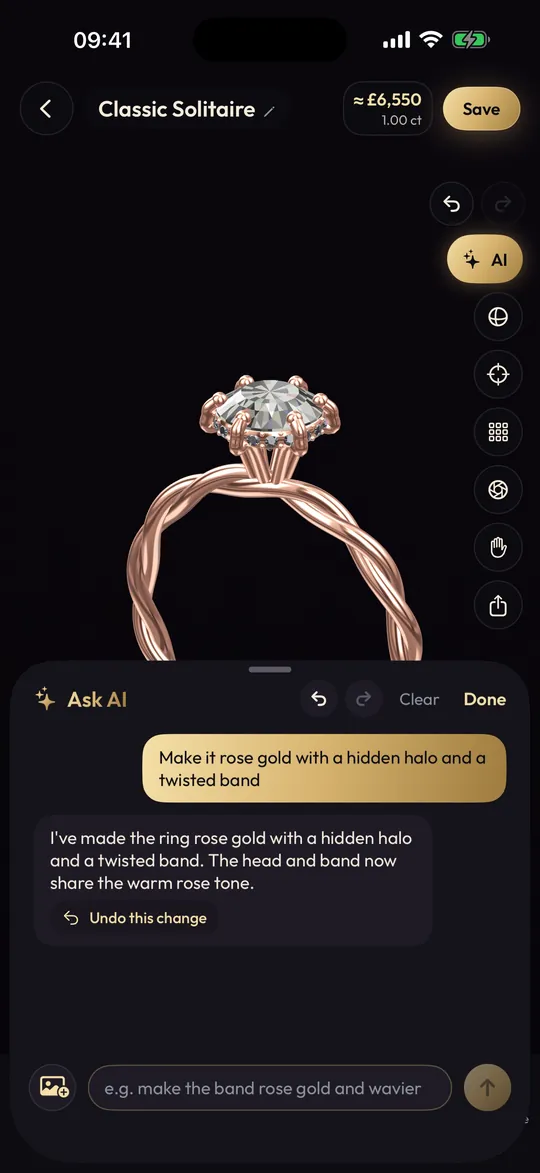
Designing a sapphire engagement ring in Ring Studio
Ring Studio includes blue and pink sapphire as stone options. You can set either as the centre stone in any of the app's 28 shapes and see how it looks in each metal.
- Choose a shape. Oval and cushion are the most common for sapphire; try east-west orientation for a modern look.
- Set the stone to blue sapphire or pink sapphire and adjust the carat.
- Add a classic halo or three stone side stones with diamonds.
- Switch metals: blue in platinum, then yellow gold; pink in rose gold.
- Or describe it to the AI, for example "blue sapphire oval with a diamond halo in platinum", and refine by chatting.
The app does not offer yellow, green, padparadscha or other sapphire colours, or lab-created vs natural sapphire, so note those preferences for your jeweller and share the ring code.
Caring for a sapphire ring
Sapphire is easy to live with. Clean it with warm soapy water and a soft brush. Untreated and heat-treated stones are safe in ultrasonic cleaners, but fracture-filled or glass-filled stones are not, so check what you have. Have prongs checked once a year. For birthstone ideas, see birthstone rings by month.
Frequently asked questions
Is sapphire good for an engagement ring?
Yes. Sapphire scores 9 on the Mohs scale and is tough, so it handles daily wear far better than softer gems like morganite or emerald. It is one of the most practical coloured stones for an engagement ring.
What colours do sapphires come in?
Sapphire is the mineral corundum, which comes in almost every colour. Red corundum is called ruby; every other colour, including blue, pink, yellow, green, purple, orange and colourless, is sapphire.
Are most sapphires heat treated?
Yes. Most sapphires on the market have been heated to improve colour and clarity. It is a long-established, stable treatment. Untreated sapphires of similar quality are rarer and cost more, and a lab report can confirm treatment.
What is a padparadscha sapphire?
Padparadscha is a rare pinkish-orange sapphire, named after the colour of a lotus flower. It is among the most valuable sapphire colours and usually needs a lab report to be sold under that name.
Are lab-created sapphires real sapphires?
Yes. Lab-created sapphire is corundum with the same chemistry and hardness as natural sapphire, made in a factory. It costs much less and should always be disclosed as lab-created or synthetic.