 Ring Studio
Sapphire vs Diamond: Which Is Better for an Engagement Ring?
For a sapphire vs diamond engagement ring, the diamond wins on hardness and fire, while a sapphire wins on colour, character and often price per carat. At 9 on the Mohs scale, sapphire is one of the few gemstones tough enough for daily wear, which is why it is the most popular coloured alternative.
On this page
- Hardness (Mohs)
- Diamond 10; sapphire 9
- Sparkle
- Diamond: more brilliance and fire. Sapphire: colour-led glow
- Price
- Varies widely; sapphire often lower per carat than natural diamond
- Best for
- Diamond: classic sparkle. Sapphire: colour and individuality
Sapphire vs diamond at a glance
| Sapphire | Diamond | |
|---|---|---|
| Mineral | Corundum (aluminium oxide) | Carbon |
| Mohs hardness | 9 | 10 |
| Refractive index | About 1.76-1.77 | About 2.42 |
| Fire (dispersion) | Low | High |
| Colours | Blue, pink, yellow, white, green, padparadscha and more | Mostly colourless; fancy colours exist |
| How it is judged | Colour first, then clarity, cut, origin, treatment | The 4Cs: cut, colour, clarity, carat |
| Treatments | Heat treatment is common | Less common in fine stones; disclosed on reports |
| Lab-grown option | Yes | Yes |
| Cleaning | Easy; holds a clean look | Attracts grease, needs regular cleaning to sparkle |
Durability: 9 vs 10
Mohs hardness measures scratch resistance. Diamond, at 10, can only be scratched by another diamond. Sapphire, at 9, is scratched by diamond and very little else in daily life; household dust (mostly quartz, at 7) cannot scratch it. In practice, both keep a crisp polish for decades.
Toughness, or resistance to chipping, is a separate property. Sapphire's toughness is good, and diamond's is good but directional: a diamond can cleave along certain planes if struck hard in the wrong spot. Either stone benefits from a protective setting if you are rough on your hands.
Look: colour versus fire
A diamond's high refractive index and strong dispersion give it white brilliance and flashes of spectral colour. That is the "sparkle" most people picture. A sapphire's appeal is saturation: a velvety royal blue, a soft pink, or a sunset padparadscha. Its sparkle is more of a glow, with light bouncing around inside the colour.
White sapphire exists as a diamond alternative, but it shows noticeably less fire and can look glassy next to a diamond. If you want colourless sparkle, a diamond or lab-grown diamond is the honest recommendation.
Price: it depends on quality
Commercial blue sapphires, heated and with good colour, often cost less per carat than a comparable natural diamond. Fine sapphires with exceptional colour, from sought-after origins and with no heat treatment, can cost as much as or more than a diamond. Meanwhile, lab-grown diamond prices have fallen sharply over recent years, so a lab-grown diamond can now be cheaper than many natural sapphires of the same size. Prices vary by retailer and market; treat any figure as a rough estimate.
Grading and what to check
Diamonds have a standardised grading language in the 4Cs. Sapphires don't have one universal scale; colour is judged by hue, tone and saturation, and clarity standards are more forgiving. Ask for a report from a recognised gemmological lab stating whether the stone is natural or lab-grown and whether it is heated or otherwise treated.
Size and cut
Sapphire is denser than diamond, so a 1 carat sapphire is slightly smaller than a 1 carat diamond of the same shape. Many sapphires are cut for colour and weight rather than maximum brilliance, and ovals and cushions are especially common.
Choose a sapphire if... choose a diamond if...
Choose a sapphire if colour matters to you, you want a ring that feels personal and less expected, you love vintage or royal-inspired designs, or you want a durable gem with a lot of presence for your budget.
Choose a diamond if you want maximum hardness, white brilliance and fire, the classic engagement ring look, or a ring that will pair with any future jewellery. Then decide between lab-grown and natural.
Best of both
Many of the most loved designs combine the two: a blue sapphire centre with a diamond halo, a diamond centre with sapphire side stones, or a diamond solitaire with a hidden sapphire detail. If you can't decide, a mixed ring may be the answer. Red corundum, ruby, is the same mineral and an option if you want a warm colour with sapphire's durability.
Design a sapphire or diamond ring in Ring Studio
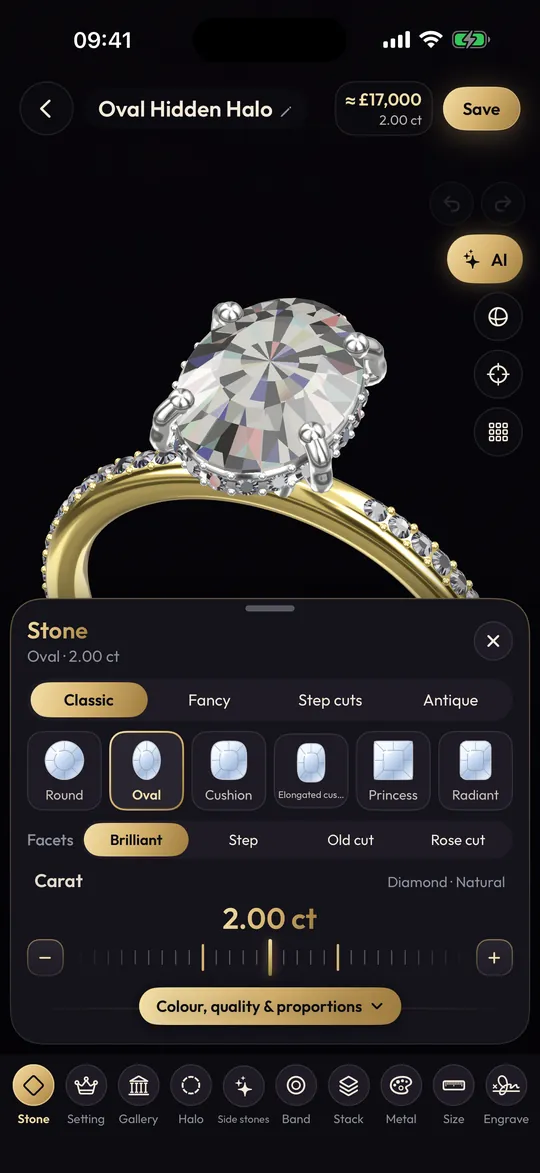
Ring Studio lets you set natural or lab-grown diamonds, yellow and black diamonds, blue and pink sapphires, emeralds, rubies and morganite, so you can swap stones in one design and compare them:
- Build your ring with an oval or cushion centre, popular shapes for sapphires.
- Set the stone to blue sapphire and rotate it in yellow gold, then platinum.
- Switch the stone to a diamond and compare the same design.
- Try a classic halo (Pro) or side stones to see how a framed or three stone version looks.
- Watch the live price estimate change as you switch stones and carat.
Which metal suits each stone?
A colourless diamond looks crisp in platinum or white gold, which don't add any warmth to the stone; yellow gold gives a warmer vintage look. A blue sapphire is striking in both: white metal makes the blue feel cool and bright, yellow gold makes it feel rich and regal. Pink sapphire is lovely in rose gold for a soft, tonal ring, or in white metal for contrast.
Verdict
Choose a diamond for unmatched hardness and fire. Choose a sapphire for colour, character and excellent durability, often at a lower price per carat. Both are proven engagement ring stones; the right one is the one whose look you love, and a sapphire with diamond accents lets you have both.
Frequently asked questions
Is sapphire durable enough for an engagement ring?
Yes. Sapphire is corundum, rated 9 on the Mohs scale, second only to diamond among popular gems, and it has good toughness. It handles daily wear well, though like any stone it can chip from a hard knock.
Is a sapphire cheaper than a diamond?
Often, but not always. Commercial-quality blue sapphires usually cost less per carat than comparable natural diamonds, but fine, untreated sapphires with top colour can cost as much or more. Lab-grown diamonds have fallen sharply in price and can now undercut many natural sapphires.
Do sapphires sparkle like diamonds?
Not in the same way. A diamond's higher refractive index and dispersion give it more brilliance and coloured fire. A well-cut sapphire has a rich, glowing sparkle where colour is the star rather than flashes of rainbow light.
Are most sapphires heat treated?
Heat treatment is very common and widely accepted, as it improves colour and clarity and is stable. Untreated sapphires exist and usually cost more. A reputable seller should disclose treatment, ideally on a lab report.
Do sapphires come in colours other than blue?
Yes. Sapphire is the name for gem corundum in every colour except red, which is called ruby. Pink, yellow, green, white, orange-pink padparadscha and colour-change sapphires all exist.