 Ring Studio
Comparisons
Emerald vs Radiant Cut
Emerald vs radiant is the same cut-corner rectangle with two very different personalities: the emerald cut's long step facets create calm flashes and a "hall of mirrors", while the radiant's brilliant facets deliver full, fiery sparkle and hide inclusions better. A 1 ct emerald is about 7.0 x 5.0 mm; a 1 ct elongated radiant about 6.5 x 5.0 mm.
On this page
- Shared
- Rectangular outline with cut corners
- Emerald cut
- Step facets: clean lines, broad flashes
- Radiant cut
- Brilliant facets: intense, scattered sparkle
- More forgiving
- Radiant (inclusions and colour hide better)
Emerald vs radiant comparison table
| Emerald cut | Radiant cut | |
|---|---|---|
| Look | Long parallel steps; sleek, Art Deco, understated | Busy, glittering, crushed-ice or brilliant |
| 1 ct size | About 7.0 x 5.0 mm | About 6.5 x 5.0 mm (rectangular) |
| Sparkle | Fewer, larger flashes | High brilliance and fire |
| Clarity needed | Higher (often VS2+) | Lower (often SI1 can be eye-clean) |
| Colour | Shows tint more | Hides tint fairly well, though corners can hold colour |
| Durability | Cut corners protect against chipping | Cut corners protect against chipping |
| Maintenance | Shows dirt and smudges on the table | Grime dulls sparkle; clean often |
| Price per carat | Lower than round | Lower than round; similar to emerald |
| Best for | Elegant, minimal and vintage looks | Sparkle-lovers who want a rectangle |
Step cut vs brilliant cut, explained
Everything comes from the faceting. An emerald cut is a step cut: long, flat facets run parallel to the edges like stairs, around a large open table. Light bounces between them in broad on-off flashes, the famous "hall of mirrors". It looks clear, deep and calm.
A radiant cut keeps the same cut-corner outline but uses brilliant faceting, around 70 facets, in the crown and pavilion. The light is broken into many small, bright sparkles. It was created in the late 1970s to combine the emerald's shape with a round's fire. Our ring design glossary defines the facet terms.
Size per carat
Emerald cuts are usually shallower and wider at the top, so their weight is visible. A 1 ct emerald at about a 1.4 ratio measures roughly 7.0 x 5.0 mm. Radiants are typically cut deeper to maximise sparkle, and a 1 ct rectangular radiant is often about 6.5 x 5.0 mm. In practice, the emerald looks slightly longer per carat. Square radiants at 1 ct are around 5.5 mm. See the carat size chart.
Clarity and colour: where the money goes
An emerald cut's big open table works like a window: inclusions that a brilliant would scatter into sparkle are on show. Most jewellers advise VS2 or better for an emerald cut, chosen by eye rather than grade alone. Colour also shows more in step cuts, so many buyers stay G or above in white metal.
A radiant's busy faceting masks inclusions, so SI1 and sometimes SI2 stones can look clean, and it hides colour reasonably well, though its corners can concentrate a tint. That flexibility often makes a radiant cheaper for the same visual quality. Our diamond clarity chart explains the grades.
Durability
Both shapes have cropped corners, which removes the fragile points a princess has. Four prongs on the corners is standard for both; a bezel suits the emerald's clean lines especially well.
Style
The emerald cut is linked with Art Deco design and old-Hollywood glamour, and looks superb with tapered baguettes or in a plain solitaire. The radiant feels more contemporary and glamorous, and works well in halos and pavé bands that add to its sparkle.
Natural or lab-grown for these shapes?
Because emerald cuts demand high clarity, lab-grown stones are a popular way to get a clean, colourless emerald cut without the steep price of a natural one. Radiants are already forgiving, so a natural radiant at SI clarity can be good value. Lab-grown prices have fallen sharply over recent years, so compare both; our lab-grown vs natural diamond page explains the trade-offs and diamond price per carat gives typical ranges.
Settings that suit each
Emerald cuts look best in settings that respect their clean lines: four claws on the corners, a slim bezel, or baguette side stones. Radiants love extra sparkle, so a hidden halo or pavé band suits them. Both can be set east-west for a modern twist.
Choose emerald if... choose radiant if...
- Choose emerald if you love clean lines and quiet elegance more than glitter, you want the most length per carat, and your budget can stretch to higher clarity.
- Choose radiant if you want a rectangle that sparkles as hard as possible, you want to save by choosing lower clarity, or you plan a halo or pavé design.
Compare them side by side in Ring Studio
Emerald is a free shape in Ring Studio and radiant is one of the extra shapes in Pro. Building both on the same setting is the fastest way to see whether you are a step-cut or a brilliant person.
- Design an emerald cut solitaire on four prongs or a bezel; add tapered baguette side stones if you like the Art Deco look.
- Switch the centre stone to radiant and rotate it under the studio lights to compare the sparkle pattern.
- Try the radiant with a hidden halo, and the emerald set east-west, to explore each at its best.
- Compare the live price estimates and try each design on your hand (Pro).
Then share the ring code with your jeweller; our guide to working with a jeweller covers what to send.
Verdict
Choose the emerald cut if you want understated, glassy sophistication and can buy good clarity. Choose the radiant if you want all the sparkle of a brilliant in a rectangular outline, with more freedom on clarity and colour. Look at both in person or in motion, because the difference is in how they move, not their outline.
Frequently asked questions
Is an emerald cut or radiant cut better?
Neither is better; they suit different tastes. Choose emerald for understated, glassy elegance and radiant for maximum sparkle in a rectangular shape. Radiants are more forgiving of inclusions and colour.
Does an emerald cut look bigger than a radiant?
Usually a little. Emerald cuts are shallower and spread their weight across the top, so a 1 ct emerald is about 7.0 x 5.0 mm, while a 1 ct radiant is often about 6.5 x 5.0 mm.
What clarity do I need for an emerald cut?
Emerald cuts show inclusions clearly through their open table, so many jewellers suggest VS2 or better, checked by eye. Radiants can often look clean at SI1 or even SI2.
Does a radiant cut sparkle like a round?
A good radiant sparkles intensely, often with a crushed-ice look, but a round brilliant still returns light a little more evenly. Radiants are among the sparkliest fancy shapes.
Can a radiant be square?
Yes. Radiants come in both square and rectangular versions. Rectangular radiants of around 1.2 to 1.35 ratio are the most popular for engagement rings.
Keep reading
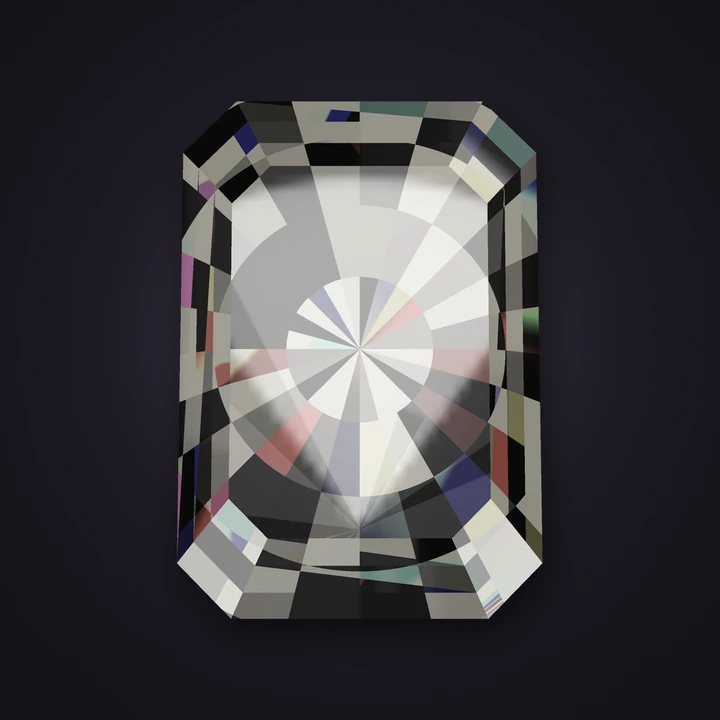 Stone shapesEmerald Cut Engagement Rings: Clarity, Sizes and StyleEmerald cut engagement ring guide: why clarity matters in step cuts, the best ratios, carat-to-mm sizes, settings, bands…
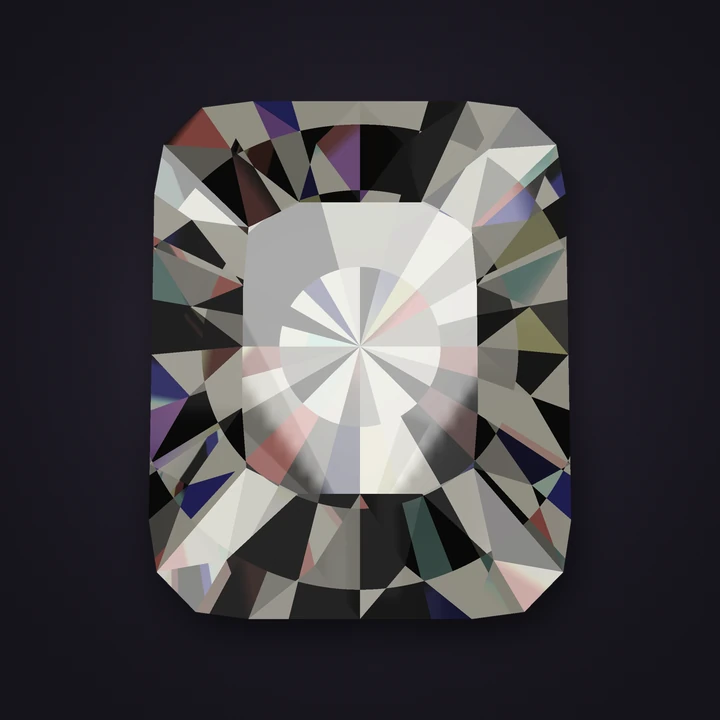 Stone shapesRadiant Cut Engagement RingsRadiant engagement ring guide: square vs rectangular ratios, carat-to-mm sizes, depth and colour tips, best settings, ba…ComparisonsEmerald Cut vs Asscher CutEmerald cut vs Asscher: both step cuts with a hall-of-mirrors look. The emerald is a long rectangle that looks bigger; t…GemstonesDiamond Clarity Chart: FL to I3 ExplainedDiamond clarity chart from FL to I3: what each grade means, which inclusions matter, the eye-clean sweet spot by shape a…Settings & stylesArt Deco Engagement RingsArt Deco engagement ring guide: 1920s-30s design traits, asscher, emerald, octagon and hexagon cuts, calibré colour, mil…Settings & stylesTapered Baguette Engagement RingsTapered baguette engagement rings flank the centre stone with narrowing step-cut side stones. See best centre shapes, si…