 Ring Studio
Tapered Baguette Engagement Rings
A tapered baguette engagement ring sets a long, narrow step-cut stone on each side of the centre stone, each one wider at the centre and narrower towards the band. The tapering lines lead the eye inwards and give the ring a tailored, Art Deco look.
On this page
- Why tapered baguettes work so well
- Baguette, tapered baguette and other step-cut side stones
- Choosing the centre stone
- How big should tapered baguettes be?
- Setting styles and durability
- What do tapered baguettes add to the cost?
- Designing a tapered baguette ring in Ring Studio
- Who suits a tapered baguette ring?
- Side stones
- Two step-cut stones, wider at the centre end
- Look
- Linear, tailored, Art Deco
- Classic centre
- Emerald cut; also round, oval, radiant, cushion
- Light
- Clean flashes rather than sparkle
- Durability
- Protect the corners with channel, bezel or corner prongs
- In Ring Studio
- Baguette side stones; tapered baguette is also a stone shape
Why tapered baguettes work so well
Side stones solve a design problem: how to make the centre stone feel bigger and the ring feel complete without distracting from the main event. Tapered baguettes do it with lines rather than sparkle. Because each stone is widest where it meets the centre and narrowest where it meets the band, the pair acts like a pair of arrows pointing inward. The result looks intentional and elegant, and it has been a signature of formal, architectural ring design since the Art Deco period.
They also make an engagement ring look more substantial on the hand without adding much height or bulk.
Baguette, tapered baguette and other step-cut side stones
| Side stone | Outline | Effect |
|---|---|---|
| Straight baguette | Rectangle | Strong, geometric; extends the width evenly |
| Tapered baguette | Long trapezoid | Leads the eye in, blends into the band |
| Trapezoid | Short, wide trapezoid | Bolder, works with larger centres |
| Epaulette | Five-sided, shoulder-like | Distinctive, vintage |
| Half moon | Semicircle | Soft, hugs round and oval centres |
Our baguette guide covers baguettes as centre stones too, which some people choose for a very minimal look.
Choosing the centre stone
- Emerald cut: the natural partner. Step cut with step cut gives a calm, unified hall-of-mirrors effect. See emerald cut engagement rings.
- Radiant: the same outline as an emerald cut with brilliant sparkle, so you get sparkle in the centre and flash on the sides. Compare them in emerald vs radiant.
- Round: a beautiful contrast between the circle and the straight lines. Often seen in mid-century designs.
- Oval: the tapered lines extend the oval's length visually, especially when set east-west.
- Asscher and cushion: both work well; asscher leans fully Art Deco, cushion softer and more vintage.
How big should tapered baguettes be?
There is no fixed rule, but the centre should clearly lead. As a guide, the long side of each baguette is often similar to, or a little shorter than, the centre stone's width, and the wide end matches a good part of the centre's depth. On a 1 carat emerald cut, side baguettes are frequently somewhere around 0.1 to 0.25 carats each. A jeweller will source a matched pair, ideally cut from similar rough so colour and clarity match.
Step cuts show inclusions more readily than brilliant cuts because the large open facets act like windows. For side baguettes, choose clarity high enough that nothing is visible to the naked eye.
Setting styles and durability
Baguettes have sharp corners, and corners chip. How they are set makes the biggest difference to how well the ring lasts.
- Prong set: small claws at the corners. Light and open, shows the most stone.
- Channel set: held between two walls of metal. Very secure, and clean in profile.
- Bezel or half bezel: a metal rim around each stone. The most protective option for active wear.
Side baguettes also widen the head, which can make a straight wedding band sit a little away from the ring. Our guide to curved wedding bands covers contour options that close the gap.
What do tapered baguettes add to the cost?
A matched pair of small baguettes usually adds far less than the centre stone, but more than you might expect for their size. Step cuts need a well-matched pair, cutting losses on long, narrow stones are relatively high, and channel or bezel setting takes extra bench time. Lab-grown baguettes cost considerably less than natural ones, and their prices, like all lab-grown diamond prices, have fallen sharply in recent years. Treat any figure you see as an estimate that varies by retailer, quality and market; our engagement ring cost guide explains the moving parts.
Designing a tapered baguette ring in Ring Studio
Ring Studio offers baguettes as a side stone option and includes tapered baguette as a stone shape, so you can model the classic three stone look and variations on it.
- Choose the centre shape: emerald or radiant for a step-cut set, round or oval for contrast. Set the carat.
- Open side stones and choose baguettes. View from above to judge proportions.
- With Pro, use custom stone placement to position tapered baguettes or other extra stones exactly where you want them.
- Choose a setting for the centre (4 prong or bezel suit the clean lines) and a straight or tapered band.
- Pick a metal: platinum or white gold for an icy Art Deco feel, yellow gold for warmth.
- Stack a wedding band below and test straight, curved and chevron contours.
Prefer to describe it? Try asking the AI designer for "an emerald cut diamond with tapered baguettes on a platinum band".
Who suits a tapered baguette ring?
If you like tailored clothes, clean architecture and jewellery that looks considered rather than ornate, tapered baguettes are hard to beat. They sit somewhere between a minimal solitaire and a full three stone ring. For more classic step-cut style, see our Art Deco engagement rings, or the wider guide to side stone engagement rings.
Frequently asked questions
What is a tapered baguette?
A tapered baguette is a step-cut stone shaped like a long trapezoid: one short end is wider than the other. In rings it is set with the wide end against the centre stone, so the pair narrows towards the band.
What is the difference between a baguette and a tapered baguette?
A straight baguette is a rectangle with parallel sides. A tapered baguette has sides that angle inwards, so it is wider at one end. Tapered baguettes flow into the band more smoothly; straight baguettes look more geometric.
What centre stone goes best with tapered baguettes?
Emerald cuts are the classic match because both are step cuts. Round, oval, radiant and cushion centres also look excellent, giving a contrast between sparkle and the side stones' clean flashes.
Are tapered baguettes durable?
Diamond baguettes are hard, but the sharp corners can chip if left exposed. Setting them in a channel, a bezel or with protective prongs at the corners guards against this.
Do tapered baguettes sparkle?
They flash rather than sparkle. Step cuts show broad, mirror-like flashes of light instead of the scattered sparkle of brilliant cuts, which is why they look so crisp beside a brilliant-cut centre.
Keep reading
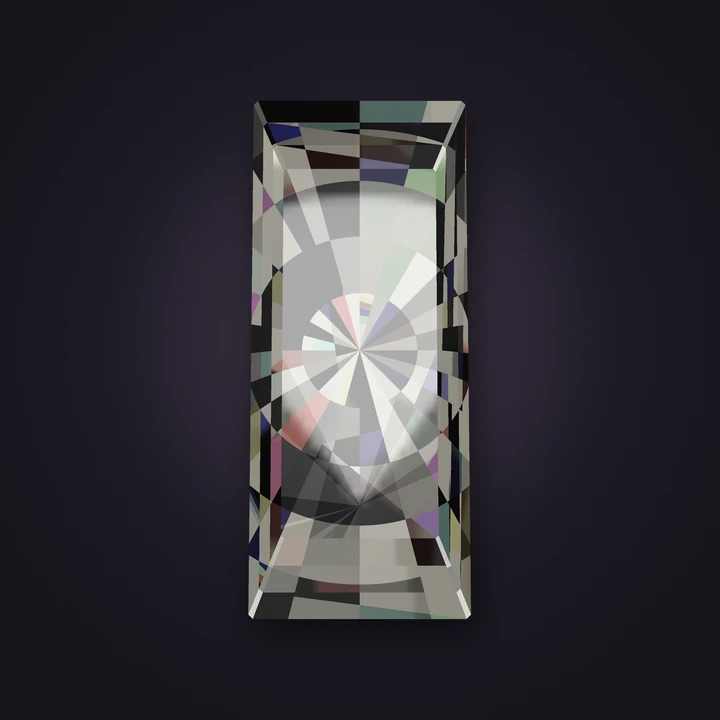 Baguette Engagement RingsBaguette engagement ring guide: baguette centre stones vs side accents, mm sizes, clarity, setting styles, bands and pri…
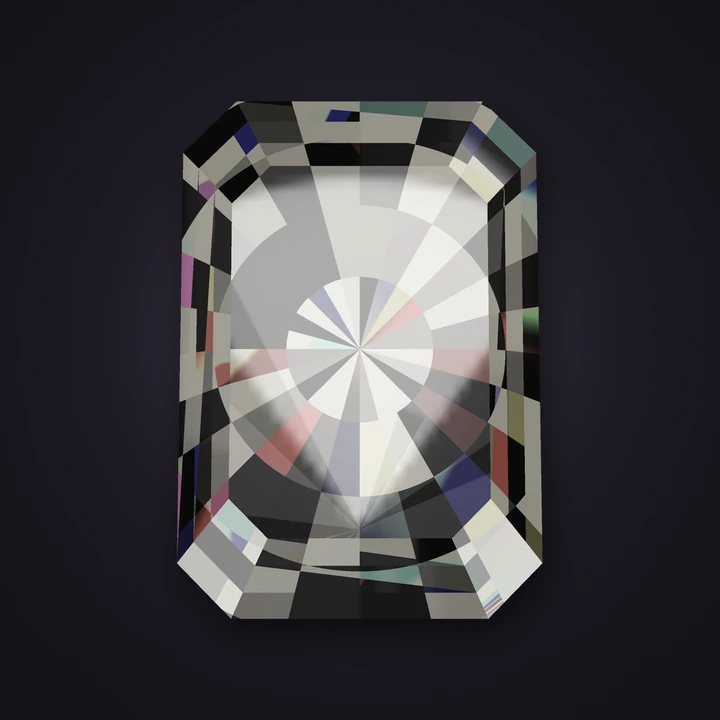 Emerald Cut Engagement Rings: Clarity, Sizes and StyleEmerald cut engagement ring guide: why clarity matters in step cuts, the best ratios, carat-to-mm sizes, settings, bands…Side Stone Engagement RingsSide stone engagement rings frame the centre stone with smaller gems. Compare pears, baguettes, kites, marquise and more…Three Stone Engagement RingsThree stone engagement ring guide: side stone sizes and shapes that balance the centre, pears vs baguettes vs trillions,…Art Deco Engagement RingsArt Deco engagement ring guide: 1920s-30s design traits, asscher, emerald, octagon and hexagon cuts, calibré colour, mil…Emerald vs Radiant CutEmerald vs radiant cut: same rectangular outline, opposite personalities. Compare step-cut calm with brilliant sparkle, …