 Ring Studio
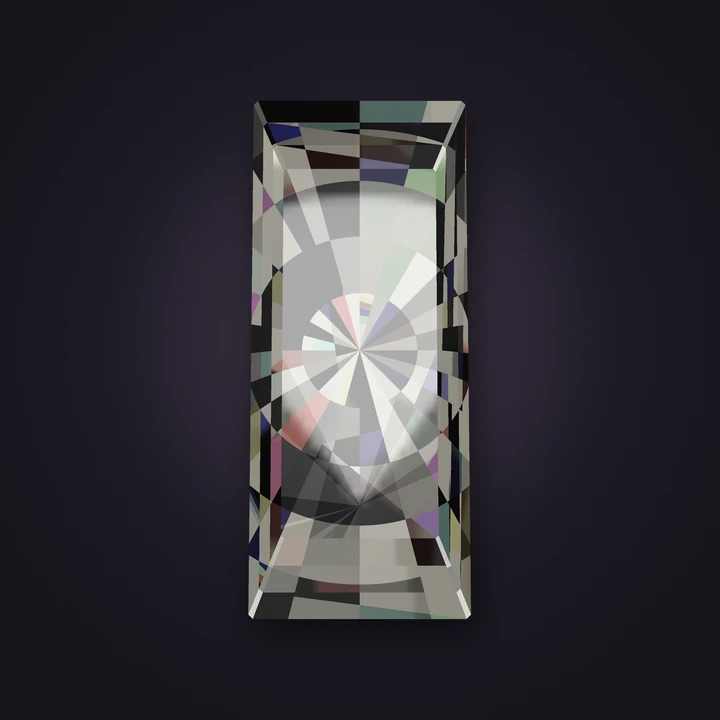
Baguette Engagement Rings
A baguette engagement ring uses long, narrow, step-cut rectangular diamonds, either as an unusual centre stone or, far more often, as sleek side stones beside a larger centre. Baguettes give clean lines and flashes of light rather than sparkle.
On this page
- Two ways to use baguettes
- Baguette sizes: centre stones and accents
- What to look for in baguette diamonds
- Best settings for baguette rings
- Pairing a wedding band
- Baguette pros and cons
- Sourcing and price
- Who suits a baguette engagement ring?
- Common mistakes with baguette rings
- How to design a baguette ring in Ring Studio
- Related step-cut shapes
- Facets
- Typically about 14 step facets
- Length-to-width
- Accents often 2:1 to 3:1; centre stones usually 1.5 to 2.5
- Look
- Clean, linear, glassy flashes; Art Deco and minimalist
- Best settings
- Bezel or 4 prong for centres; channel or prong set as side stones
- Price vs round
- Much lower per carat; large centre baguettes are rare and priced individually
Two ways to use baguettes
Most people meet baguettes as the slim stones flanking a solitaire or lined up in a channel-set band. They became a hallmark of 1920s and 1930s Art Deco jewellery, where their straight lines suited geometric designs. A smaller group of people choose a baguette as the centre stone: a long, pure rectangle that looks modern, almost architectural, and very different from a typical engagement ring.
Both uses share the same character. With so few facets, baguettes don't sparkle like brilliants. They flash. Placed beside a round or oval, that contrast makes the centre look brighter.
Baguette sizes: centre stones and accents
There is no standard size chart for baguette centre stones because so few are cut. These are very approximate for a straight baguette around a 1.8 ratio.
| Carat (centre) | Approx. L x W |
|---|---|
| 0.50 ct | 6.5 x 3.6 mm |
| 0.75 ct | 7.4 x 4.1 mm |
| 1.00 ct | 8.1 x 4.5 mm |
| 1.50 ct | 9.3 x 5.2 mm |
| 2.00 ct | 10.2 x 5.7 mm |
| 3.00 ct | 11.7 x 6.5 mm |
Accent baguettes are much smaller. As a rough guide, a 3 x 1.5 mm baguette weighs only a few points (hundredths of a carat), and a 5 x 2.5 mm stone roughly 0.15 to 0.2 ct. Your jeweller will match pairs by size and colour.
What to look for in baguette diamonds
- Clarity: few facets mean nowhere for inclusions to hide. For a centre baguette, aim for eye-clean, typically VS2 or better.
- Colour: step cuts show colour; match side baguettes to the centre stone's colour, or one grade lower, so they don't look yellow beside it.
- Straight edges and square corners: wobbly lines are obvious in a row of baguettes and in a channel setting.
- Corners: sharp square corners are the weakest point. Fully enclosed settings protect them best.
- Matching: in pairs and bands, consistent length, width and depth matter more than individual grades.
Baguettes in a channel or bezel are well protected. Prong-set baguettes with exposed corners look airy but are more prone to chipping on everyday knocks.
Best settings for baguette rings
Baguette centre stones
A slim bezel is the most natural choice, protecting the corners and framing the rectangle. A 4 prong setting shows more stone. Set east-west, a baguette looks like a bar of light across the finger.
Baguettes as side stones
A pair of baguettes or tapered baguettes either side of a round, oval, emerald or Asscher is the classic Art Deco three stone layout. Baguettes can also run down the shoulders in channels.
Baguette bands
Channel-set baguette eternity bands are a striking wedding band choice and pair especially well with step-cut centres.
Pairing a wedding band
Straight-edged baguette rings sit well with straight bands. A baguette band beside a brilliant-cut engagement ring adds contrast; a round pavé band beside a baguette centre softens it.
Baguette pros and cons
| Pros | Cons |
|---|---|
| Clean, modern or Deco lines | Little sparkle on their own |
| Make brilliant centres look brighter | Show inclusions and colour |
| Low price per carat as accents | Sharp corners can chip if exposed |
| Very distinctive as a centre stone | Large centre baguettes are hard to source |
Sourcing and price
Accent baguettes are inexpensive per stone, though well-matched sets cost more because of the labour of matching. Large centre baguettes are rare in natural diamond and often cut to order; lab-grown ones are easier to find and much cheaper, as lab-grown prices have fallen sharply. Prices vary widely by retailer and quality.
Who suits a baguette engagement ring?
A baguette centre suits someone with a minimalist, modern or architectural taste who doesn't want a traditional sparkle. It is also a smart choice for people who work with their hands: a bezel-set, east-west baguette sits low and has no prongs to snag. Baguette side stones suit almost anyone and are one of the easiest ways to upgrade a solitaire. If you love the look but want more fire, consider pairing a brilliant centre with baguette shoulders rather than a baguette centre.
Common mistakes with baguette rings
- Choosing side baguettes noticeably whiter or warmer than the centre, which draws the eye to the mismatch.
- Prong-setting very thin baguettes with exposed corners on a ring that will be worn every day.
- Expecting a baguette centre to sparkle like a round; it is a different, calmer look.
- Buying a large baguette centre on clarity grade alone without seeing the stone.
How to design a baguette ring in Ring Studio
Baguette and tapered baguette are both free shapes in Ring Studio, and baguettes are also a side stone option.
- For a baguette centre, choose Baguette in the stone tray, set east-west and try a bezel.
- For a three stone, choose your centre (for example Round or Emerald), then add baguettes as side stones.
- Compare a plain band with a pavé band, and preview yellow gold against platinum.
- Stack a wedding band with Pro to see a full bridal set.
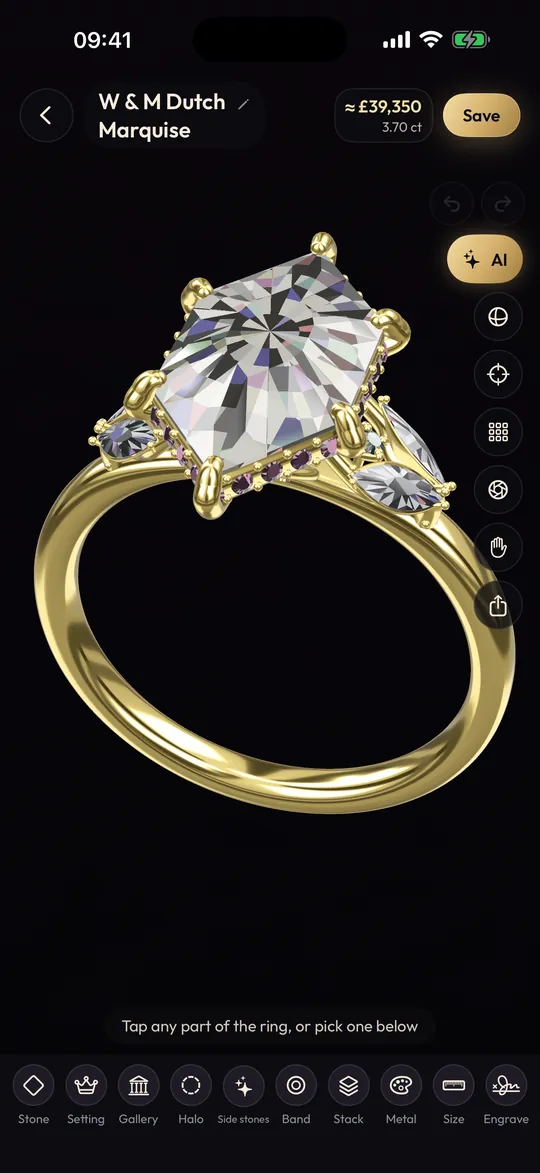
For something more unusual, describe it to the AI ring designer, such as "an east-west baguette in a thin platinum bezel on a knife edge band".
Related step-cut shapes
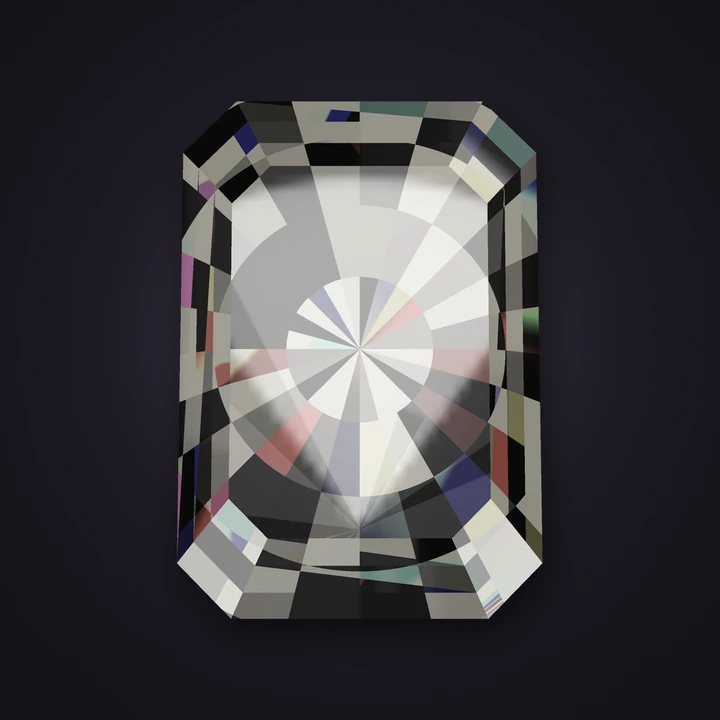
If you like the flashes but want a bigger centre, the emerald cut is the baguette's larger, corner-clipped relative. For pure minimalism, see minimalist engagement rings, and for the full Deco look, Art Deco engagement rings.
Frequently asked questions
What is a baguette cut diamond?
A baguette is a long rectangular step cut, usually with around 14 facets and square corners. The name comes from the French word for a long loaf of bread.
Can a baguette be a centre stone?
Yes, though it is uncommon. Large baguette centres are usually set east-west or in a bezel and suit minimalist or Art Deco designs. Most baguettes in engagement rings are side or band stones.
What is the difference between a baguette and a tapered baguette?
A straight baguette has parallel long sides; a tapered baguette narrows towards one end, so a pair either side of a centre stone draws the eye inward.
Do baguette diamonds sparkle?
Not much compared with brilliant cuts. They have few facets, so they give clean flashes and a glassy look, which is why they contrast well with a brilliant centre.
What clarity do baguettes need?
Their open step facets show inclusions easily, so for a centre baguette aim for VS2 or better and eye-clean. Small accent baguettes are often graded in ranges by the setter.
Keep reading
 Emerald Cut Engagement Rings: Clarity, Sizes and StyleEmerald cut engagement ring guide: why clarity matters in step cuts, the best ratios, carat-to-mm sizes, settings, bands…Minimalist Engagement RingsMinimalist engagement ring guide: thin bands, low settings, bezels and small stones, how to make a simple ring look inte…East-West Engagement RingsEast-west engagement ring guide: which elongated shapes work turned sideways, how it changes finger coverage and size, s…