 Ring Studio
Side Stone Engagement Rings
A side stone engagement ring adds smaller gems on either side of the centre stone, from a simple pair of trillions to fanned pears or a row of baguettes. Side stones make the ring look wider and fuller, and they let you play with shape, colour and meaning.
On this page
- What counts as a side stone engagement ring?
- Side stone shapes compared
- How to size side stones
- Matching colour, clarity and metal
- Practical points: snagging, band fit and care
- What do side stones add to the cost?
- Which centre shapes suit side stones best?
- Designing a side stone ring in Ring Studio
- Side stones or a halo?
- Definition
- Extra gems set beside the centre stone, on the shoulders
- Popular side shapes
- Pears, baguettes, tapered baguettes, trillions, kites, marquise
- Effect
- Wider, fuller look; centre can appear larger
- Wedding band
- May need a curved or chevron band to sit close
- Cost
- More than a solitaire, less than upsizing the centre
- In Ring Studio
- Three stone, pears, marquise, leaf V, baguettes, kites; place your own stones with Pro
What counts as a side stone engagement ring?
Any ring where the centre stone has company. That covers a wide family: the classic three stone ring with two near-equal partners, rings with slim accents tucked against the head, fanned clusters of small pears, and designs where a line of baguettes runs down each shoulder. Pavé bands, where tiny stones line the band itself, are usually treated as a separate style; see pavé engagement rings.
Side stone shapes compared
| Side stones | Look | Pairs well with |
|---|---|---|
| Round (three stone) | Balanced, classic | Round, oval, cushion |
| Pears | Soft, romantic; points can face in or out | Oval, round, cushion |
| Baguettes | Clean lines, Art Deco | Emerald, asscher, radiant, round |
| Tapered baguettes | Lines that narrow towards the band | Emerald, oval, round |
| Trillions | Sharp, modern, adds width | Round, princess, cushion, radiant |
| Kites | Geometric and unusual | Round, oval, elongated cushion |
| Marquise | Flowing, leaf-like | Oval, round, pear |
| Leaf V (marquise pairs) | Botanical, fanned | Round, oval |
For specific combinations, read tapered baguette engagement rings, pear engagement rings and kite engagement rings.
How to size side stones
Proportion is what makes a side stone ring look intentional rather than crowded. Some useful starting points:
- Three stone rings: side stones of roughly a third to a half of the centre's carat weight keep the hierarchy clear.
- Accent stones: much smaller, often under a tenth of a carat each, so they read as sparkle rather than partners.
- Length: the side stones together should rarely extend wider than the finger looks comfortable. On a slim finger, keep the total spread modest.
- Height: side stones usually sit slightly lower than the centre so the centre stays the focal point.
Matching colour, clarity and metal
With diamonds throughout, side stones look best when their colour is close to the centre's. A noticeably warmer side stone next to a bright white centre is easy to spot. Clarity matters less on small stones, since inclusions are hard to see. Coloured side stones are a different game: blue sapphires beside a diamond, or diamonds beside a ruby, make contrast the point. Metal colour shifts the mood too; yellow gold warms the whole group, white metals make it look icier.
Practical points: snagging, band fit and care
Side stones add width at the top of the ring. That has three practical effects. First, wider heads catch more often on gloves and pockets, so ask for low profiles on the outer stones. Second, a straight wedding band may not sit flush against side stones that overhang the shank; contour bands solve this, as our curved wedding bands guide explains. Third, each extra stone is held by its own prongs or bezel, so there are more settings to check during your annual inspection.
What do side stones add to the cost?
The extra stones and labour add to the price, but often less than you would expect. Small diamonds cost far less per carat than large ones, and lab-grown side stones have become much more affordable in recent years. A common budget strategy is to choose a slightly smaller centre and let side stones add presence. Our engagement ring cost guide explains how the parts of the price fit together.
Which centre shapes suit side stones best?
Almost any centre stone can take side stones, but some combinations are more forgiving. Rounds and ovals accept nearly every side shape, from pears to trillions. Elongated centres such as ovals and emerald cuts look longest with slim side stones that continue their line. Pointed centres like pears and marquises are trickier, because the side stones need to sit around the rounded part without crowding the point. Square centres such as princess and asscher suit straight-edged partners like baguettes and trillions, which repeat their geometry.
Designing a side stone ring in Ring Studio
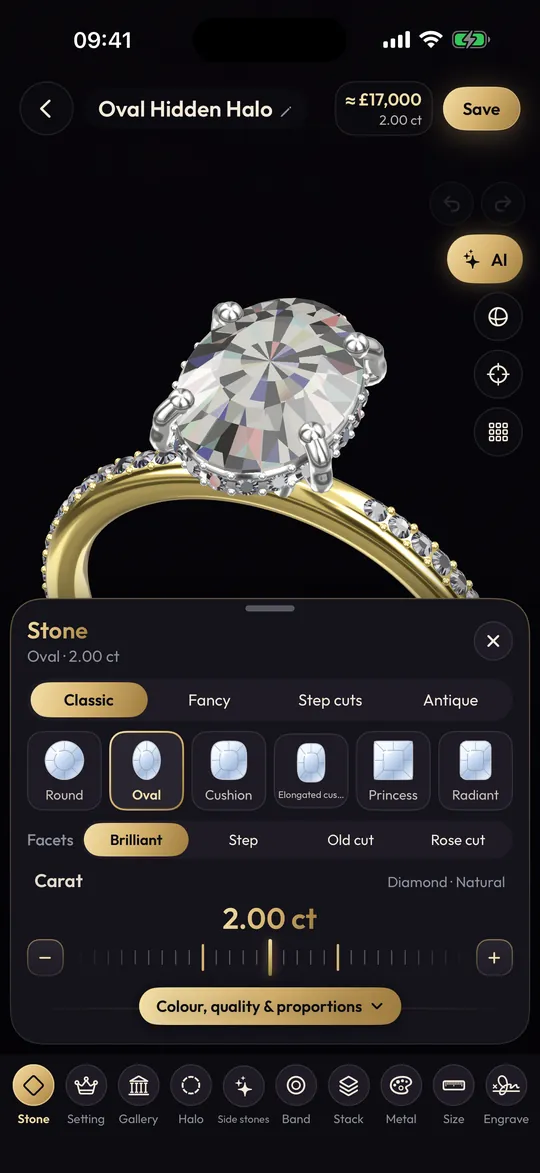
Ring Studio has a dedicated side stone section, so you can swap between styles on the same centre stone in seconds.
- Choose the centre stone shape and carat.
- Open side stones and work through the options: three stone, pears, baguettes, kites, plus marquise and leaf V with Pro.
- Look at each one from above and in profile, and on the 3D hand or your own hand with try-on (Pro) to judge the width.
- With Pro, place extra stones yourself if none of the presets match the arrangement in your head.
- Stack a wedding band and try straight, curved and chevron contours to check the fit.
Side stones or a halo?
Both make the centre stone look bigger. A halo surrounds it in a ring of small stones; side stones extend the design sideways and give it a distinct silhouette. If you want width and shape, choose side stones. If you want maximum sparkle around the centre, a halo. Our three stone vs halo comparison goes deeper, and toi et moi rings cover the two-stone alternative.
Frequently asked questions
What is a side stone engagement ring?
It is any engagement ring with additional stones set beside the centre stone, usually one or more on each shoulder. Three stone rings, rings with baguettes either side and rings with pear accents are all side stone designs.
What size should side stones be?
As a rough guide, each side stone is often about a third to a half of the centre stone's carat weight in a three stone ring, or much smaller for accents. The aim is that the centre stone clearly dominates.
Do side stones have to match the centre stone?
No. Side stones can be a different shape, such as pears beside an oval, or a different colour, such as sapphires beside a diamond. Matching colour and clarity grades matters more when everything is the same gem.
Can you wear a wedding band with a side stone ring?
Usually yes, but wide side stones can stop a straight band sitting flush. A curved or chevron contour band, or a band with a slight gap, often solves it.
Are side stone rings more expensive?
They cost more than a plain solitaire with the same centre stone because you are buying extra stones and more setting work. They can also make a smaller centre stone look larger, which can be cheaper than upsizing the centre.
Keep reading
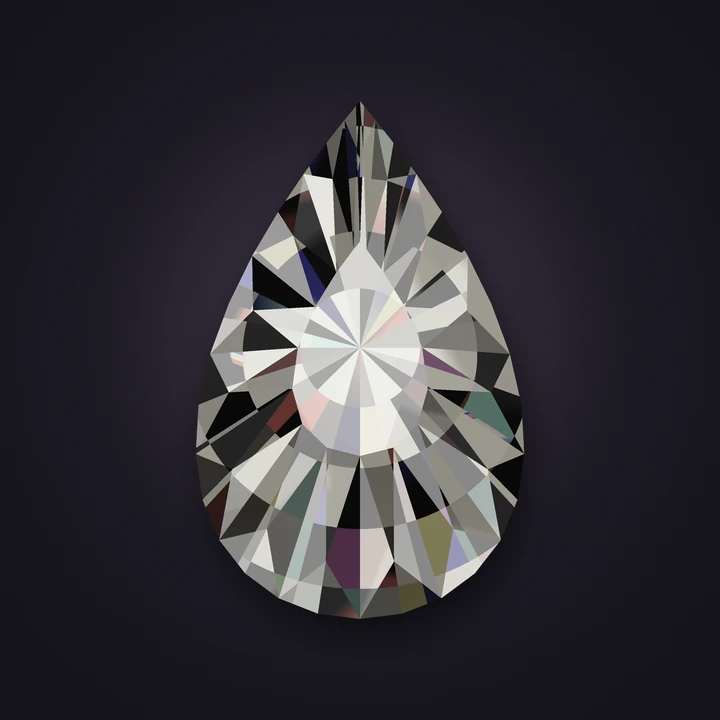 Pear Engagement Rings: Choosing a Teardrop DiamondPear engagement ring guide: the best ratios, judging the bow-tie and shoulders, carat-to-mm sizes, protecting the tip, b…
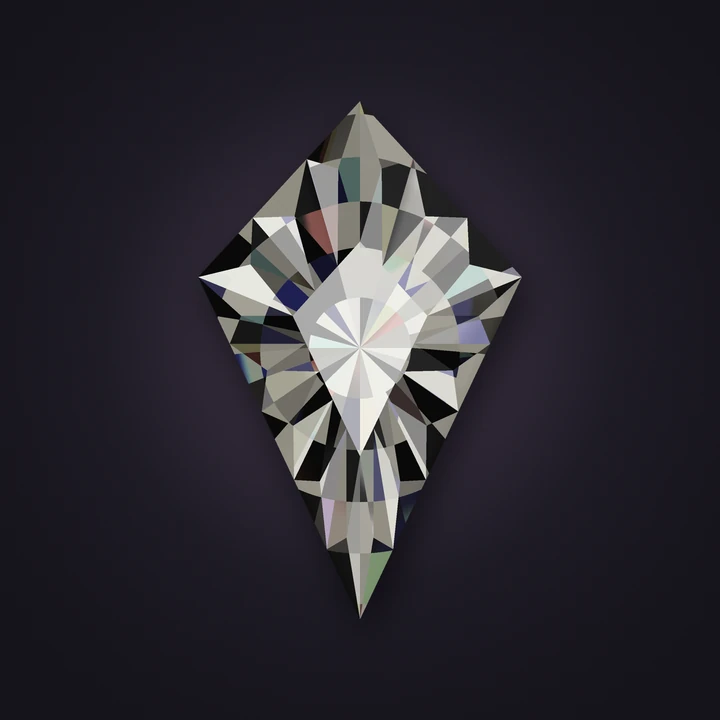 Kite Engagement RingsKite engagement ring guide: what a kite cut is, its Art Deco roots, approximate sizes, sourcing a custom or lab-grown ki…