 Ring Studio
Diamond Cut Grades
Diamond cut grades measure how well a diamond's angles, proportions and finish send light back to your eye. GIA grades round brilliants from Excellent to Poor, and cut has the biggest effect on sparkle of all the 4Cs.
On this page
- GIA cut scale (round)
- Excellent, Very Good, Good, Fair, Poor
- IGI top grade
- Ideal (round), then Excellent, Very Good
- Also graded
- Polish and symmetry
- Fancy shapes
- No GIA cut grade; judge proportions and appearance
- Rule of thumb
- Buy the best cut you can; save on colour and clarity
What diamond cut grade actually measures
A diamond is a tiny optical device. Light enters through the top (the table and crown), bounces off the angled facets underneath (the pavilion) and comes back out. Cut grade measures how well that happens, based on the stone's proportions and finishing. It is separate from shape: "oval" is a shape, while "Excellent" is a cut quality.
A well-cut diamond shows three things:
- Brightness: white light returned to the eye.
- Fire: flashes of spectral colour from dispersion.
- Scintillation: the pattern of sparkle and contrast when the stone or the viewer moves.
Cut too deep and light escapes through the sides, making the centre look dark. Cut too shallow and light leaks out of the bottom, giving a glassy, washed-out "fish-eye" look.
The GIA cut grade scale
| Grade | What it means | Should you buy it? |
|---|---|---|
| Excellent | Top proportions, high brightness and fire | Yes; the standard for a centre stone |
| Very Good | Slightly less light return | Fine for small stones and budgets |
| Good | Noticeable light loss | Only if price matters most |
| Fair | Visibly less lively | Not for an engagement ring |
| Poor | Dull and dark | No |
IGI, which grades a large share of lab-grown diamonds, uses Ideal as its top round grade, with Excellent below it. Grade labels do not translate perfectly between labs, so compare actual proportions. See GIA vs IGI.
Ideal proportions for a round brilliant
There is no single perfect recipe, but these ranges are widely used as a guide for top-performing round diamonds:
| Measurement | Typical strong range |
|---|---|
| Table | About 54% to 58% |
| Total depth | About 59% to 62.5% |
| Crown angle | About 34° to 35° |
| Pavilion angle | About 40.6° to 41° |
| Girdle | Thin to slightly thick |
| Culet | None or pointed |
Crown and pavilion angles work as a pair. A slightly steeper crown can pair well with a slightly shallower pavilion, which is why light performance images (such as ASET or ray-tracing scopes offered by some retailers) are useful for fine-tuning a choice.
Polish and symmetry
Every report also grades polish (surface finish) and symmetry (how precisely facets align), usually from Excellent to Poor. Aim for Excellent or Very Good on both. A round diamond with Excellent for cut, polish and symmetry is often called "Triple Excellent" or 3EX.
How fancy shapes are judged
GIA gives no overall cut grade to fancy shapes such as oval, pear, cushion or emerald. That puts more weight on you and your jeweller. Look at:
- Depth and table: very deep stones carry hidden weight and look smaller.
- Length-to-width ratio: a matter of taste, for example ovals around 1.35 to 1.5.
- Bow-tie: the dark band in ovals, pears and marquises. Some is normal; a strong one is not.
- Outline: even shoulders and symmetrical points.
- Polish and symmetry: still graded on the report.
- Video: the best way to judge sparkle when buying online.
Step cuts such as emerald and asscher are about clean lines and a hall-of-mirrors effect rather than sparkle. Their appeal is in even steps and symmetry, and they reveal inclusions and colour more than brilliant cuts.
Is cut worth paying extra for?
Usually, yes. Cut is the C you see from across a room. A one-grade drop in colour or clarity is often invisible once set, but a drop in cut can make a stone look smaller and duller. A well-cut stone also spreads its weight better, so it can face up larger than a deep stone of the same carat. This is true for both natural and lab-grown diamonds.
Cut grades and price
For round diamonds, an Excellent cut usually costs more than Very Good or Good of the same weight, colour and clarity. Part of the reason is weight: cutting for maximum light return means removing more rough, so a cutter who could have produced a heavier, deeper stone gives up carat weight for beauty. Stones cut for weight rather than light often have deep pavilions or thick girdles, and they can look smaller than their carat suggests.
The premium for a top cut is usually modest compared with the premium for higher colour or clarity, and the visual return is much greater. That makes cut the best place to spend. If you need to save, drop a colour grade or two (see the diamond colour chart) before you drop to a lower cut grade. This logic holds for natural and lab-grown stones alike, and you can compare estimates in diamond price per carat.
Seeing cut and shape in Ring Studio
Ring Studio renders each of its 28 stone shapes as a well-cut stone with live reflections, so you can compare how a round brilliant, a radiant and a step-cut emerald each play with light as you rotate the ring. It does not model cut grades or proportions, so use it to choose the shape and setting, then pick the actual stone on its report.
- Compare a round brilliant with an old European cut to see modern vs vintage faceting styles.
- Switch between oval and elongated cushion to see how outline changes the look at the same carat.
- Try east-west orientation for elongated shapes.
- Share the ring code and note the cut grade or proportions you want your jeweller to source.
Cut grade buying checklist
- Round: GIA Excellent (or IGI Ideal), Excellent polish and symmetry.
- Check depth and table are in a sensible range; avoid extremes even within a top grade.
- Fancy shapes: ask for a video, check the bow-tie and the outline.
- Do not overpay for a top grade with weak proportions; compare a few stones.
- Combine this with sensible colour and clarity using the 4Cs guide, then size it with the carat size chart.
Frequently asked questions
What is the best diamond cut grade?
For round diamonds graded by GIA, Excellent is the top cut grade. IGI and some other labs use Ideal as their top grade. Within the top grade there is still variation, so proportions and light performance images help pick the best stones.
Is Very Good cut good enough?
A Very Good cut round diamond can look very nice, especially at smaller sizes, and costs a little less. For a centre stone, most experts recommend Excellent because the difference in brightness can be visible side by side.
Do oval and pear diamonds have cut grades?
GIA does not give a cut grade to fancy shapes such as oval, pear, cushion or emerald. You judge them by polish, symmetry, depth, table, length-to-width ratio and how they look, including any bow-tie.
What is a bow-tie in a diamond?
A bow-tie is a dark band across the middle of an elongated diamond such as an oval, pear or marquise, caused by facets that do not return light well. Almost all have a little; a strong one is a cut flaw.
What does Triple Excellent mean?
Triple Excellent, or 3EX, means a round diamond received Excellent for cut, polish and symmetry on its GIA report. It is a useful shortcut but does not guarantee the very best light performance on its own.
Keep reading
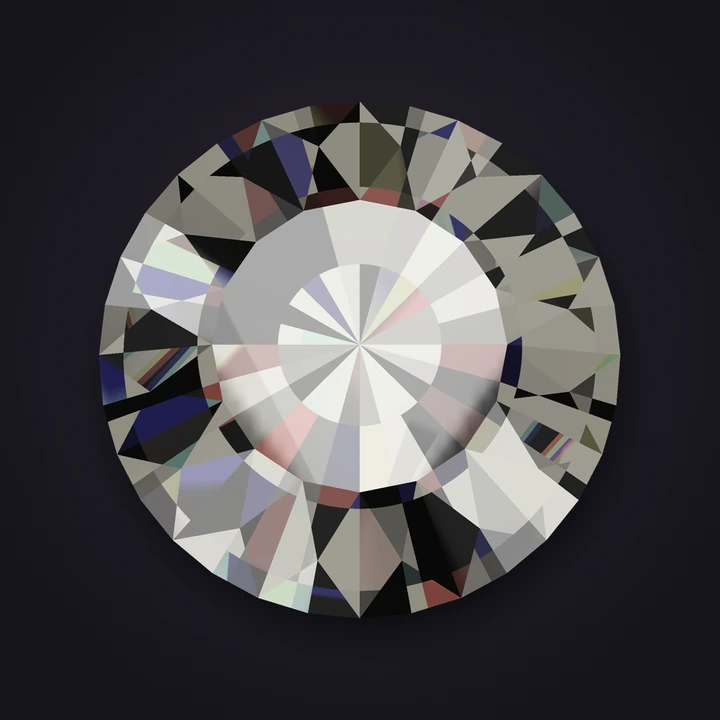 Round Engagement Rings: The Complete Buyer's GuideRound engagement ring guide: carat-to-mm sizes, cut grades that matter, best prong settings, band pairings and prices, p…
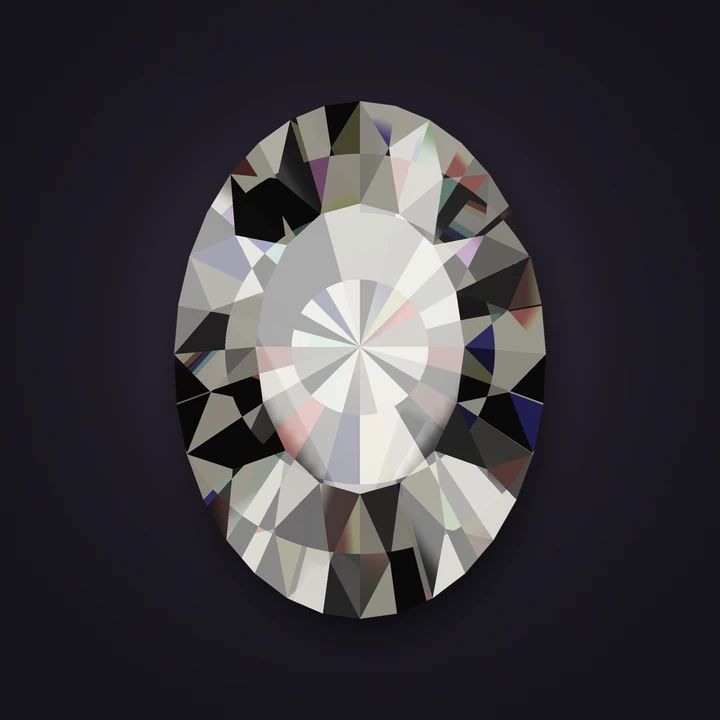 Oval Engagement Rings: How to Choose a Beautiful OneOval engagement ring guide: the best length-to-width ratio, judging the bow-tie, carat-to-mm sizes, flattering settings …GIA vs IGI: How the Two Diamond Grading Labs CompareGIA vs IGI diamond certificates compared: who they are, what each report covers, natural vs lab-grown grading and how to…Diamond Carat Size Chart (mm)Diamond carat size chart in mm: approximate sizes for round diamonds from 0.25 to 5 carats, plus oval, cushion, princess…