 Ring Studio
Pavé vs Plain Band: Sparkle or Simplicity?
In the pavé vs plain band debate, a pavé band adds a line of small diamonds that sparkles along the shoulders, while a plain band is pure polished metal that makes the centre stone stand out and is tougher, easier to resize and cheaper. Pick pavé for glamour, plain for longevity and contrast.
On this page
- More sparkle
- Pavé
- Centre stone stands out more
- Plain
- Tougher and easier to resize
- Plain
- Lower cost
- Plain
- Lower maintenance
- Plain
Pavé vs plain band at a glance
| Pavé band | Plain band | |
|---|---|---|
| Look | Continuous glitter along the shoulders | Clean polished metal |
| Effect on centre stone | Adds sparkle around it; less contrast | Maximum contrast; stone is the star |
| Durability | Small stones can loosen over years | Very durable; scratches can be polished out |
| Resizing | Limited and riskier | Straightforward |
| Cost | Higher (stones plus setting labour) | Lower |
| Cleaning | Dirt collects between stones | Wipe and polish |
| Minimum width | Needs enough width to hold stones | Can be very fine |
| Engraving outside | Not possible where stones are | Possible |
What pavé actually means
Pavé (from the French for "paved") means small stones, usually around 1-1.5 mm, set close together and held by tiny beads of metal raised from the band. On an engagement ring, a pavé band might run halfway round (the visible top half) or nearly all the way. Variations include micro-pavé with even smaller stones, French pavé with V-shaped cuts that show more of each stone, and channel-set bands where the stones sit in a groove.
How each band changes the centre stone
A plain band is the frame of a painting: neutral, so your eye goes straight to the stone. That is why minimalist and classic solitaire designs almost always use plain metal. It also suits coloured stones, where polished gold or platinum shows off the colour without competition.
A pavé band adds light around the centre stone and makes the whole ring look brighter and more luxurious. With a small centre stone, it can make the ring feel more substantial. With a large centre stone, it can tip the ring into "a lot happening", which some love and others find fussy.
Durability and long-term wear
This is where a plain band clearly wins. Solid metal can take decades of knocks, and a jeweller can polish out scratches and restore it. Pavé beads are tiny; daily contact slowly wears them down, and a hard knock can dislodge a stone. Losing a pavé stone is common over a ring's life. It is usually a simple fix, but it does mean pavé needs an annual check.
Pavé on the underside of the band, where the finger rubs against surfaces, wears fastest. Many jewellers recommend half-pavé for that reason.
Resizing
A plain band can usually be resized up or down a couple of sizes with ease. A pavé band is harder: changing the shank's circumference can strain the stone seats near the join. A half-pavé band with plain metal at the bottom resizes more easily. See ring resizing costs for what to expect.
Cost
Pavé adds the cost of the small stones plus the labour of setting each one by hand, which is skilled and time-consuming. The premium varies hugely by stone count, stone quality and retailer. A plain band puts that money back into the centre stone or metal, which is why budget-minded buyers often choose plain and add sparkle with the wedding band later.
Wedding band pairing
Many people like contrast in a stack: a plain engagement band with a pavé or eternity wedding band, or a pavé engagement band with a plain wedding band. Two pavé bands together give maximum sparkle but can look busy and rub against each other. Our ring stacking ideas and wedding band styles guides show common combinations.
Choose pavé if... choose plain if...
Choose a pavé band if you love sparkle from every angle, want to make a modest centre stone feel bigger, prefer a glamorous or romantic look, and are happy to have the ring checked each year.
Choose a plain band if you want the centre stone to be the hero, you are hard on your hands, you may need to resize the ring, you want to put more budget into the stone, or you like a clean, classic look.
Compare pavé and plain bands in Ring Studio
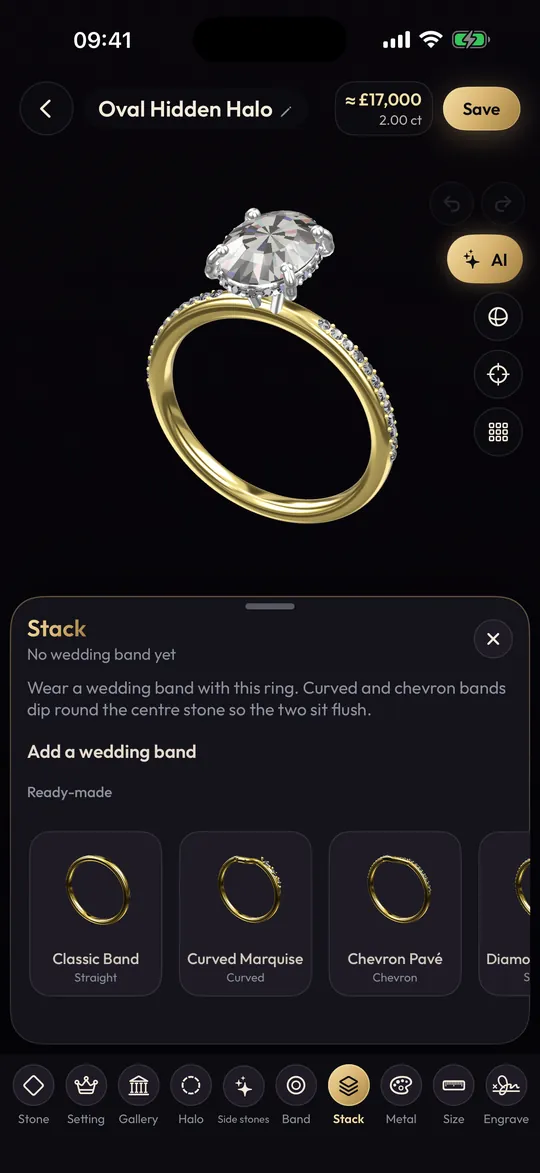
Ring Studio's band options include plain, pavé, eternity, knife edge, twisted, bypass, asymmetric and engraved, each straight or tapered with adjustable width. To compare:
- Build your centre stone and setting first.
- Choose plain and set a width you like; look at the ring from above and the side.
- Switch to pavé and compare. Try a tapered version, which narrows towards the head and makes the stone look larger.
- Check the live price estimate as you switch to see how the band changes the total.
- With Pro, stack a wedding band to see whether contrast or matching works better.
A practical compromise
If you love pavé but worry about wear, ask for half-pavé on the top of the band, or pavé only on the shoulders near the head. You get sparkle where people see it and solid metal where it takes the knocks.
Which centre stones suit each band?
A plain band suits almost anything, and it is especially good with coloured stones like sapphire, where you want nothing to compete with the colour. Pavé works well with colourless diamonds and with halo designs, where it continues the sparkle of the frame down the shoulders. With elongated shapes like ovals and pears, a slim tapered band of either type makes the centre stone look longer.
Verdict
A plain band is tougher, cheaper, easier to resize and puts the centre stone centre stage. A pavé band adds sparkle and luxury at the cost of more maintenance. If you are unsure, start plain and bring sparkle in with the wedding band, or choose half-pavé for the best of both.
Frequently asked questions
Does a pavé band make the centre stone look smaller?
It can draw some attention away from the centre stone, and a busy band can make a small stone feel less dominant. A plain band creates contrast that makes the centre stone the obvious focal point. A fine pavé band that tapers towards the head is a good compromise.
Can pavé rings be resized?
Usually by a size or so, but it is trickier than with a plain band because stretching or cutting the shank can loosen stones near the join. Half-pavé bands, with plain metal under the finger, are easier to resize.
Do pavé stones fall out?
Occasionally. Each stone is held by tiny beads of metal that can wear or be knocked. Losing one is common over many years of wear and usually a quick, inexpensive repair. A yearly check reduces the risk.
Is a pavé band more expensive than a plain band?
Yes. You pay for the small diamonds and, often more significantly, the skilled labour to set each one. The premium varies widely by stone count, quality and retailer.
Which band is better for a wedding ring stack?
Either works. A plain engagement band pairs well with a pavé or eternity wedding band, and a pavé engagement band suits a plain or matching pavé wedding band. Mixing textures often looks more deliberate than doubling up.