 Ring Studio
Solitaire vs Three Stone: One Stone or Three?
Solitaire vs three stone is really a budget and story question: a solitaire puts all your money and attention into one centre stone, while a three stone ring spreads it across a centre and two side stones for more width and a past-present-future meaning. Same budget, very different rings.
On this page
- Solitaire
- One stone; maximum centre size for the budget; easiest to pair and maintain
- Three stone
- Centre plus two side stones; wider, symbolic, more total sparkle
- Biggest centre for a fixed budget
- Solitaire
- Most stone on the finger
- Three stone
Solitaire vs three stone compared
| Solitaire | Three stone | |
|---|---|---|
| Stones | 1 | 3 (centre usually largest) |
| Budget focus | All on one stone | Split between centre and sides |
| Look | Clean, vertical focus | Wide, horizontal, balanced |
| Meaning | Simplicity, "the one" | Past, present and future |
| Hand coverage | Narrow | Wide |
| Upkeep | Minimal | More prongs to check |
| Wedding band fit | Very easy | May need a curved band |
| Personalisation | Stone, setting, band, hidden details | All of that plus side stone shapes and colours |
How the budget splits
Imagine the same total spend. With a solitaire, nearly all of it goes into the centre stone and a simple band. With a three stone ring, perhaps a fifth to a third goes on side stones and the more complex head, so the centre stone is smaller.
Whether that is a good trade depends on what you value. Diamond prices rise faster than size, so a slightly smaller centre can save a lot, and two side stones add more visible sparkle than the lost size. On the other hand, if you have dreamed of a particular carat weight, the solitaire gets you there. Use the ring budget calculator to set a total, then decide how to split it.
The look on the hand
A solitaire is vertical: the eye goes to one point. It suits every hand and every outfit, and it is hard to tire of. A three stone ring is horizontal and covers more of the finger. On long fingers it looks generous and balanced; on short fingers, choose smaller side stones so the ring doesn't reach the knuckles.
Side stone shape changes the personality completely. Round sides feel traditional; pears feel romantic; tapered baguettes feel Art Deco; kites or trillions feel modern and geometric.
Meaning and personalisation
The three stone ring's association with past, present and future gives it a built-in story. It is also an easy way to add birthstones, a coloured stone that matters to you, or stones from a family piece. A solitaire's story is in its simplicity, and you can still personalise it with a hidden detail like initials under the stone or an engraving inside the band.
Practicality
A solitaire is the easiest ring to live with: fewer prongs, quick to clean, and nearly any wedding band sits against it. A three stone ring has more prongs and more edges to knock, and the wider head can leave a gap with a straight wedding band. Neither is fragile; the three stone just needs a little more attention. Low-set designs help.
Choose a solitaire if... choose three stone if...
Choose a solitaire if you want the largest centre stone your budget allows, you love minimal, classic design, you want to wear any wedding band you like, or you want the simplest ring to maintain.
Choose a three stone ring if the past-present-future symbolism resonates, you want more sparkle across the finger, you would like to include birthstones or heirloom stones, or you prefer a slightly smaller centre with beautiful companions.
A note on anniversaries
Three stone designs are a popular choice for anniversary rings. Some couples start with a solitaire and mark a milestone with a three stone ring later, worn together or alone. If that appeals, choose a solitaire with a simple band that will stack well.
Build both in Ring Studio and compare
The easiest way to decide is to see both rings with the same centre stone and then with the same budget:
- Design your solitaire: shape, carat, setting and metal. Note the live price estimate.
- Add side stones and choose three stone; then try pears, baguettes or kites.
- Reduce the centre carat until the estimate matches your solitaire and compare the two looks.
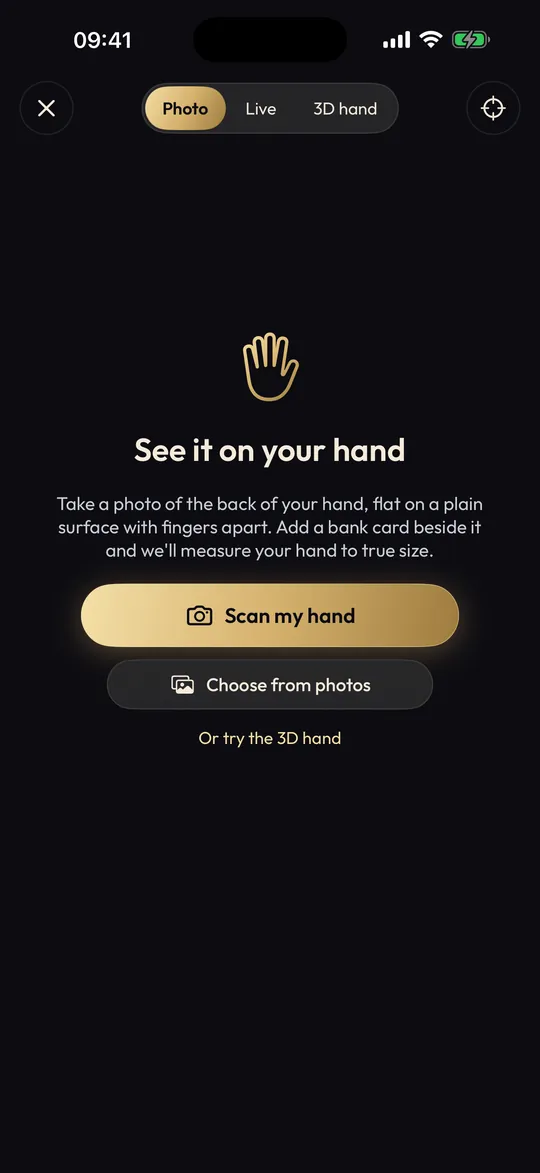
- View both on the 3D hand, or on your own hand with the camera (Pro), to judge width.
- Save both, and with Pro share ring codes with your partner or jeweller.
Proportion tips
- Side stones about half to two-thirds the width of the centre usually look balanced.
- Match the outline: soft shapes with soft shapes, angular with angular, unless you want deliberate contrast.
- Keep side stones close in colour to the centre, or choose an obviously different colour on purpose.
Which centre shapes suit each style?
Every shape works as a solitaire, but some shine there: a round brilliant gives the most sparkle, while an oval or pear elongates the finger. For three stone rings, rectangular and oval centres sit naturally between side stones, and step cuts like the emerald cut make a striking Art Deco trio with baguettes. If you plan a coloured centre, three stone designs give you an easy way to frame it with diamonds.
Verdict
A solitaire gives you the biggest, purest centre stone and the easiest everyday ring. A three stone ring gives you more width, more sparkle and a story. If carat size is the goal, choose the solitaire; if meaning and presence across the finger matter more, choose three stone.
Frequently asked questions
Is a solitaire or three stone ring more classic?
Both are long-standing classics. The solitaire is the archetypal engagement ring, while three stone rings have been popular for well over a century and are strongly associated with anniversaries as well as engagements.
Does a three stone ring cost more than a solitaire?
For the same centre stone, yes, because you add two side stones and extra setting work. For the same total budget, a three stone ring usually means a smaller centre stone than a solitaire would allow.
Can you upgrade a solitaire to a three stone ring later?
Sometimes. A jeweller can rebuild the head to add side stones, but it is often closer to making a new setting. Some couples add side stones for an anniversary, so it is worth discussing at the start.
Which looks better on short fingers?
A solitaire or a three stone ring with small side stones. A wide three stone layout can cover most of a short finger, while a solitaire or slim three stone keeps the proportions balanced.
What side stones go with an oval centre?
Pears, tapered baguettes, smaller rounds and trapezoids are all common. Pears follow the oval's soft curves; baguettes add an Art Deco contrast.