 Ring Studio
Yellow Diamond Engagement Rings
Yellow diamond engagement rings give you diamond's hardness of 10 and sparkle with a sunny colour that ranges from soft lemon to intense canary. Value depends on the fancy colour grade, so knowing how labs describe yellow is the key to buying well.
On this page
- What makes a diamond yellow?
- Yellow diamond colour grades explained
- Natural, treated or lab-grown yellow?
- How much does a yellow diamond engagement ring cost?
- The best cuts for yellow diamonds
- Settings that make yellow look richer
- Design a yellow diamond ring in Ring Studio
- Caring for a yellow diamond ring
- Cause of colour
- Nitrogen in the diamond crystal
- Hardness
- 10 on the Mohs scale
- Grading scale
- Fancy Light, Fancy, Fancy Intense, Fancy Vivid (plus Fancy Deep and Fancy Dark)
- Best shapes for colour
- Radiant, cushion, oval, pear
- Also available
- Lab-grown and colour-treated yellows, at lower prices
What makes a diamond yellow?
Nitrogen. Almost every natural diamond contains some, and how the nitrogen atoms are arranged decides the colour you see.
- Type Ia ("Cape") diamonds: nitrogen in aggregated clusters. These are the large majority of natural yellows and of faintly yellow "near-colourless" stones. Their yellow is often softer and slightly lemony.
- Type Ib diamonds: nitrogen as single, isolated atoms. Rare in nature, they absorb more blue light and produce a deep, saturated yellow to orangey yellow, the look often called canary. Many lab-grown yellow diamonds are also type Ib.
The same mechanism gives a slight warmth to colourless diamonds at the lower end of the D-to-Z scale. Once yellow becomes stronger than a Z grade, the stone moves onto the fancy colour scale, where more colour means more value rather than less. Our diamond colour chart explains the D-to-Z side.
Yellow diamond colour grades explained
Labs grade fancy yellow diamonds on how strong and pure the colour looks in the face-up position. Major labs use a broadly similar ladder:
| Grade | Appearance | Relative value |
|---|---|---|
| Fancy Light Yellow | Pale, gentle lemon | Often below a similar colourless diamond |
| Fancy Yellow | Clearly yellow, medium strength | Good value; a popular sweet spot |
| Fancy Intense Yellow | Rich and saturated | Higher; what many people call canary |
| Fancy Vivid Yellow | Most saturated, bright, pure yellow | Highest for yellow |
| Fancy Deep / Fancy Dark Yellow | Darker, richer tone | Varies; deep can be valued highly, dark less so |
Watch for secondary colours. A report might say "Fancy Intense Brownish Yellow" or "Fancy Greenish Yellow". A brownish modifier generally lowers value; a slight greenish or orangey modifier can go either way depending on taste. Pure yellow with no modifier is the classic ideal. Clarity matters less than with white diamonds, because strong colour hides small inclusions, but eye-clean stones are still preferred.
Natural, treated or lab-grown yellow?
There are three routes to a yellow diamond, with very different prices:
- Natural colour: the most valuable. A lab report should state "natural colour". For a meaningful purchase, insist on one; see our guide to diamond certificates.
- Treated colour: natural diamonds made yellow by irradiation and annealing, or by high-pressure, high-temperature (HPHT) processing. Usually stable but worth much less. Avoid coated stones, as surface coatings can wear off.
- Lab-grown yellow: real diamond, grown with nitrogen to give the colour. Strong, even colour at a fraction of natural prices, and lab-grown prices have fallen sharply over recent years.
Lab-grown and treated yellows can't be reliably identified by eye; testing by a gem laboratory can. Reputable sellers disclose all three clearly.
How much does a yellow diamond engagement ring cost?
Very rough estimates for a 1 carat centre stone with good clarity, in British pounds, as of late 2026:
| Type and grade | Rough range (GBP) |
|---|---|
| Lab-grown, intense yellow | Roughly a few hundred to around £1,500 |
| Natural, treated colour | Roughly £800 to £3,000 |
| Natural Fancy Light / Fancy Yellow | Roughly £2,000 to £6,000 |
| Natural Fancy Intense Yellow | Roughly £4,000 to £10,000 |
| Natural Fancy Vivid Yellow | Often £10,000 and up |
These vary considerably by retailer, shape, clarity and market. Natural prices rise faster than size above 1.5 to 2 carats. For a broader view of diamond pricing see diamond price per carat.
The best cuts for yellow diamonds
Cut changes yellow colour more than it changes white. Facet patterns that bounce light around inside the stone make the colour look more saturated.
- Radiant: the go-to for fancy yellows, intensifying colour while keeping lots of sparkle.
- Cushion: soft, romantic and colour-boosting; probably the most common yellow diamond shape.
- Oval and pear: good colour concentration toward the ends, plus a longer look.
- Round brilliant: maximum sparkle, but tends to look a shade paler. Often used for lighter yellows.
- Emerald cut: shows colour evenly but can look lighter; best with stronger grades.
Settings that make yellow look richer
The metal touching the stone tints how we see it. Many yellow diamond rings use yellow gold prongs or a yellow gold bezel to reflect warm light up into the diamond, then a white gold or platinum band so the yellow stands out against white. That's a two-tone design. A halo of white diamonds adds contrast, while a halo of small yellow diamonds can make a lighter centre stone look more yellow overall.
Design a yellow diamond ring in Ring Studio
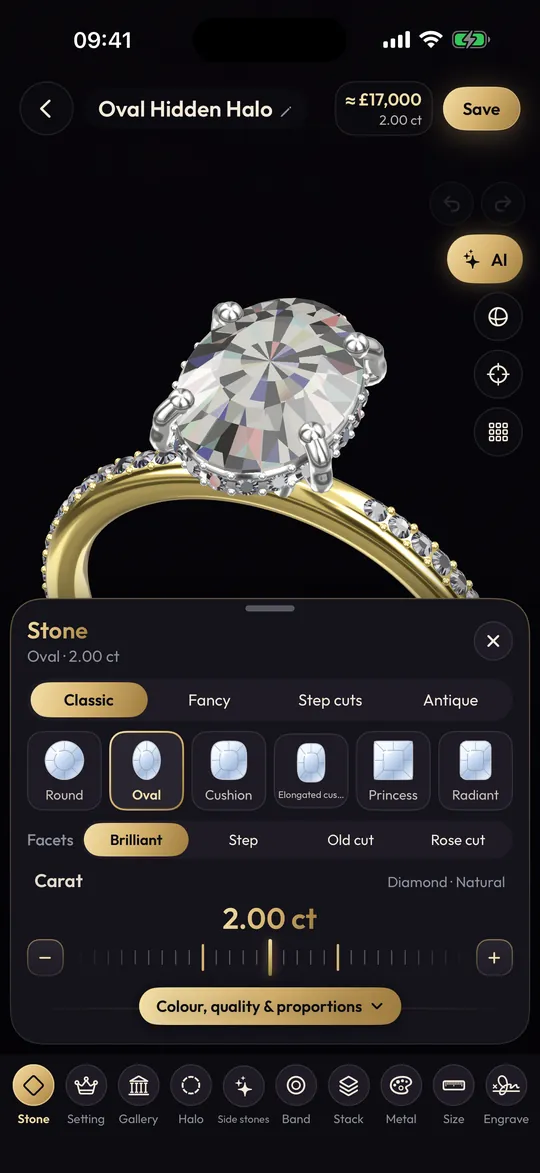
Ring Studio includes yellow diamond as a stone option, so you can compare cuts and metal combinations before you go stone shopping:
- Choose yellow diamond, then try cushion, radiant and round to compare. Cushion and round are free; radiant is part of Pro.
- Set the carat size and orientation.
- Add a classic halo, or pick three stone side stones for white diamond contrast.
- Choose two-tone metal (Pro) to combine yellow and white, or compare yellow gold with platinum.
- Finish with a pavé, plain or twisted band.
The live price estimate updates as you design, but it's a comparison, not a quote. Ring Studio doesn't make rings, sell stones or let you choose a karat; share your ring code or screenshots with a jeweller who can source a natural or lab-grown yellow to match.
Caring for a yellow diamond ring
Natural and lab-grown yellow diamonds are as durable as any diamond and clean the same way: warm soapy water and a soft brush, or professional ultrasonic cleaning. Treated stones are usually fine too, but tell your jeweller about any treatment before repairs involving heat. Check prongs once a year.
Verdict
A yellow diamond is a confident, durable alternative to a white one. Decide your budget for colour first: Fancy Yellow is the value sweet spot, Fancy Intense the classic canary look, and lab-grown the way to get vivid colour affordably. Choose a radiant or cushion cut and consider yellow prongs on a white band to make the colour sing. For other natural colours, see natural diamonds.
Frequently asked questions
Are yellow diamonds real diamonds?
Yes. Natural yellow diamonds are diamonds coloured by nitrogen trapped in the crystal. They have the same hardness and brilliance as colourless diamonds. Yellow diamonds can also be lab-grown or colour-treated, which should always be disclosed.
What is a canary diamond?
Canary is a trade term for an intense to vivid, pure yellow diamond. It is not a formal grade; on a lab report the equivalent stones are usually graded Fancy Intense Yellow or Fancy Vivid Yellow.
Are yellow diamonds cheaper than white diamonds?
Lighter natural yellows such as Fancy Light and Fancy Yellow are often cheaper than colourless diamonds of similar size and quality. Fancy Intense and especially Fancy Vivid yellows can cost more.
What cut is best for a yellow diamond?
Radiant and cushion cuts are popular because their faceting concentrates and intensifies yellow colour. Round brilliants maximise sparkle but can look slightly paler for the same rough.
Should a yellow diamond be set in yellow gold?
Setting the yellow diamond in yellow gold prongs or a yellow gold bezel can make the colour look richer, while a white gold or platinum band adds contrast. Many designs combine the two.
Keep reading
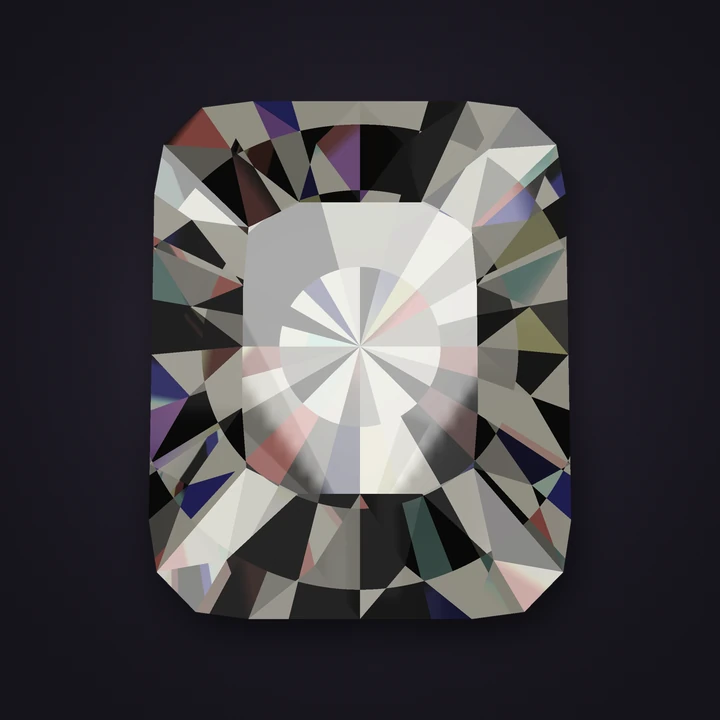 Radiant Cut Engagement RingsRadiant engagement ring guide: square vs rectangular ratios, carat-to-mm sizes, depth and colour tips, best settings, ba…
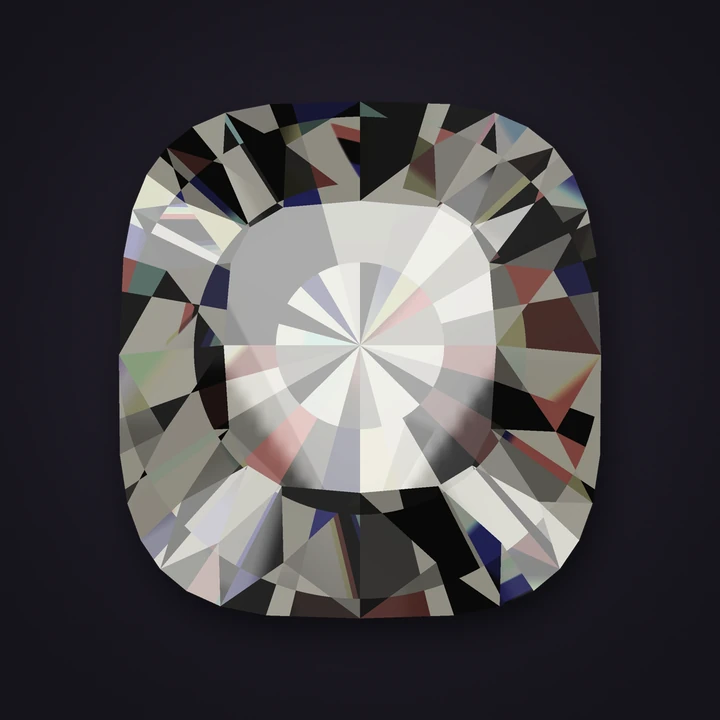 Cushion Engagement Rings: Choosing the Right Cushion CutCushion engagement ring guide: crushed ice vs antique cushions, carat-to-mm sizes, colour tips, settings and wedding ban…Two-Tone and Mixed Metal RingsTwo-tone and mixed metal rings explained: white prongs on yellow gold, platinum and gold together, how they are made, ca…