 Ring Studio
Two-Tone and Mixed Metal Rings
Two-tone and mixed metal rings combine two metals in one design, most often a white metal head holding the stone on a yellow or rose gold band. Done well, they keep a diamond icy white while giving you the warmth of gold.
On this page
- Most common combination
- White metal head or prongs on a yellow gold band
- Also popular
- Rose gold band with white prongs; mixed-metal ring stacks
- Main benefit
- Whiter-looking diamond with a warm band
- How joined
- Cast separately and soldered or laser welded
- In Ring Studio
- Two-tone metal option (Pro)
What counts as a two-tone ring?
A two-tone ring uses two metal colours in one piece. "Mixed metal" usually refers to the same idea or to a stack of rings in different metals worn together. The main types:
- White head, yellow band. The most traditional version. The setting that grips the stone is platinum or white gold; everything else is yellow gold.
- White head, rose band. The same idea with a pinker band.
- Split colour bands. Two strands of different golds twisted or laid side by side, a look that suits twisted bands.
- Tri-colour. Yellow, white and rose together, often in interlocking or rolled bands.
- Mixed stacks. A yellow gold engagement ring with a platinum wedding band, or the reverse.
Why put white prongs on a gold ring?
Metal reflects its colour into a diamond. A colourless diamond held by yellow claws picks up a warm tint at its edges. Swap the claws for white metal and the stone looks whiter and the claws nearly disappear, so the stone can look slightly bigger. It is a way to have the warmth of yellow gold without compromising the look of a high-colour diamond.
There is a durability angle too. Many jewellers prefer platinum for claws because it is dense and tough, so a platinum head on a gold band is common even when the look is subtle.
If your diamond is warmer, for example J or K colour, the reverse logic applies: yellow claws make the warmth look intentional. White claws on a warm stone can highlight the contrast instead.
Popular two-tone combinations
| Head / prongs | Band | Effect | Good with |
|---|---|---|---|
| Platinum | Yellow gold | Classic, crisp stone on warm band | D to G diamonds, round and oval |
| White gold | Rose gold | Romantic, modern | Diamonds, pink sapphire |
| Yellow gold | Platinum | Highlights a coloured centre | Yellow diamonds |
| Rose gold | White gold | Soft pink accent around the stone | Morganite, pink stones |
The yellow-head-on-white-band combination is the classic way to set a yellow diamond: the yellow claws intensify its colour while the white band keeps everything else crisp.
How mixed metal rings are made
Each metal melts at a different temperature and needs its own casting. A jeweller usually casts the head and band separately, then joins them by soldering or laser welding and polishes the seam so it is invisible. Joining platinum to gold is skilled work because platinum melts far hotter than gold. This extra step is why two-tone rings can cost a little more than single-metal ones. Our guide to how custom rings are made walks through CAD, casting and finishing.
Mixing metals in a ring stack
You do not have to match. A yellow engagement ring with a white wedding band, or the reverse, looks deliberate and modern, especially when the band shape echoes the engagement ring. Two practical notes:
- Harder alloys can slowly wear softer ones where rings rub. Platinum against 18k gold will, over many years, mark the gold more than the reverse.
- Rhodium-plated white gold next to another ring wears its plating faster at the contact point.
For ideas, see ring stacking ideas and bridal sets.
Pros and cons of two-tone rings
| Pros | Cons |
|---|---|
| Diamond looks whiter in a warm-metal ring | Extra workshop step can add cost |
| Hard-wearing platinum claws where it matters most | Harder to match exactly with a future wedding band |
| Pairs easily with both white and yellow jewellery | Fewer off-the-shelf designs to choose from |
| Distinctive without being loud | Plated white gold sections still need re-plating |
The matching point is worth thinking about early. If you plan a wedding band, decide now whether it should match the band colour, the head colour, or deliberately contrast. Many people match the band metal so the two rings read as one continuous colour around the finger, and let the white head stand out as the focal point. If you are unsure, a plain band in the same metal as the engagement ring's band is the safest choice.
Designing a two-tone ring in Ring Studio
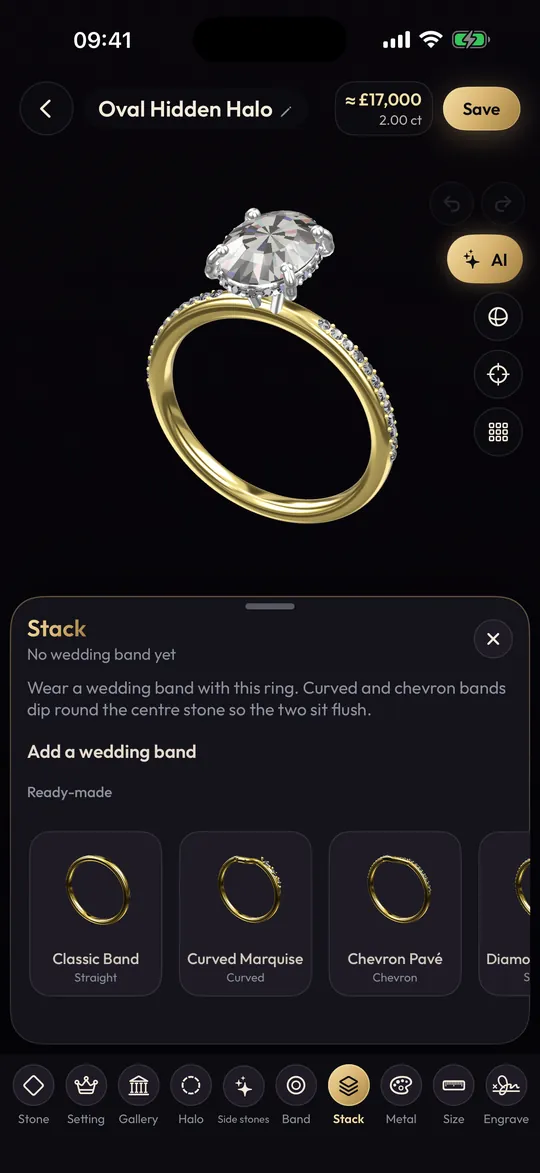
Ring Studio has a two-tone metal option as part of Pro, so you can see the split between head and band in 3D before asking a jeweller to quote.
- Build the ring: choose shape, carat, setting and band.
- Set the metal to two-tone and rotate the ring to see where the colours meet.
- Compare against all-yellow and all-white versions to decide whether the contrast is worth it.
- For a stack, design a wedding band and place it above or below the engagement ring (Pro) to judge how the pair sits together.
- Share the ring code so your jeweller sees exactly which parts you want in which metal.
The app does not let you choose karats or a third metal colour, so add those details (for example "platinum head, 18k yellow band") in your note to the jeweller. You can also read more about two-tone engagement ring styles.
Caring for two-tone and mixed metal rings
Clean as you would any ring, with warm water, mild soap and a soft brush. If the white part is rhodium-plated white gold, it will need re-plating every few years; a jeweller can mask the yellow or rose part so only the white section is plated. Platinum heads need no plating at all, which is one more reason they are popular on gold bands. See rhodium plating explained for what that appointment involves.
Frequently asked questions
Why do some yellow gold rings have white prongs?
White prongs blend into a colourless diamond, so the stone looks whiter and larger, while the band keeps its yellow gold colour. Platinum or white gold claws are also hard-wearing, which is a practical bonus.
Can platinum and gold be combined in one ring?
Yes. Jewellers often make the head in platinum and the band in gold, joining them by soldering or laser welding. It needs a skilled bench jeweller because platinum melts at a much higher temperature than gold.
Is it okay to mix metals in a ring stack?
Yes. Mixing a yellow engagement ring with a white wedding band, or the reverse, is common. Bear in mind harder metals can wear softer ones where rings rub together over the years.
Are two-tone rings harder to resize?
Resizing is usually done in the band, which is a single metal, so it is normally straightforward. If the join between metals is close to where the band is cut, tell your jeweller so they can plan around it.
Do two-tone rings need special care?
Clean them like any ring. If one part is rhodium-plated white gold, that part will need occasional re-plating, which the jeweller can do without affecting the yellow or rose gold.