 Ring Studio
Two-Tone Engagement Rings
A two-tone engagement ring uses two metal colours in one design, most often a white gold or platinum head holding the stone on a yellow or rose gold band. It lets a colourless diamond look whiter while keeping the warmth of gold on the finger.
On this page
- Most common
- White metal head, yellow or rose gold band
- Why
- Keeps a colourless diamond looking white, adds warmth on the hand
- Other versions
- Contrast shoulders, mixed inlays, two-colour twists
- Care
- White gold parts may need rhodium replating
- Stacking
- Matches bands in either colour
- In Ring Studio
- Two-tone is a metal option (Pro)
What makes a ring two-tone?
A two-tone engagement ring combines two metal colours in a single piece. The classic version is simple: the head and prongs are white (white gold or platinum) and the band is yellow or rose gold. Jewellers typically make the head and band separately and solder them together, so each part can be the right alloy for its job.
Two-tone is different from a mixed-metal stack, where each ring is a single colour and the mix happens across rings. For that, see ring stacking ideas. For the metallurgy behind each colour, see our two-tone and mixed metal guide.
Why a white head on a gold band?
It comes down to reflection. A diamond returns light that has bounced around inside it, and some of that light picks up colour from the metal around the stone. Yellow gold prongs can lend a colourless diamond a slight warmth; white prongs keep it neutral. So if you love the look of yellow gold on the hand but have chosen a high colour grade diamond, a white head protects what you paid for.
It also works in reverse. A warm-coloured stone, such as a yellow diamond or a near-colourless diamond with a faint tint, can be set in yellow gold prongs on a white band to intensify its warmth. That is a common choice for yellow diamond rings.
Popular two-tone combinations
| Head / prongs | Band | Effect |
|---|---|---|
| Platinum or white gold | Yellow gold | Classic, warm on the hand, bright stone |
| Platinum or white gold | Rose gold | Soft, romantic, modern |
| Yellow gold | White gold or platinum | Emphasises warm or yellow stones |
| Rose gold | White gold | Pink stones such as morganite or pink sapphire look richer |
| Mixed shoulders or twist | Two colours along the band | A bolder, decorative look |
For help choosing the main metal, see white gold vs yellow gold and rose gold vs yellow gold.
Which styles suit two-tone metal?
- Solitaires: the cleanest showcase. The white head reads as a little crown on a gold band.
- Halos: a white halo makes the centre look bigger and brighter against a gold shank.
- Vintage designs: two-tone was popular in early twentieth-century jewellery, so it suits engraved bands and old cuts.
- Twisted bands: a two-colour twist makes the metal itself the feature.
Care and practicalities
Most white gold is rhodium plated to give it a bright white finish. Over time, the plating wears and the warmer colour of the alloy underneath begins to show, so white gold parts usually need replating every year or two. With a two-tone ring, the jeweller masks off the yellow or rose part before plating. Platinum needs no plating, which makes a platinum head on a gold band a low-maintenance combination. Our page on rhodium plating explains the process.
Resizing is usually straightforward if the bottom of the shank is a single metal, which it normally is. Rings split into two colours all the way around are harder to resize.
Different alloys also differ in hardness. Platinum (around 95% pure in jewellery) wears differently from 18k gold (75% gold) or 14k (58.3%). That is not a problem in practice, but it is one reason to buy from a jeweller experienced in joining metals.
What does two-tone add to the cost?
Expect a modest premium over a single-colour ring: there is extra labour in making and joining two parts. A platinum head on a gold band costs a little more than an all-gold ring because platinum is denser and usually priced higher per gram, though gold and platinum prices move with the markets. The stone remains the biggest share of the cost. See gold ring prices and platinum ring prices for current ranges.
Designing a two-tone ring in Ring Studio
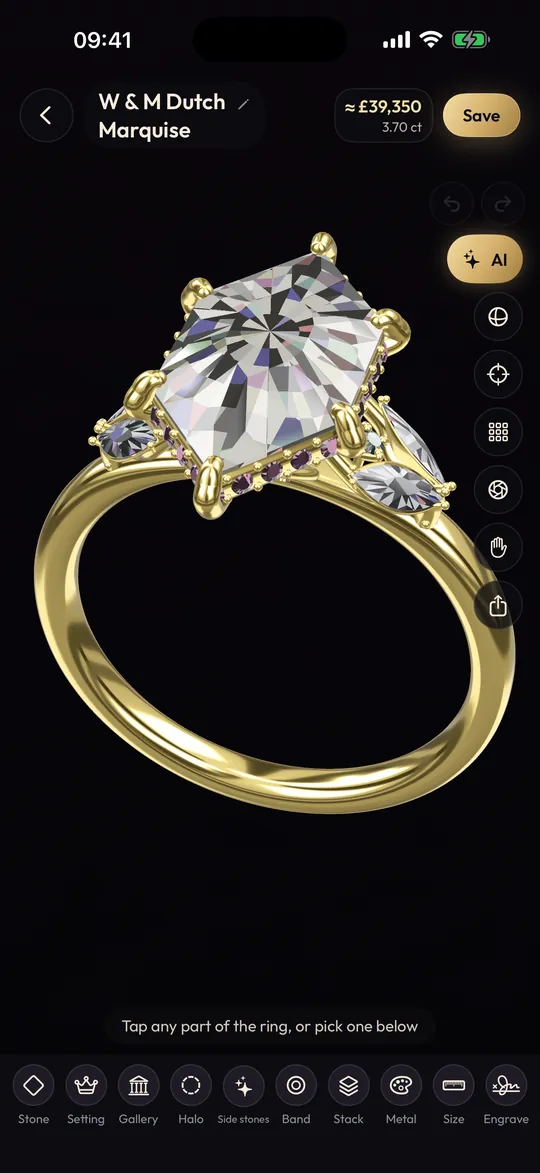
Two-tone is one of Ring Studio's metal choices, unlocked with Pro, alongside yellow gold, white gold, rose gold and platinum.
- Choose your stone, carat and setting.
- In metals, select two-tone and rotate the ring to see how the colours fall on the head and band.
- Compare against single-colour versions in yellow, white and rose gold, and in platinum.
- Try a twisted or knife edge band; both change how the second colour reads on the hand.
- Stack a wedding band to test which colour you prefer beside it.
- Share the ring code with your jeweller and note exactly which parts you want in which metal and karat, since the app does not set karats.
Is two-tone right for you?
Choose two-tone if you are torn between white and warm metals, if you want a colourless diamond to stay crisp on a gold band, or if you already wear mixed-metal jewellery. If you prefer a single, uniform look, choose one metal and use the wedding band to introduce a second colour later. Either way, our platinum and rose gold guides help you pick the pairing.
Frequently asked questions
What is a two-tone engagement ring?
It is a ring made with two metal colours, such as a platinum head on a yellow gold band, or a rose gold band with white gold accents. The two parts are usually made separately and joined by a jeweller.
Why do two-tone rings have a white head?
White prongs reflect neutral colour into a colourless diamond, while yellow or rose prongs can add a faint warm tint. A white head lets you wear a gold band without the diamond picking up its colour.
Does a two-tone ring go with any wedding band?
Two-tone rings are flexible: a band in either of the two colours matches, and a mixed-metal stack looks deliberate. Many people pick the band colour that matches the shank of the engagement ring.
Is two-tone gold harder to maintain?
Slightly. White gold parts are often rhodium plated and need replating every year or two, while the yellow or rose part does not. Platinum heads need no plating but develop a soft patina.
Can a two-tone ring be resized?
Usually yes, because resizing happens at the bottom of the shank, which is normally one metal. If the colours are split around the whole band, resizing is more complex, so ask your jeweller first.